How fish breathe
Explainer · Last reviewed 2026-08-14
Gills extract oxygen from water using a counter-current arrangement of extraordinary efficiency — and they collapse into a useless mass the moment they leave the water, which is why air exposure is the thing that matters most in handling.
A GILL IS A LARGE SURFACE AREA HELD OPEN BY WATER. Water is drawn in through the mouth and passed out over the gill arches, each of which carries rows of filaments, each filament carrying stacks of thin plates called lamellae. The total surface area is enormous relative to the fish's size, and it is separated from the blood by a very thin barrier.
WHAT MAKES IT EFFICIENT IS THE DIRECTION OF FLOW. Blood flows through the lamellae in the OPPOSITE direction to the water passing over them. That counter-current arrangement means the blood always meets water with a slightly higher oxygen content than its own along the whole length of the exchange surface, rather than reaching equilibrium halfway. The result is oxygen extraction efficiency far higher than a same-direction arrangement could achieve, and far higher than a mammalian lung achieves from air.
IT HAS TO BE THAT GOOD, because water is a poor source of oxygen. It holds a small fraction of the oxygen that the same volume of air does, that fraction FALLS AS WATER WARMS, and water is dense and viscous so moving it over the gills costs energy. A fish is doing much harder work for its oxygen than an air-breathing animal.
WHY A FISH SUFFOCATES IN AIR — and this is the sentence that should change how somebody handles a fish. Air contains far more oxygen than water. The problem is not supply; it is structure. The gill filaments and lamellae are held apart by the water around them. Out of water, surface tension collapses them into a stuck-together mass, and the effective surface area falls to almost nothing. A fish in air is not short of oxygen: it has plenty of oxygen and no functioning surface to absorb it through. It is also, at the same time, unable to move water for cooling and losing the mucus layer that protects the delicate tissue.
WHAT FOLLOWS DIRECTLY.
TIME OUT OF WATER IS THE SINGLE MOST CONTROLLABLE VARIABLE IN FISH HANDLING, and the relationship between air exposure and post-release mortality is one of the better-established findings in the catch-and-release literature.
A FISH THAT HAS FOUGHT HARD IS ALREADY OXYGEN-DEBTED, so air exposure lands on top of an existing deficit.
WARM WATER MAKES ALL OF IT WORSE, because there is less oxygen available to recover with.
AND SOME FISH BREATHE AIR DELIBERATELY. Snakeheads, many catfish, lungfish, arapaima and others have accessory air-breathing organs, and several can survive out of water for long periods. That is a genuine adaptation to low-oxygen water rather than an exception to the mechanism above, and it is why some of the most air-tolerant fish live in the most oxygen-poor places.
Why the gill is the most fragile thing an angler handles
Almost every handling instruction on FishingHQ traces back to one piece of anatomy, and it is worth understanding once rather than obeying repeatedly.
THE GILL IS BUILT FOR WATER AND COLLAPSES IN AIR. Water is drawn in at the mouth and passes out over gill filaments carrying thousands of fine folds, giving an enormous surface area across a membrane a few cells thick. Water supports those structures; air does not. Out of water they clump together, the surface area available for exchange collapses, and a fish suffocates in air surrounded by oxygen it cannot reach.
EXCHANGE RUNS AGAINST THE FLOW, WHICH IS WHY IT IS SO EFFICIENT AND SO FRAGILE. Blood moves through the filaments in the opposite direction to the water passing over them, so the gradient favouring oxygen uptake is maintained along the whole length. It extracts a high proportion of the available oxygen — and it depends on water actually moving across the gills in the right direction, which is why a fish held facing backwards in a current, or dragged backwards through water, is not being helped.
AND WATER IS A POOR OXYGEN SOURCE TO BEGIN WITH. It holds a small fraction of the oxygen air does, it holds less as it warms, and moving it over the gills costs energy. A fish is working considerably harder to breathe than a mammal is, at rest, before anything has gone wrong.
THREE HANDLING RULES FOLLOW DIRECTLY AND NEED NO FURTHER JUSTIFICATION. Time out of water is the dominant variable and is counted in seconds. Never lift a fish by the gill cover or put fingers inside the gills — the filaments are unprotected, they bleed freely and the damage is not survivable. And a fish being recovered is held upright, facing into any flow, and released when it swims off rather than when the angler is ready.
THE EXCEPTION WORTH KNOWING. Some fish breathe air deliberately, through modified gut, swim bladder or accessory organs, and several are angling catch in tropical fresh water. They tolerate handling and low oxygen far better than a trout does — which is a fact about those species and not a licence to generalise, since the same water that suits them would kill most of what FishingHQ covers.
Backed by research — why, and the sources (2)
Supported by peer-reviewed research or fisheries science. The sources are listed and can be checked.
- Understanding the Complexity of Catch-and-Release in Recreational Fishing — Reviews in Fisheries Science 15:75–167, 2007 (Scientific literature)Relied on for: Review of catch-and-release outcomes including physiological stress, exhaustion, air exposure, water temperature and post-release survival.States this directlyCitation checked — the work exists and is described correctly
- FishBase: a global information system on fishes — Froese, R. and D. Pauly, eds. — FishBase Consortium (Scientific institute)Relied on for: Recorded physiological tolerance and habitat association of the species concerned.Background and mechanism onlyPassage read and verified
Safety
Further safety reading
- Handling fish safely — Gill lamellae are held apart by the water around them and collapse in air, which is the mechanism behind every piece of handling guidance about time out of water. An angler who knows this handles fish better than one who has been told to be quick.
Where to go next
Fish this applies to
- African sharptooth catfishAn accessory arborescent breathing organ above the gills, which is why this fish persists in drying pools, muddy channels and aquaculture ponds at densities and temperatures nothing else tolerates — and why it is farmed so widely across Africa and Asia.
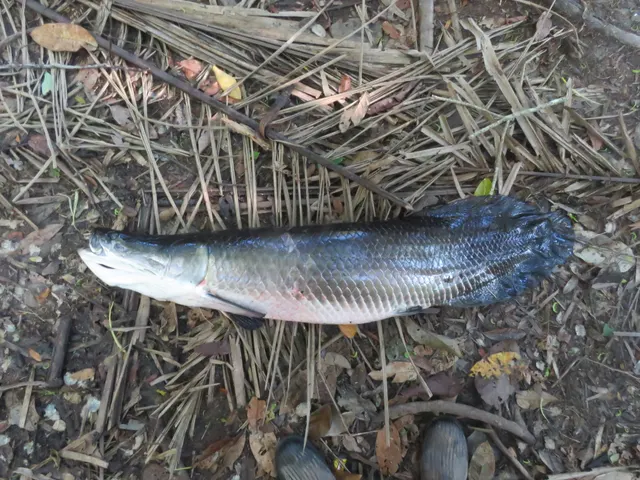 ArapaimaThe most extreme case in FishingHQ and an OBLIGATE air breather: an arapaima that cannot reach the surface drowns. Its swim bladder is modified into a lung-like organ, it surfaces to gulp air every ten to twenty minutes, and that single fact organises everything about it — where it can live, how it survives the deoxygenated water of a shrinking dry-season pool, and how it is located by fishermen, who watch and listen for the rise rather than searching the water.
- BowfinA living demonstration of the transitional case. Bowfin have a vascularised gas bladder they use to supplement gill breathing, which lets them survive in warm, stagnant, oxygen-poor backwaters that kill almost everything else — and it is why an angler finds them in water that looks and smells uninhabitable.
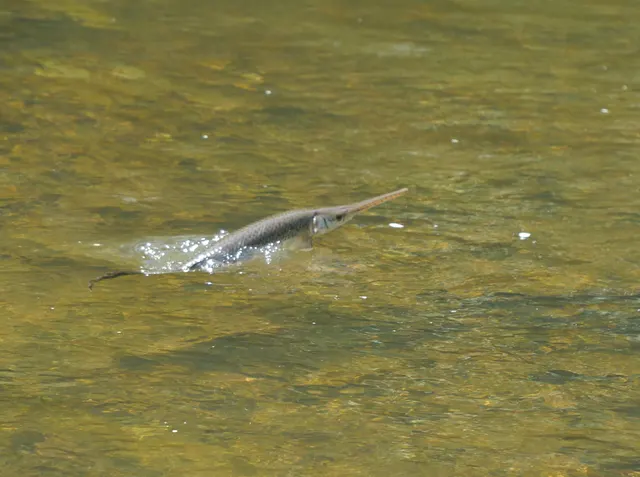 Longnose garAnother North American survivor of the same lineage and the same solution. Gars gulp air at the surface and can persist in water too warm and too poorly oxygenated to hold anything else, which is why they dominate stagnant backwaters and why a summer surface roll is the way they are found.
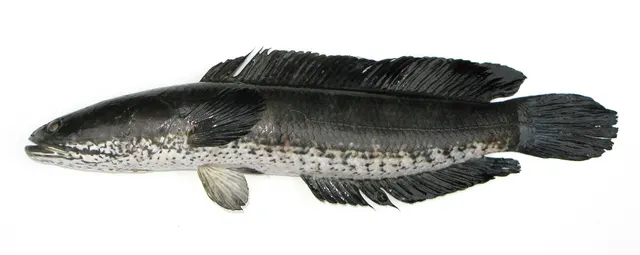 Striped snakeheadThe species whose air breathing is directly responsible for its reputation. A suprabranchial organ lets it breathe atmospheric air, survive in near-anoxic water, and — with enough moisture — remain alive out of water for a period. That last capability is what makes it a formidable invader, because it can be transported alive and can move overland between waters.
Related reading
- Air exposure, and the clock that starts when a fish leaves the waterGill lamellae collapse in air and the effective exchange surface falls to almost nothing, so a fish out of water is surrounded by oxygen it cannot use. That is the whole of why the clock matters.
- Dissolved oxygen and fishWater is a poor source of oxygen and holds less of it as it warms, which is why the counter-current gill arrangement has to be as efficient as it is and why warm water is a welfare problem.
How this compares
Sources and evidence
- FishBase: a global information system on fishes — Froese, R. and D. Pauly, eds. — FishBase Consortium (Scientific institute)Relied on for: Life history, diet, migration pattern, habitat association and depth range recorded for the species concerned.States this directlyPassage read and verified
- Do we need species-specific guidelines for catch-and-release recreational angling? — Biodiversity and Conservation 14:1195–1209, 2005 (Scientific literature)Relied on for: Synthesis of recreational angling effects on fish including physiological disturbance, air exposure and post-release survival.States this directlyCitation checked — the work exists and is described correctly
- Understanding the Complexity of Catch-and-Release in Recreational Fishing — Reviews in Fisheries Science 15:75–167, 2007 (Scientific literature)Relied on for: Review of catch-and-release science including physiological stress response, welfare argument and post-release survival.States this directlyCitation checked — the work exists and is described correctly
Why the 9 connections on this page are here, and the sources
Fish this applies to
Backed by research — 5 connections
Supported by peer-reviewed research or fisheries science. The sources are listed and can be checked.
African sharptooth catfish
A species joined to the mechanism it is a worked example of, written only where the species demonstrates the mechanism unusually clearly rather than where it is merely subject to it.
- FishBase: a global information system on fishes — Froese, R. and D. Pauly, eds. — FishBase Consortium (Scientific institute)Relied on for: Recorded environment, respiration, oxygen tolerance, feeding biology, growth, longevity and distribution of the species named.States this directlyPassage read and verified
- The IUCN Red List of Threatened Species — International Union for Conservation of Nature (Conservation authority)Relied on for: Conservation assessment, recorded threats and population trend of the species named.States this directlyCitation checked — the work exists and is described correctly
Arapaima
A species joined to the mechanism it is a worked example of, written only where the species demonstrates the mechanism unusually clearly rather than where it is merely subject to it.
- FishBase: a global information system on fishes — Froese, R. and D. Pauly, eds. — FishBase Consortium (Scientific institute)Relied on for: Recorded environment, respiration, oxygen tolerance, feeding biology, growth, longevity and distribution of the species named.States this directlyPassage read and verified
- The IUCN Red List of Threatened Species — International Union for Conservation of Nature (Conservation authority)Relied on for: Conservation assessment, recorded threats and population trend of the species named.States this directlyCitation checked — the work exists and is described correctly
Bowfin
A species joined to the mechanism it is a worked example of, written only where the species demonstrates the mechanism unusually clearly rather than where it is merely subject to it.
- FishBase: a global information system on fishes — Froese, R. and D. Pauly, eds. — FishBase Consortium (Scientific institute)Relied on for: Recorded environment, respiration, oxygen tolerance, feeding biology, growth, longevity and distribution of the species named.States this directlyPassage read and verified
- The IUCN Red List of Threatened Species — International Union for Conservation of Nature (Conservation authority)Relied on for: Conservation assessment, recorded threats and population trend of the species named.States this directlyCitation checked — the work exists and is described correctly
Longnose gar
A species joined to the mechanism it is a worked example of, written only where the species demonstrates the mechanism unusually clearly rather than where it is merely subject to it.
- FishBase: a global information system on fishes — Froese, R. and D. Pauly, eds. — FishBase Consortium (Scientific institute)Relied on for: Recorded environment, respiration, oxygen tolerance, feeding biology, growth, longevity and distribution of the species named.States this directlyPassage read and verified
- The IUCN Red List of Threatened Species — International Union for Conservation of Nature (Conservation authority)Relied on for: Conservation assessment, recorded threats and population trend of the species named.States this directlyCitation checked — the work exists and is described correctly
Striped snakehead
A species joined to the mechanism it is a worked example of, written only where the species demonstrates the mechanism unusually clearly rather than where it is merely subject to it.
- FishBase: a global information system on fishes — Froese, R. and D. Pauly, eds. — FishBase Consortium (Scientific institute)Relied on for: Recorded environment, respiration, oxygen tolerance, feeding biology, growth, longevity and distribution of the species named.States this directlyPassage read and verified
- The IUCN Red List of Threatened Species — International Union for Conservation of Nature (Conservation authority)Relied on for: Conservation assessment, recorded threats and population trend of the species named.States this directlyCitation checked — the work exists and is described correctly
Related reading
Backed by research — 2 connections
Supported by peer-reviewed research or fisheries science. The sources are listed and can be checked.
Air exposure, and the clock that starts when a fish leaves the water
The biology or physiology beneath a handling practice, resting on the catch-and-release and fisheries science cited rather than on convention.
- Understanding the Complexity of Catch-and-Release in Recreational Fishing — Reviews in Fisheries Science 15:75–167, 2007 (Scientific literature)Relied on for: Review of catch-and-release science including air exposure, handling, temperature effects and post-release survival.States this directlyCitation checked — the work exists and is described correctly
- Do we need species-specific guidelines for catch-and-release recreational angling? — Biodiversity and Conservation 14:1195–1209, 2005 (Scientific literature)Relied on for: Synthesis of recreational angling effects on fish including physiological disturbance, recovery and the variables that dominate outcome.States this directlyCitation checked — the work exists and is described correctly
Dissolved oxygen and fish
Why it works, and what that rests on. The underlying claims are documented in the fisheries science and reference literature cited rather than restated from practice.
- Understanding the Complexity of Catch-and-Release in Recreational Fishing — Reviews in Fisheries Science 15:75–167, 2007 (Scientific literature)Relied on for: Review of catch-and-release science including physiological stress response, air exposure, handling and post-release survival.States this directlyCitation checked — the work exists and is described correctly
- Do we need species-specific guidelines for catch-and-release recreational angling? — Biodiversity and Conservation 14:1195–1209, 2005 (Scientific literature)Relied on for: Synthesis of recreational angling effects on fish including physiological disturbance and the variables that dominate outcome.States this directlyCitation checked — the work exists and is described correctly
How this compares
Backed by research — 1 connection
Supported by peer-reviewed research or fisheries science. The sources are listed and can be checked.
What stress does to a fish
Two biological records a reader will hold together, joined where the contrast between them is the informative part.
- Understanding the Complexity of Catch-and-Release in Recreational Fishing — Reviews in Fisheries Science 15:75–167, 2007 (Scientific literature)Relied on for: Review of catch-and-release science including physiological stress response, air exposure, handling and post-release survival.States this directlyCitation checked — the work exists and is described correctly
- Do we need species-specific guidelines for catch-and-release recreational angling? — Biodiversity and Conservation 14:1195–1209, 2005 (Scientific literature)Relied on for: Synthesis of recreational angling effects on fish including physiological disturbance and the variables that dominate outcome.States this directlyCitation checked — the work exists and is described correctly
Safety reading
Backed by research — 1 connection
Supported by peer-reviewed research or fisheries science. The sources are listed and can be checked.
Handling fish safely
The relationship between air exposure and post-release survival is among the better-established findings in the catch-and-release literature and is cited directly.
- Understanding the Complexity of Catch-and-Release in Recreational Fishing — Reviews in Fisheries Science 15:75–167, 2007 (Scientific literature)Relied on for: Review of catch-and-release science including physiological stress response, air exposure, handling and post-release survival.States this directlyCitation checked — the work exists and is described correctly
- Do we need species-specific guidelines for catch-and-release recreational angling? — Biodiversity and Conservation 14:1195–1209, 2005 (Scientific literature)Relied on for: Synthesis of recreational angling effects on fish including physiological disturbance and the variables that dominate outcome.States this directlyCitation checked — the work exists and is described correctly
How FishingHQ labels evidence is explained in the evidence policy.