Blackhead seabream vs Yellowfin bream
How to tell them apart, and what follows from getting it right.
Why they get confused
Two Acanthopagrus of the western Pacific with the same deep silver-grey body, the same crushing dentition and the same habit of living in estuaries and around structure. Both are called simply 'bream' across their ranges, the ranges approach each other, and photographs of the two are difficult to tell apart unless somebody has thought to shoot the fins and the top of the head.
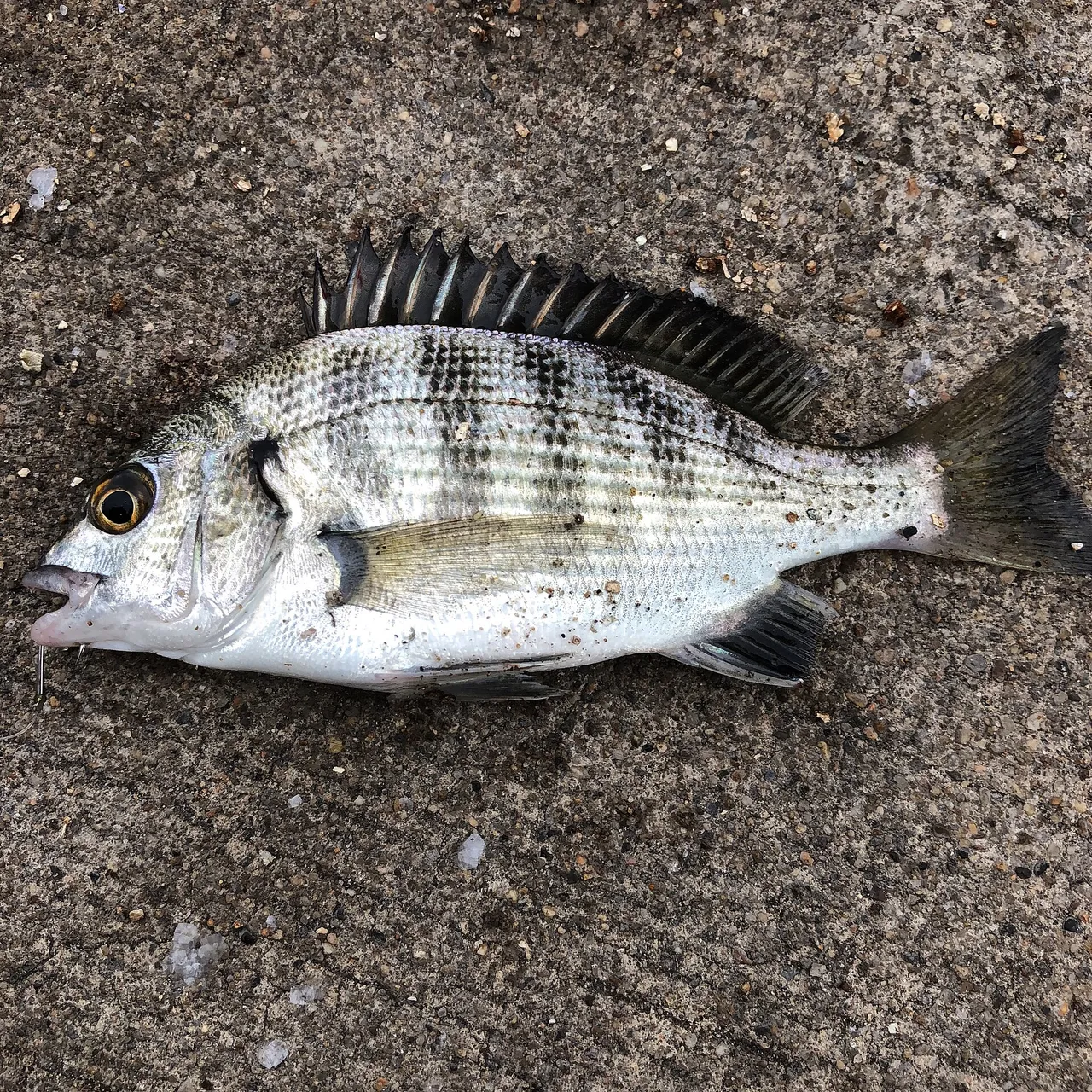
Blackhead seabream
Acanthopagrus schlegelii — Sparidae

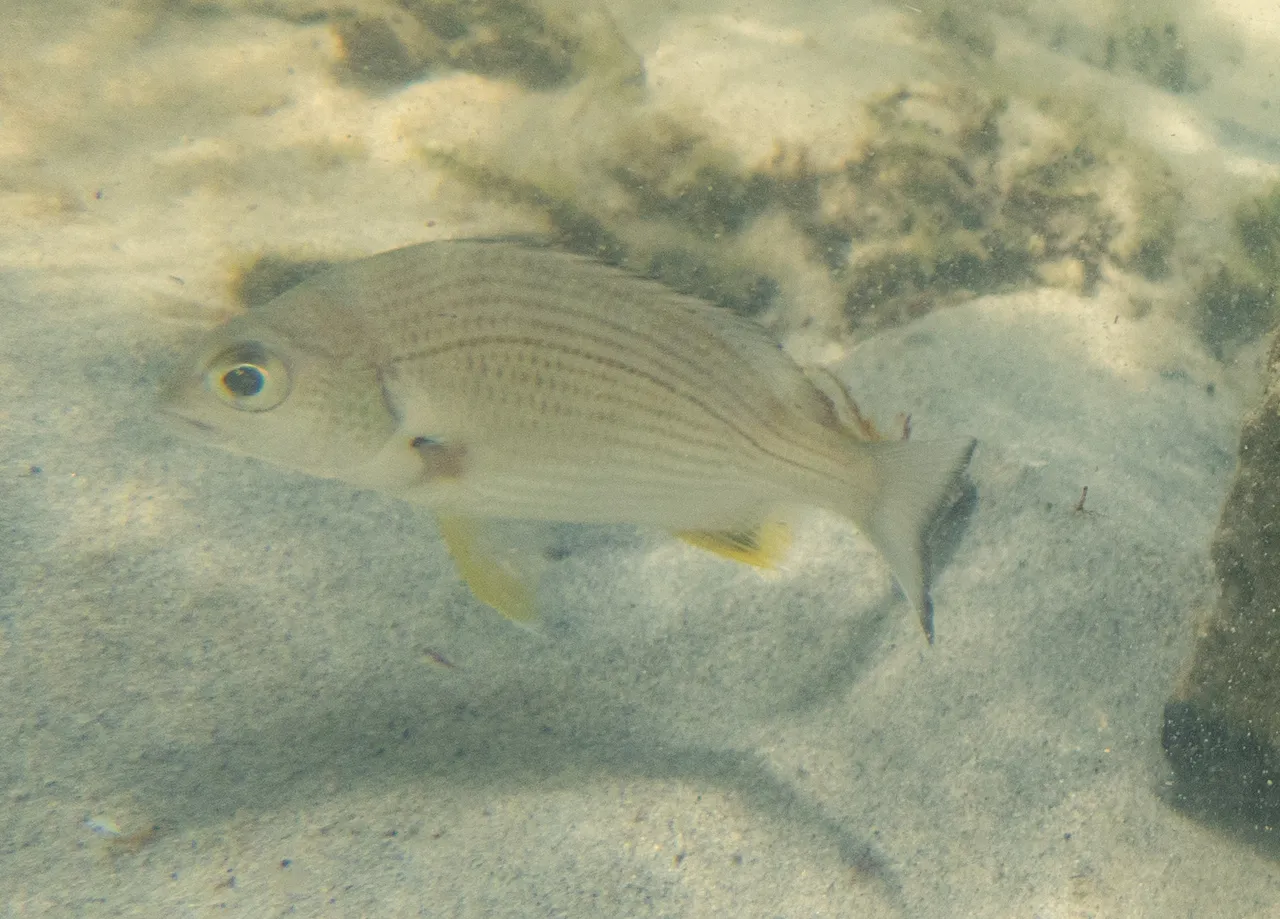
Yellowfin bream
Acanthopagrus australis — Sparidae
The differences
Each difference is marked with how far it can be trusted on its own. A single diagnostic character settles the identification; suggestive ones only narrow it.
| Character | Blackhead seabream | Yellowfin bream | Reliability |
|---|---|---|---|
| Colour of the pelvic and anal finsIdentification | Dusky to dark grey, sometimes almost black, with no yellow in them. | Distinctly yellow, usually with a yellow wash in the lower lobe of the tail as well. | Supporting — use with others |
| The head above the eyesIdentification | Dark over the nape and forehead, which is what the common name refers to, on a fish whose whole upper body reads darker. | No gold band between the eyes and no dark cap; the head tone continues the flank rather than contrasting with it. | Diagnostic on its own |
| Which coast the fish is onRange | The north-western Pacific — Japan, Korea, China and Taiwan — where it is one of the principal estuarine sport fish. | Eastern Australia, from Queensland down through New South Wales into Victorian waters. | Diagnostic on its own |
| Teeth and what they are forFeeding | Cutting teeth at the front and crushing molars behind, used on shellfish, crustaceans and barnacles taken off structure. | The same arrangement and the same diet — which is why the two look alike, and why this character separates the genus rather than the species. | Suggestive only — varies |
| Size classSize | Reaches a broadly similar size to the yellowfin bream, so weight tells a reader very little. | FishBase records a maximum of 66 cm and 4.5 kg, with most rod-caught fish under a kilo. | Suggestive only — varies |
Why it matters
This pair is a lesson in what a comparison page is for. Anatomically the two are close enough that a photograph without a locality is genuinely hard, and the honest headline is that RANGE is the diagnostic — an Acanthopagrus in a Sydney estuary is not a blackhead seabream and one in Tokyo Bay is not a yellowfin bream. The page exists because images travel without their captions and because anglers travel too, and a visitor who has learned bream on one coast will meet a fish that looks like it on the other. Where either range holds further Acanthopagrus, and both do, the separation stops being a two-way choice and becomes a specialist question.
The full records
This page compares two species. Each of them has a complete record covering biology, behaviour, handling and the evidence behind all of it.
More about blackhead seabream
Where it lives, how it is caught, and what else it is confused with.
Similar and related fish
How it is caught
Where it lives
Why the 5 connections on this page are here, and the sources
Similar and related fish
Backed by research — 1 connection
Supported by peer-reviewed research or fisheries science. The sources are listed and can be checked.
Yellowfin bream
An identification comparison naming both binomials: Acanthopagrus schlegelii and Acanthopagrus australis.
- FishBase: a global information system on fishes — Froese, R. and D. Pauly, eds. — FishBase Consortium (Scientific institute)Relied on for: Morphological and distributional data for Acanthopagrus schlegelii and for Acanthopagrus australis.States this directlyPassage read and verified
- The IUCN Red List of Threatened Species — International Union for Conservation of Nature (Conservation authority)Relied on for: Separate assessments treating Acanthopagrus schlegelii and Acanthopagrus australis as distinct species.States this directlyCitation checked — the work exists and is described correctly
How it is caught
What experienced anglers do — 1 connection
Widely and independently recommended by experienced anglers and specialist sources. This is real angling knowledge, not proof: controlled evidence for it is limited, and FishingHQ records it as convention rather than as a demonstrated effect.
Float fishing
A practitioner claim about how Acanthopagrus schlegelii is commonly fished, following from where and how it feeds.
- General angling website restatements of established technique — Various (Credible secondary source)Relied on for: Widely restated practitioner accounts of fishing for blackhead seabream.Citation checked — the work exists and is described correctly
- Sea Angler — Bauer Media (Specialist angling publication)Relied on for: Practitioner treatment of the methods used for blackhead seabream and comparable species.Citation checked — the work exists and is described correctly
Where it lives
Backed by research — 3 connections
Supported by peer-reviewed research or fisheries science. The sources are listed and can be checked.
Estuary
A habitat association for Acanthopagrus schlegelii taken from the environment and distribution data on its FishBase summary.
- FishBase: a global information system on fishes — Froese, R. and D. Pauly, eds. — FishBase Consortium (Scientific institute)Relied on for: The environment, depth range and habitat description recorded for Acanthopagrus schlegelii.States this directlyPassage read and verified
Harbours, piers and breakwaters
A habitat association for Acanthopagrus schlegelii taken from the environment and distribution data on its FishBase summary.
- FishBase: a global information system on fishes — Froese, R. and D. Pauly, eds. — FishBase Consortium (Scientific institute)Relied on for: The environment, depth range and habitat description recorded for Acanthopagrus schlegelii.States this directlyPassage read and verified
Rocky shores and reefs
A habitat association for Acanthopagrus schlegelii taken from the environment and distribution data on its FishBase summary.
- FishBase: a global information system on fishes — Froese, R. and D. Pauly, eds. — FishBase Consortium (Scientific institute)Relied on for: The environment, depth range and habitat description recorded for Acanthopagrus schlegelii.States this directlyPassage read and verified
Reviewed 2026-08-16. FishingHQ does not state what any rule is or where any rule applies. Where this page says the two species are managed differently, that is a reason to check the authority for the water you are on — not a statement of what it requires.