The Baltic states
Fishing regions · Last reviewed 2026-08-18
Three countries on a brackish, nearly tideless sea, with a sea-trout coast, two of Europe's largest lakes, the Curonian Lagoon behind a sand spit, and a winter in which the fishing moves onto the ice.
Safety: drowning and immersion — can cause serious injury or death. 3 more points apply here.
Being listed here is not permission to fish. What that meansClose
Access, fishing rights, seasons, licences, local bylaws and permitted methods vary and can change. Check current access, permission, local regulations, closures and restrictions before you travel or fish. FishingHQ describes what the ground is and names who holds the answer; it does not hold the answer itself.
Find the authority for a jurisdiction · What FishingHQ does and does not cover
Estonia, Latvia and Lithuania are treated as one record because what a visiting angler needs to know is shared, and what differs between them is administrative detail that changes.
THE SEA IS BRACKISH AND ALMOST TIDELESS, and that single fact reorganises everything an Atlantic angler expects. Salinity here is a small fraction of ocean salinity and falls further north and east into the Gulfs of Riga, Finland and Bothnia. Marine species are at their physiological limit, freshwater species live in the bays, and the community is species-poor and slow-growing. There is no tide worth reading; water level is driven by wind and pressure instead.
THE HEADLINE SPORT FISHERY IS SEA TROUT. Anadromous trout do extremely well in a cold, productive, low-salinity sea with rivers along its whole length, and the coastal fishery for them — from shore in the cold months, by boat and trolling offshore — is the reason most travelling anglers come.
THE FRESH WATER IS ENORMOUS. Estonia and Russia share Lake Peipus, one of the largest lakes in Europe; Latvia and Estonia share Võrtsjärv and a dense river network; Lithuania holds the Curonian Lagoon, a very large shallow brackish body enclosed behind a hundred-kilometre sand spit and connected to the sea by one narrow strait. The lagoon is a fishery in its own right and a nursery for much of the surrounding coast.
WINTER IS A SEASON RATHER THAN A GAP. Ice fishing is ordinary practice across all three countries — for perch, pike, burbot, roach and, on the big lakes, at real scale. It is also the activity that kills anglers here.
ADMINISTRATION IS NATIONAL, LIGHT BY REGIONAL STANDARDS, AND VARIABLE. Each country licenses recreational fishing nationally, distinguishes simple hand-gear angling from more productive gear, and layers water-specific and species-specific arrangements on top. The freedom-to-roam traditions of the region mean access to water is frequently easier than it is further west — which is not the same as permission to fish it.
What fishing here is like
Three low-lying countries on the eastern Baltic, forested, lake-strewn and drained by a dense network of slow rivers. The coast is predominantly sand — long beaches, dunes, spits and shallow bays — with limestone cliffs in northern Estonia and an archipelago of hundreds of islands off its western coast. The sea is brackish, cold, nearly tideless and stratified, becoming fresher north and east. Behind the Lithuanian coast the Curonian Lagoon is enclosed by a sand spit almost a hundred kilometres long, forming a very large, very shallow, nearly fresh body connected to the sea through one narrow strait. Inland, Lake Peipus on the Estonian–Russian border is among Europe's largest lakes, and Võrtsjärv, Lubāns and hundreds of smaller lakes fill the glacial landscape. Rivers are mostly slow, tea-coloured with bog drainage, and interrupted by historic mill weirs. Winters are cold enough that ice is an ordinary seasonal surface.
What dominates
Coastal sea trout fishing, which is the region's signature sport fishery, from shore in the cold months with fly and lure and from boats by trolling. Ice fishing across all three countries through the winter, at scale on the large lakes, for perch, pike, burbot, roach and bream. Predator fishing for pike, zander and perch on the lakes, the lagoon and the lower rivers. Fly fishing for trout, grayling and sea trout in the rivers, with a strong catch-and-release culture on the salmonid waters. Salmon fishing on a small number of rivers, closely managed. Feeder, float and match fishing on the slower waters. Boat fishing on the big lakes, where the scale is closer to a sea than to a lake. Traditional and small-scale net and trap fishing persists under licence in the lagoon and on the large lakes and is part of the local economy rather than a curiosity.
The water available
Brackish, nearly tideless, cold sea with long sand beaches, dunes, shallow bays, boulder reefs and — in northern Estonia — limestone cliff coast. A large west-Estonian archipelago of low islands, shoals and shallow sounds. The Curonian Lagoon: very large, very shallow, nearly fresh, enclosed by a sand spit and connected to the sea by one strait. Very large shallow lakes, including one of Europe's largest. Hundreds of small glacial lakes, many with bog margins. Slow, tea-coloured lowland rivers stained by peat drainage, with historic mill weirs. Some faster spring-fed and limestone-influenced streams holding trout. Extensive bog and mire systems that colour and acidify the water draining them.
How the rules are structured
The three countries administer recreational fishing nationally, and the shape they share matters more to a visitor than their differences.
THE COMMON STRUCTURE IS A DISTINCTION BY GEAR RATHER THAN BY WATER. Simple hand-gear angling — a rod, a line, a hand-held approach — is treated differently from more productive gear such as multiple rods, nets, traps and set lines. What each country requires for each tier differs, and the requirement is generally a national card or licence rather than a water permit.
ON TOP OF THAT SIT WATER-SPECIFIC AND SPECIES-SPECIFIC ARRANGEMENTS. Salmon and sea trout carry their own measures everywhere, salmonid rivers are managed separately and frequently under limited licences, and particular lakes and stretches run their own systems. Privately held and leased waters exist and set their own terms.
ACCESS AND PERMISSION ARE DIFFERENT QUESTIONS HERE, and the distinction is worth stating because the region's freedom-to-roam traditions make the first unusually generous. Being lawfully able to stand somewhere is not the same as being lawfully able to fish there, and a visitor who conflates them will get it wrong in good faith.
PROTECTED AREAS ARE EXTENSIVE — national parks, the Curonian Spit's designations, coastal reserves and bird areas — and their rules are independent of any fishing licence.
AND BALTIC MEASURES ARE SET ABOVE THE NATIONAL LEVEL for shared stocks, revised against international assessment, which is how what is permitted changes without any national law changing.
FishingHQ does not state what any current rule is: no season, no size and no limit. Establish which country's water this is, which tier of gear is intended, and ask the national authority and the water's manager.
Who to ask
- The national environment or nature conservation authority of the country concerned, which licenses recreational fishing and sets seasons and closures.
- The manager, lessee or municipality operating a water's own licence system, where one exists.
- The national park or protected-area administration, including for the Curonian Spit and the coastal reserves.
- The national fisheries administration, for coastal measures and for salmon and sea trout.
- The port or municipal authority, for access to harbour structures and breakwaters.
Words you will meet
- Curonian Lagoon
- A very large, very shallow, nearly fresh body of water enclosed behind a hundred-kilometre sand spit and joined to the sea by one narrow strait. It functions as a nursery for much of the surrounding coast and fishes like a huge shallow lake rather than like the sea outside it.
- Everyman's access
- The regional tradition of broad public access to land and water for passage and recreation. It governs where a person may go and does not by itself govern whether they may fish there, which is the distinction visitors most often miss.
- Meriforell / taimen / šlakys
- Sea trout, in Estonian, Latvian and Lithuanian respectively. The region's headline sport fish and the reason most travelling anglers come to this coast.
- Luts / burbot
- A wholly freshwater cod relative that feeds and spawns in the coldest part of the winter, which makes it a classic ice-fishing target here and one of very few fish that is easiest to catch at the worst time of year.
- Bog-stained water
- The tea-brown colour of rivers and lakes draining peat and mire. It is natural rather than polluted, it cuts light penetration sharply, and it is a large part of why these waters fish the way they do.
Conditions and hazards
The Baltic states' hazards are cold-climate hazards and the most dangerous of them is the one people treat as routine.
ICE IS THE PRINCIPAL KILLER OF ANGLERS HERE. Ice fishing is ordinary, social and widespread, which is exactly why it is dangerous: an activity that everybody does is an activity nobody assesses. Thickness varies across a single water with depth, inflow, outflow, current, wind and springs, and it is routinely thinnest over exactly the features that hold fish. On the big lakes and on sea ice there is an additional and far worse mechanism: an offshore wind can detach a sheet of ice and carry it, with people on it, away from the shore. That has happened repeatedly on this coast and on the large lakes, and it is the reason ice fishing here has organised rescue services rather than merely warnings.
THE SEA IS COLD YEAR-ROUND and cold water shock governs the first minute of any immersion.
THERE IS ALMOST NO TIDE, which removes the habit of checking one without removing the hazard: level here is driven by wind and pressure, so a surge arrives with weather rather than on a schedule.
THE SEA BUILDS FAST ON A FETCH. Shallow, enclosed water raises a short steep sea within hours, which is harder on a small boat than an ocean swell of the same height.
THE ARCHIPELAGO AND THE SHALLOW BAYS ARE NAVIGATIONALLY DEMANDING, with boulder reefs and shoals a long way offshore and very little depth over them.
AND WINTER DARKNESS IS A REAL FACTOR at these latitudes: short days, long dusk, and a great deal of fishing done in the dark by people who have not planned for it.
A sea that is barely salt, and what that does to the fish in it
The eastern Baltic is the most useful teaching example in European fishing of what salinity does, because it runs the whole gradient inside one sea.
SALINITY FALLS FROM THE DANISH STRAITS TO THE HEAD OF THE GULFS. The Baltic receives an enormous freshwater input from its catchment and exchanges water with the North Sea only through narrow, shallow channels. The result is a salinity gradient: still fairly marine in the west, distinctly brackish along the Baltic states' coast, and nearly fresh at the heads of the Gulfs of Finland, Riga and Bothnia.
MARINE SPECIES LIVE HERE AT THEIR PHYSIOLOGICAL LIMIT. Osmoregulation costs energy, and a marine fish in water far below its optimum spends more of its intake on staying in balance and less on growth and reproduction. That is why Baltic cod, herring, flounder and plaice are characteristically smaller and slower-growing than their North Sea populations, why the species list is short, and why the eastern end of the sea holds fewer marine species still.
FRESHWATER SPECIES COME THE OTHER WAY. Pike, perch, roach, bream and zander live in the shallow coastal bays and lagoons in genuinely brackish water, and the Curonian Lagoon in particular is a freshwater fishery that happens to be joined to a sea.
WHICH MAKES THE MIGRATORY SALMONIDS THE WINNERS. A sea trout is built to move between salinities. In the Baltic it gets a cold, productive feeding sea, no need to cross a full-strength salinity front, and rivers along the entire coast to spawn in. That is why the sea-trout fishery here is as good as it is, and it is a structural advantage rather than a management one.
THE SEA ALSO STRATIFIES PERMANENTLY, with a salinity boundary below which oxygen is chronically depleted. The deep basins are periodically uninhabitable, cod spawning depends on rare inflows of dense saline water from the North Sea, and that dependency — not fishing alone — is a large part of the Baltic cod story.
INLAND, THE WATER IS DARK AND THAT MATTERS. Rivers and lakes draining peat and mire carry dissolved organic material that stains them brown and cuts light penetration sharply. Sight-feeding is harder, predators that hunt in low light are favoured, and thermal structure in a stained lake differs from a clear one because light is absorbed nearer the surface.
THE BIG LAKES BEHAVE LIKE SMALL SEAS. Peipus and its neighbours are large enough to build a serious sea in wind, shallow enough to mix, and productive enough to support commercial as well as recreational fisheries. They freeze extensively, which is what makes them the region's great ice-fishing waters.
Backed by research — why, and the sources (4)
Supported by peer-reviewed research or fisheries science. The sources are listed and can be checked.
- ICES Advice on fishing opportunities, catch and effort — International Council for the Exploration of the Sea (Scientific institute)Relied on for: Ecoregion description, stock distribution and status, nursery function and the hydrography of the European sea areas assessed, including the Baltic, the North Sea, the Celtic Seas and the Iberian and Biscay shelf.States this directlyCitation checked — the work exists and is described correctly
- FAO Species Identification Guides for Fishery Purposes and the FAO Species Catalogues — Food and Agriculture Organization of the United Nations (Scientific institute)Relied on for: Identification, distribution and habitat association of the fishes and invertebrates of the Mediterranean, the Black Sea and the eastern central Atlantic.States this directlyCitation checked — the work exists and is described correctly
- FishBase: a global information system on fishes — Froese, R. and D. Pauly, eds. — FishBase Consortium (Scientific institute)Relied on for: Recorded distribution, depth range, habitat association, size and biology of the species named.States this directlyPassage read and verified
- The IUCN Red List of Threatened Species — International Union for Conservation of Nature (Conservation authority)Relied on for: Current global and regional conservation assessment for the species named, with the assessment date.Background and mechanism onlyCitation checked — the work exists and is described correctly
Gear tiers, everyman's access, and the difference between standing and fishing
The Baltic states run a lighter administration than the qualification belt to their south, and the structure they share is easy to describe and easy to get wrong.
THE DISTINCTION IS DRAWN BY GEAR, NOT BY WATER. All three treat simple hand-held angling differently from more productive gear — multiple rods, nets, traps, set lines. The requirement is generally a national card or licence rather than a permit for a particular water, which is the reverse of the Polish or Czech arrangement. What each tier needs differs between the three countries and is exactly the kind of detail that changes.
SPECIES AND WATERS ARE LAYERED ON TOP. Salmon and sea trout carry their own measures everywhere; salmonid rivers are managed separately and often under limited licences; particular lakes and river stretches run their own systems; and leased or privately held waters set their own terms.
THE ACCESS TRADITION IS THE PART THAT MISLEADS VISITORS. This region has a strong tradition of public access to land and water for passage and recreation, considerably more generous than in most of western Europe. It governs where somebody may walk, launch and be. It does not by itself govern whether they may fish. A visitor who reasons "access is free here, therefore fishing is" has made a category error in good faith, and it is the commonest one on this coast.
PROTECTED AREAS ARE EXTENSIVE AND INDEPENDENT OF FISHING LICENCES. National parks, coastal reserves, bird areas and the Curonian Spit's designations all carry their own constraints, and the spit in particular is a protected landscape where the rules concern the landscape rather than the fishery.
AND THE BALTIC'S SHARED STOCKS ARE MANAGED ABOVE THE NATIONAL LEVEL. Cod, salmon and herring measures are set against international assessment and revised, which is how what is permitted changes without any national law changing. The salmon situation in particular is managed river by river as well as at sea.
FishingHQ does not state what any current rule is: no season, no size and no limit. Establish the country, the water, the gear tier and the species, and ask the national authority.
Official guidance — why, and the sources (2)
Stated by a fisheries authority, scientific institute or recognised angling body. Authoritative, but summarising rather than demonstrating.
- Code of Conduct for Responsible Fisheries — Food and Agriculture Organization of the United Nations, Rome, 1995 (Standards body)Relied on for: The international framework within which national and regional fisheries authorities set, revise and enforce measures, and the principle that responsible fishing includes the safety of fishers.Background and mechanism onlyCitation checked — the work exists and is described correctly
- ICES Advice on fishing opportunities, catch and effort — International Council for the Exploration of the Sea (Scientific institute)Relied on for: That the stock advice European fisheries measures are set against is produced internationally and revised annually, which is the mechanism by which a national measure changes without the national law changing.States this directlyCitation checked — the work exists and is described correctly
Ice that detaches, a sea that surges, and darkness as a working condition
One hazard here is worse than anything the rest of Europe's angling offers, and it is not obvious from a distance.
DETACHING ICE IS THE MECHANISM THAT PRODUCES MASS RESCUES. On the large lakes and on sea ice, a sheet can separate from the shore-fast ice along a crack and be carried away by an offshore wind, with people standing on it. It happens on this coast and on the big lakes repeatedly, it takes groups rather than individuals, and it is why these countries operate organised ice-rescue services. The conditions that produce it are known — an offshore wind, a thaw, an existing crack, a current beneath — and the measure is to take current local advice from people who monitor that specific water, rather than to judge by thickness underfoot. Thickness tells you whether the ice holds your weight. It tells you nothing about whether it is still attached to the land.
ORDINARY ICE VARIABILITY APPLIES ON TOP OF THAT. Thickness varies with depth, inflow, outflow, current, wind and springs, and it is thinnest over exactly the structure that concentrates fish. Nothing visible on the surface reports it. Go with others, carry ice picks and a throwline, know how to use them before they are needed, and treat the fact that everyone does this as the reason to be careful rather than the reason not to be.
THE WATER IS COLD IN EVERY SEASON. Cold water shock decides the first minute of an unexpected immersion — an involuntary gasp, loss of breathing control, loss of swimming ability — and is unaffected by fitness or swimming skill.
THERE IS ALMOST NO TIDE AND THAT IS NOT SAFETY. Water level on this coast responds to wind and atmospheric pressure rather than to the moon, so a surge arrives with a weather system and can be well above the expected line while the sky overhead looks unremarkable. The habit of consulting a tide table finds nothing useful and should be replaced rather than dropped.
A SHALLOW ENCLOSED SEA BUILDS A SHORT STEEP CHOP FAST on a fetch, which is worse for a small boat than a longer ocean swell of the same height and gives less warning that it is coming.
THE ARCHIPELAGO AND SHALLOW BAYS ARE NAVIGATIONALLY UNFORGIVING, with boulder reefs and shoals well offshore carrying very little water over them.
AND WINTER DARKNESS IS AN OPERATING CONDITION rather than an inconvenience at these latitudes. Days are short, dusk is long, and a great deal of winter fishing happens in the dark. Light, spare light, and telling somebody where you are and when you will be back are basic rather than cautious.
Official guidance — why, and the sources (4)
Stated by a fisheries authority, scientific institute or recognised angling body. Authoritative, but summarising rather than demonstrating.
- RNLI water safety guidance: cold water shock and Float to Live — Royal National Lifeboat Institution (Water-safety or diver-training authority)Relied on for: Cold water shock and the immersion response, tidal cut-off, and water-safety guidance for shore anglers and small-craft users.States this directlyPassage read and verified
- Met Office shipping forecast, inshore waters forecast and marine warnings — Met Office, United Kingdom (Government fisheries body)Relied on for: That inshore waters forecasts, sea state and swell are the operative inputs for shore and small-craft decisions in north-west European waters.States this directlyCitation checked — the work exists and is described correctly
- Code of Conduct for Responsible Fisheries — Food and Agriculture Organization of the United Nations, Rome, 1995 (Standards body)Relied on for: The international framework within which national and regional fisheries authorities set, revise and enforce measures, and the principle that responsible fishing includes the safety of fishers.Background and mechanism onlyCitation checked — the work exists and is described correctly
- ICES Advice on fishing opportunities, catch and effort — International Council for the Exploration of the Sea (Scientific institute)Relied on for: That the stock advice European fisheries measures are set against is produced internationally and revised annually, which is the mechanism by which a national measure changes without the national law changing.States this directlyCitation checked — the work exists and is described correctly
Some of what lives here
Fish recorded here that FishingHQ holds a reviewed photograph of. It is not a complete list of what The Baltic states holds, and it is not a prediction that you will catch any of them — it is a way in to the ones we can show you.
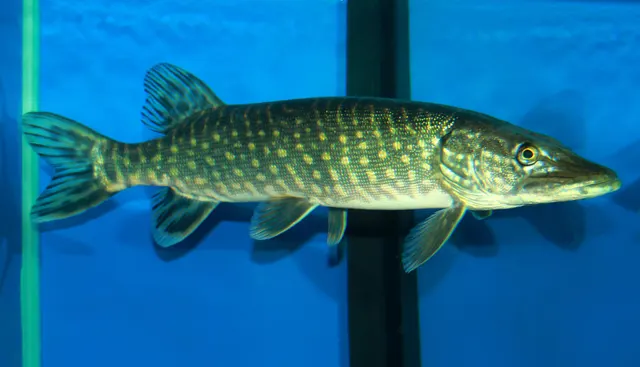 Northern pikeThe dominant freshwater ambush predator of the northern hemisphere: long, cryptic, and built for one violent acceleration rather than pursuit.
Karelj, Public domain, via Wikimedia Commons
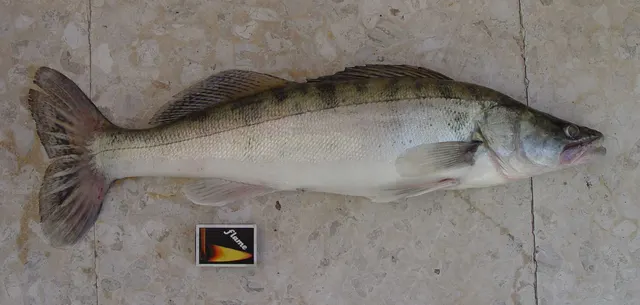 ZanderA shoaling freshwater predator built for hunting in low light and coloured water, and the fish that made a virtue of the conditions pike find difficult.
eLNuko — Public domain, via Wikimedia Commons
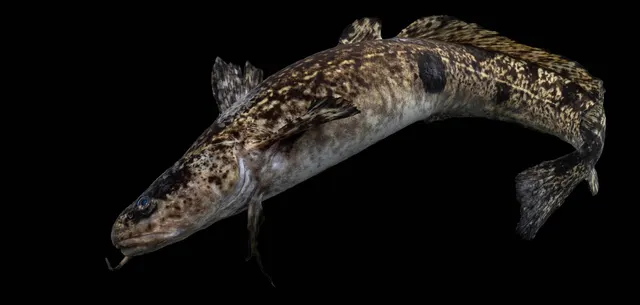 BurbotThe only freshwater cod, a nocturnal cold-water bottom predator with a single chin barbel that spawns under ice in midwinter.
U.S. Fish and Wildlife Service — public domain, via Wikimedia Commons
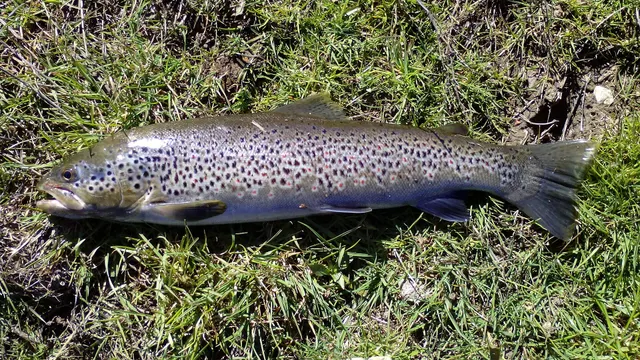 Brown troutA single, extraordinarily plastic species that appears as a tiny hill-stream fish, a deep-bodied loch trout and a silver sea-run migrant — all the same animal.
Robermix, CC0, via Wikimedia Commons
Safety
Drowning and immersion — Can cause serious injury or death
On large lakes and sea ice, a sheet can detach from the shore-fast ice along a crack and be carried offshore by wind with people standing on it. It takes groups rather than individuals, and thickness underfoot gives no warning of it whatever.
What reduces it: Take current local advice from the bodies that monitor that specific water rather than judging by thickness, treat an offshore wind, a thaw or a known crack as a reason not to go, never go alone, and carry ice picks and a throwline and know how to use them beforehand.
Worse when:
- In an offshore wind, which is the condition that detaches and carries the sheet.
- During and after a thaw, and late in the ice season generally.
Cold water shock — Can cause serious injury or death
Baltic and inland water here is cold in every season, so an unexpected immersion produces an involuntary gasp, loss of breathing control and loss of swimming ability within the first minute, regardless of fitness or swimming ability.
What reduces it: Wear flotation rather than carry it, keep a means of calling for help on the person, and treat every wading position, ice hole and boat as a place an immersion can begin.
Weather and lightning — Can cause injury needing treatment
A shallow, nearly enclosed sea with almost no tide responds to wind and pressure instead: a short, steep sea builds within hours on a fetch, and water level can surge well above the expected line during weather that is still offshore.
What reduces it: Read the wind and fetch forecast rather than a tide table, treat a rising wind as this coast's operative warning, and give a small craft a far larger margin than a tidal-coast habit suggests.
Boat safety — Can cause injury needing treatment
The west-Estonian archipelago and the shallow bays carry boulder reefs and shoals a long way offshore with very little water over them, in a sea whose level is set by wind rather than by tide.
What reduces it: Navigate on current charts rather than by eye, treat wind-driven low water as a real reduction in clearance, and keep a small craft's route inside known depth rather than crossing open shoal ground.
Further safety reading
- Cold water shock and immersion — Ice fishing on lakes and lagoons and a long cold open-water season, in a sea whose low salinity makes it freeze where a saltier sea would not.
Check the rules before you fish
Fishing laws, bylaws, access rules, seasons, bait restrictions and permitted methods vary by location and can change. Check the current rules from the relevant authority and the water you intend to fish before fishing.
Check with:
- Current national or regional law for where you are fishing
- Current local bylaws
- The relevant fisheries authority
- The landowner, club or fishery whose water it is
- Any restrictions specific to the species or the method you intend to use
Where to go next
What swims here
- Brown troutSea trout run the short coastal rivers of all three states, which is the fishery that draws travelling anglers to this coast rather than the lakes.
- BurbotThe only freshwater cod, spawning under ice in midwinter, and one of the few European fisheries deliberately prosecuted in the coldest part of the year.
- Northern pikePike run into the brackish Baltic itself here, so the species is met in the sea as well as in lakes — an arrangement that surprises anglers arriving with a purely freshwater model of the fish.
- ZanderNative and abundant in the great lakes and in the Curonian Lagoon, where the brackish water suits it as well as fresh water does.
How people fish here
Rules and access
Sources and evidence
- ICES Advice on fishing opportunities, catch and effort — International Council for the Exploration of the Sea (Scientific institute)Relied on for: Ecoregion description, stock distribution and status, nursery function and the hydrography of the European sea areas assessed, including the Baltic, the North Sea, the Celtic Seas and the Iberian and Biscay shelf.States this directlyCitation checked — the work exists and is described correctly
- FAO Species Identification Guides for Fishery Purposes and the FAO Species Catalogues — Food and Agriculture Organization of the United Nations (Scientific institute)Relied on for: Identification, distribution and habitat association of the fishes and invertebrates of the Mediterranean, the Black Sea and the eastern central Atlantic.States this directlyCitation checked — the work exists and is described correctly
- Freshwater Fishes of the British Isles — HarperCollins (New Naturalist 75), 1992 (Reference work)Relied on for: Distribution, ecology, life history and conservation status of European freshwater fishes, including the migratory salmonids and the cyprinid and percid communities named.States this directlyCitation checked — the work exists and is described correctly
- FishBase: a global information system on fishes — Froese, R. and D. Pauly, eds. — FishBase Consortium (Scientific institute)Relied on for: Recorded distribution, habitat association and life history of the freshwater and migratory species named.States this directlyPassage read and verified
- FishBase: a global information system on fishes — Froese, R. and D. Pauly, eds. — FishBase Consortium (Scientific institute)Relied on for: Recorded distribution, depth range, habitat association, size and biology of the species named.States this directlyPassage read and verified
- The IUCN Red List of Threatened Species — International Union for Conservation of Nature (Conservation authority)Relied on for: Current global and regional conservation assessment for the species named, with the assessment date.Background and mechanism onlyCitation checked — the work exists and is described correctly
- Fishers' Craft and Lettered Art: Tracts on Fishing from the End of the Middle Ages — University of Toronto Press, 1997 (Scientific literature)Relied on for: That European fishing traditions develop around the water and fish available to them, and the historical method of reading such traditions.Background and mechanism onlyCitation checked — the work exists and is described correctly
- General angling website restatements of established technique — Various (Credible secondary source)Relied on for: Widely restated descriptions of regional angling practice, recorded as practitioner consensus rather than as scholarship.Background and mechanism onlyCitation checked — the work exists and is described correctly
Why the 7 connections on this page are here, and the sources
What swims here
Backed by research — 4 connections
Supported by peer-reviewed research or fisheries science. The sources are listed and can be checked.
Brown trout
That a species occurs in these waters, drawn from distribution science and stock assessment. It is a statement about where the animal lives and is not a statement that anybody will catch one, still less where.
- Freshwater Fishes of the British Isles — HarperCollins (New Naturalist 75), 1992 (Reference work)Relied on for: Distribution, habitat requirement and life history of European freshwater fishes, including their occurrence across the continental range named.States this directlyCitation checked — the work exists and is described correctly
- FishBase: a global information system on fishes — Froese, R. and D. Pauly, eds. — FishBase Consortium (Scientific institute)Relied on for: Recorded distribution and habitat association of the freshwater and migratory species named.States this directlyPassage read and verified
Burbot
That a species occurs in these waters, drawn from distribution science and stock assessment. It is a statement about where the animal lives and is not a statement that anybody will catch one, still less where.
- Freshwater Fishes of the British Isles — HarperCollins (New Naturalist 75), 1992 (Reference work)Relied on for: Distribution, habitat requirement and life history of European freshwater fishes, including their occurrence across the continental range named.States this directlyCitation checked — the work exists and is described correctly
- FishBase: a global information system on fishes — Froese, R. and D. Pauly, eds. — FishBase Consortium (Scientific institute)Relied on for: Recorded distribution and habitat association of the freshwater and migratory species named.States this directlyPassage read and verified
Northern pike
That a species occurs in these waters, drawn from distribution science and stock assessment. It is a statement about where the animal lives and is not a statement that anybody will catch one, still less where.
- Freshwater Fishes of the British Isles — HarperCollins (New Naturalist 75), 1992 (Reference work)Relied on for: Distribution, habitat requirement and life history of European freshwater fishes, including their occurrence across the continental range named.States this directlyCitation checked — the work exists and is described correctly
- FishBase: a global information system on fishes — Froese, R. and D. Pauly, eds. — FishBase Consortium (Scientific institute)Relied on for: Recorded distribution and habitat association of the freshwater and migratory species named.States this directlyPassage read and verified
Zander
That a species occurs in these waters, drawn from distribution science and stock assessment. It is a statement about where the animal lives and is not a statement that anybody will catch one, still less where.
- Freshwater Fishes of the British Isles — HarperCollins (New Naturalist 75), 1992 (Reference work)Relied on for: Distribution, habitat requirement and life history of European freshwater fishes, including their occurrence across the continental range named.States this directlyCitation checked — the work exists and is described correctly
- FishBase: a global information system on fishes — Froese, R. and D. Pauly, eds. — FishBase Consortium (Scientific institute)Relied on for: Recorded distribution and habitat association of the freshwater and migratory species named.States this directlyPassage read and verified
How people fish here
What experienced anglers do — 1 connection
Widely and independently recommended by experienced anglers and specialist sources. This is real angling knowledge, not proof: controlled evidence for it is limited, and FishingHQ records it as convention rather than as a demonstrated effect.
Predator fishing
That a discipline is conventionally practised in these waters, drawn from published description of practice rather than from participation data, and labelled as consensus accordingly.
- Sea Angler — Bauer Media (Specialist angling publication)Relied on for: Long-running published description of European sea angling practice by region and destination, including where British anglers travel and what they fish for there.FishingHQ's interpretation of what it saysCitation checked — the work exists and is described correctly
- General angling website restatements of established technique — Various (Credible secondary source)Relied on for: Widely restated descriptions of which disciplines are conventionally practised in the waters named, recorded as practitioner consensus rather than as scholarship.Background and mechanism onlyCitation checked — the work exists and is described correctly
Safety reading
Official guidance — 1 connection
Stated by a fisheries authority, scientific institute or recognised angling body. Authoritative, but summarising rather than demonstrating.
Cold water shock and immersion
A link from the place to the substantial safety topic describing the mechanism that hurts people there, rather than a warning restated in prose on the record itself.
- RNLI water safety guidance: cold water shock and Float to Live — Royal National Lifeboat Institution (Water-safety or diver-training authority)Relied on for: Cold water shock and the immersion response, tidal cut-off, and water-safety guidance for shore anglers and small-craft users.States this directlyPassage read and verified
Rules and access
Official guidance — 1 connection
Stated by a fisheries authority, scientific institute or recognised angling body. Authoritative, but summarising rather than demonstrating.
Licences and permission
This points to the kind of rule that applies rather than to a rule itself. The same question is administered differently in each of these countries, so the page says that the answer is held elsewhere and changes.
- Code of Conduct for Responsible Fisheries — Food and Agriculture Organization of the United Nations, Rome, 1995 (Standards body)Relied on for: The international framework within which national and regional fisheries authorities set, revise and enforce measures, and the principle that the responsible authority rather than a third party holds the current position.Background and mechanism onlyCitation checked — the work exists and is described correctly
- ICES Advice on fishing opportunities, catch and effort — International Council for the Exploration of the Sea (Scientific institute)Relied on for: That the stock advice European measures are set against is produced internationally and revised annually, which is how a national measure changes without the national law changing.States this directlyCitation checked — the work exists and is described correctly
How FishingHQ labels evidence is explained in the evidence policy.