Squid fishing from the shore
Explainer · Last reviewed 2026-08-14
A shore fishery for an animal that lives about a year, comes inshore to breed and die, and is caught on a barbed jig it grabs rather than swallows — which changes almost everything about how it is fished.
Safety: slips, trips and falls — can cause serious injury or death.
Squid fishing from the shore is one of the fastest-growing branches of sea angling in Europe and a long-established one in Japan, where the modern technique and most of its vocabulary come from. It is worth treating as a subject in its own right because almost nothing transfers from fishing for fish.
THE ANIMAL IS NOT HOOKED, IT IS HELD. A squid jig carries a crown of upward-facing barbless spines at the rear rather than a hook. The squid attacks the jig, wraps its arms around it, and the spines hold those arms. Nothing penetrates anything, and the squid can let go at any moment — which is why constant tension matters more here than in any hook fishery, and why a slack line loses the animal immediately.
SO THE RETRIEVE IS THE TECHNIQUE AND THE JIG IS SECONDARY. The established approach is a series of sharp upward rod flicks to make the jig dart, followed by a controlled pause on a slack-but-not-loose line during which the jig sinks nose-down and level. The take happens on the sink almost every time, and it registers as weight rather than as a bite. An angler who retrieves steadily catches very little.
THE FISHERY IS SEASONAL BECAUSE THE ANIMAL'S WHOLE LIFE IS. Squid and cuttlefish live roughly a year, grow fast, come inshore to spawn and die. What arrives in the shallows is a terminal-stage generation at its largest, and the inshore season is that migration. It ends abruptly rather than tailing off, its timing shifts by weeks between years with water temperature, and abundance swings hard between seasons because the population is rebuilt annually rather than accumulated.
DARKNESS AND LIGHT ARE PART OF THE METHOD. Squid feed heavily after dark and are drawn to the edges of lit water, which is why harbour, pier and marina lighting is so productive and why so much of this fishing is done at night.
AND THE GROUND IS SPECIFIC. Squid want structure and something to spawn on — weed, rope, pot lines, rock, harbour walls — over clean ground with reasonable depth close in. A featureless sandy beach holds very few.
Where squid may be taken, in what numbers and by what method varies by jurisdiction and is a matter for the competent authority.
What the jig is doing, and why colour is the wrong argument
Squid jig selection generates more confident advice than almost any other tackle subject in sea angling, and a substantial part of it rests on a premise the biology does not support.
THE JIG IS A GRAB TARGET, NOT A HOOK. The crown of fine barbless spines at the rear points upward and back; the squid engulfs the jig with its arms and the spines catch in the arm tissue. That is why they are barbless — the squid must be held rather than pierced, and a barb would do damage without improving the hold. It is also why unhooking is quick and why released squid are generally in good condition.
THE SINK RATE IS THE MOST IMPORTANT SPECIFICATION AND THE LEAST DISCUSSED. Jigs are made in sizes and weights that sink at different rates, and the whole technique depends on the jig sinking nose-down at a controlled speed through the zone the squid are in. Too fast and it passes them; too slow and the tide sweeps it away from the ground. Matching sink rate to depth and current is the decision that changes catches.
WHICH BRINGS US TO COLOUR. Squid and cuttlefish have a single visual pigment and are very probably colourblind — the record for European squid sets this out — while possessing excellent acuity and polarisation sensitivity that no fish on FishingHQ has. So what varies between a 'pink' and an 'orange' jig is almost certainly brightness, contrast against the background, and reflectance including in the ultraviolet, rather than hue as a person perceives it.
THAT DOES NOT MAKE THE OBSERVATION WRONG. Anglers who report that changing jig changed their catch are probably right; the explanation offered for it is probably wrong. The useful reframing is to think in terms of how visible the jig is at that depth in that light against that background, which is a variable you can reason about, rather than in terms of a colour the animal cannot see.
AND THE CLOTH MATTERS FOR A DIFFERENT REASON. Jigs are wrapped in fabric partly because it holds scent and partly because the texture appears to encourage a squid to hold on for the extra moment that matters. That is practitioner consensus rather than established fact, and it is recorded as such.
What experienced anglers do — why, and the sources (2)
Widely and independently recommended by experienced anglers and specialist sources. This is real angling knowledge, not proof: controlled evidence for it is limited, and FishingHQ records it as convention rather than as a demonstrated effect.
- The Ecology of Vision — Clarendon Press, Oxford, 1979 (Scientific literature)Relied on for: The ecology of vision in aquatic animals, including visual pigments, colour discrimination, polarisation sensitivity and the relationship between eye design and habitat.States this directlyCitation checked — the work exists and is described correctly
- General angling website restatements of established technique — Various (Credible secondary source)Relied on for: Widely restated practice on jig selection and retrieve, recorded as practitioner consensus rather than as tested fact.Background and mechanism onlyCitation checked — the work exists and is described correctly
The ink, the beak and getting one in without wearing it
Landing a squid is straightforward and there are three things worth knowing before the first one, because all three surprise people.
THE INK IS FIRED DELIBERATELY AND ACCURATELY. A squid under stress ejects ink through the funnel, and the funnel is directional — the animal can and does aim it. A squid lifted out of the water pointing at you will ink you, and the stain on clothing is persistent. Landing it pointing away, and giving it a few seconds in the water at the surface to discharge before lifting, avoids most of it. This is not fastidiousness: a face full of ink at night on a harbour wall is a genuine hazard rather than an inconvenience.
THE BEAK IS AT THE CENTRE OF THE ARMS AND IT IS SHARP. A squid has a hard parrot-like beak capable of a real bite, and it sits in the middle of the arm crown — precisely where a hand goes if the animal is grasped from the front. Hold a squid across the mantle from behind, not around the arms.
THE ARMS GRIP AND THE SUCKERS HAVE TEETH. European squid suckers carry chitinous rings, and a large animal gripping a bare forearm is unpleasant. Wet hands, a cloth or light gloves make the whole business easier.
BEYOND THAT, THE ANIMAL IS FRAGILE AND SHORT-LIVED. Squid do not survive rough handling, and one intended for the table should be dispatched promptly — a knife or spike through the head between the eyes is the standard humane method and it also stops the colour change and the ink. One intended for release should be handled in the water and let go, and it will usually swim off strongly.
AND THE CATCH DETERIORATES FAST. Squid are excellent eating and they spoil quickly in warmth. Kept fish should be chilled at once, which is the same time-and-temperature principle that governs every other catch and which matters here because the animal is often taken on warm summer nights.
WHAT MAY BE TAKEN, AND HOW MANY, is a matter for the competent authority and differs between jurisdictions.
What experienced anglers do — why, and the sources (2)
Widely and independently recommended by experienced anglers and specialist sources. This is real angling knowledge, not proof: controlled evidence for it is limited, and FishingHQ records it as convention rather than as a demonstrated effect.
- FishBase: a global information system on fishes — Froese, R. and D. Pauly, eds. — FishBase Consortium (Scientific institute)Relied on for: Life history, growth, longevity, reproductive mode and habitat association recorded for the cephalopod species concerned.States this directlyPassage read and verified
- General angling website restatements of established technique — Various (Credible secondary source)Relied on for: Widely restated practice for squid and cuttlefish fishing, recorded as practitioner consensus rather than as tested fact.Background and mechanism onlyCitation checked — the work exists and is described correctly
Safety
Slips, trips and falls — Can cause serious injury or death
Most shore squid fishing happens at night on harbour walls, piers, marina pontoons and rock, frequently beside deep water with no barrier and no ladder. A slip in the dark on wet or weeded stone puts somebody into cold water at a place they cannot climb out of, and the ink and slime the activity produces makes the surface underfoot worse as the session goes on.
What reduces it: Fish with a light you can work by rather than one you have to hold, wear footwear with grip on wet stone, keep the area around you clear of gear, and know before you start where the nearest ladder or slipway is. A buoyancy aid on an unguarded quayside at night is a reasonable precaution rather than an excessive one, and fishing with somebody else is worth more than any equipment.
Worse when:
- After dark, which is when most of this fishing is done.
- On pontoons and steps that are wet, weeded or moving.
- In cold months, when immersion incapacitates within minutes.
Further safety reading
- Night fishing safety — Almost all shore squid fishing happens after dark on harbour walls, pontoons and rock beside deep unguarded water.
Where to go next
Fish this applies to
Related reading
More explainers
Not related to this page — just the rest of the section. There is little else joined to this subject yet, and a short page should still lead somewhere.
Sources and evidence
- FishBase: a global information system on fishes — Froese, R. and D. Pauly, eds. — FishBase Consortium (Scientific institute)Relied on for: Life history, growth, longevity, reproductive mode and habitat association recorded for the cephalopod species concerned.States this directlyPassage read and verified
- General angling website restatements of established technique — Various (Credible secondary source)Relied on for: Widely restated practice for squid and cuttlefish fishing, recorded as practitioner consensus rather than as tested fact.Background and mechanism onlyCitation checked — the work exists and is described correctly
Why the 4 connections on this page are here, and the sources
Fish this applies to
What experienced anglers do — 2 connections
Widely and independently recommended by experienced anglers and specialist sources. This is real angling knowledge, not proof: controlled evidence for it is limited, and FishingHQ records it as convention rather than as a demonstrated effect.
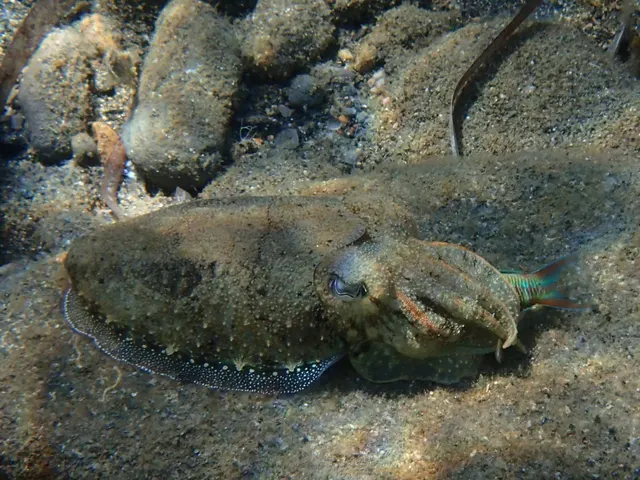
Common cuttlefish
A species joined to the practice that targets it, so a reader can move between the animal and the fishing without either page restating the other.
- General angling website restatements of established technique — Various (Credible secondary source)Relied on for: Widely restated practice associating this discipline with this place, recorded as practitioner consensus rather than as tested fact.Background and mechanism onlyCitation checked — the work exists and is described correctly
- Fishers' Craft and Lettered Art: Tracts on Fishing from the End of the Middle Ages — University of Toronto Press, 1997 (Scientific literature)Relied on for: That fishing traditions develop around the water and fish available to them, and the historical method of reading such traditions.States this directlyCitation checked — the work exists and is described correctly
European squid
A species joined to the practice that targets it, so a reader can move between the animal and the fishing without either page restating the other.
- General angling website restatements of established technique — Various (Credible secondary source)Relied on for: Widely restated practice associating this discipline with this place, recorded as practitioner consensus rather than as tested fact.Background and mechanism onlyCitation checked — the work exists and is described correctly
- Fishers' Craft and Lettered Art: Tracts on Fishing from the End of the Middle Ages — University of Toronto Press, 1997 (Scientific literature)Relied on for: That fishing traditions develop around the water and fish available to them, and the historical method of reading such traditions.States this directlyCitation checked — the work exists and is described correctly
Related reading
Backed by research — 1 connection
Supported by peer-reviewed research or fisheries science. The sources are listed and can be checked.
When and where squid come inshore
Two concept records covering adjacent halves of one subject, joined so neither is read in isolation.
- General angling website restatements of established technique — Various (Credible secondary source)Relied on for: Widely restated practice associating this discipline with this place, recorded as practitioner consensus rather than as tested fact.Background and mechanism onlyCitation checked — the work exists and is described correctly
- Fishers' Craft and Lettered Art: Tracts on Fishing from the End of the Middle Ages — University of Toronto Press, 1997 (Scientific literature)Relied on for: That fishing traditions develop around the water and fish available to them, and the historical method of reading such traditions.States this directlyCitation checked — the work exists and is described correctly
Safety reading
Official guidance — 1 connection
Stated by a fisheries authority, scientific institute or recognised angling body. Authoritative, but summarising rather than demonstrating.
Night fishing safety
A practice joined to the safety topic that explains the hazard genuinely characteristic of it.
- RNLI water safety guidance: cold water shock and Float to Live — Royal National Lifeboat Institution (Water-safety or diver-training authority)Relied on for: Cold water shock and the immersion response, shore angling hazards, small-craft guidance and the circumstances in which water users are most often killed.States this directlyPassage read and verified
- RoSPA water safety information and UK accidental drowning statistics — Royal Society for the Prevention of Accidents (Water-safety or diver-training authority)Relied on for: Accidental drowning statistics and the circumstances in which recreational water users are most often killed.Background and mechanism onlyPassage read and verified
How FishingHQ labels evidence is explained in the evidence policy.