Redds, spawning, and what happens after
Explainer · Last reviewed 2026-08-14
A redd is a nest cut in river gravel by the female's tail, and everything about whether the next generation survives depends on water continuing to flow through that gravel for months afterwards.
A REDD IS A DEPRESSION CUT IN CLEAN RIVER GRAVEL. The female turns on her side and beats her tail, lifting stones and fine material downstream and excavating a hollow. Eggs are deposited in it, fertilised, and then covered by cutting a further depression immediately upstream, whose displaced gravel falls over the eggs. The result is a mound of loosened, cleaned gravel with eggs buried inside it — visible from the bank as a pale, disturbed patch on the riverbed.
WHY THE GRAVEL MATTERS MORE THAN ANYTHING ELSE. The eggs are not simply hidden; they are placed in a matrix through which water flows. That flow delivers oxygen and removes waste for the whole incubation period, which in cold water can be months. If the gravel becomes clogged with fine sediment, the flow stops, and the eggs suffocate. This is the single largest freshwater cause of failure in salmonid recruitment, and it is why sediment from land drainage, bank erosion and run-off is such a serious issue on spawning rivers — considerably more serious than it looks, because the damage happens invisibly inside the riverbed.
WHAT HAPPENS AFTER HATCHING. The fish emerges as an ALEVIN, still carrying a yolk sac, and stays within the gravel until the yolk is used up. It then emerges as a FRY, takes up a position and begins feeding. It becomes a PARR as it grows and takes a territory, and the survivors eventually smolt and go to sea. Mortality across those stages is enormous — the great majority of eggs never produce an adult — which is why the numbers of eggs are so large and why any additional pressure at a particular stage has an outsized effect.
WHAT HAPPENS TO THE ADULTS. Pacific salmon species die after spawning, without exception, and their carcasses are a major nutrient input to the river. Atlantic salmon can survive and return to sea to spawn again, though most do not; brown trout, and most other salmonids, spawn repeatedly.
AND THE PRACTICAL OBLIGATION THAT FOLLOWS. Redds are fragile, they are on the bed of the river where people wade, and a boot through a redd destroys a season's eggs from that pair. Anglers on spawning rivers in the spawning season should know what a redd looks like — pale disturbed gravel, often in the tail of a pool or the head of a riffle — and stay off it. Many fisheries close at that season for exactly this reason, and where they do not, the obligation does not disappear.
Check the rules before you fish
Fishing laws, bylaws, access rules, seasons, bait restrictions and permitted methods vary by location and can change. Check the current rules from the relevant authority and the water you intend to fish before fishing.
Check with:
- Current national or regional law for where you are fishing
- Current local bylaws
- The relevant fisheries authority
- The landowner, club or fishery whose water it is
- Any restrictions specific to the species or the method you intend to use
Where to go next
Fish this applies to
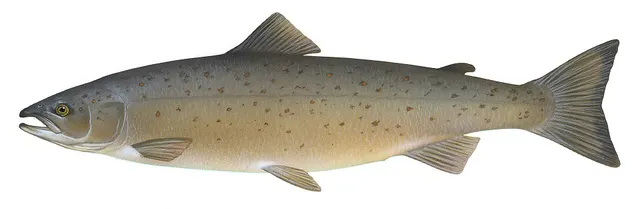 Atlantic salmonEverything about whether the next generation survives depends on water continuing to flow through the spawning gravel for months, which makes fine sediment the largest freshwater threat to recruitment.
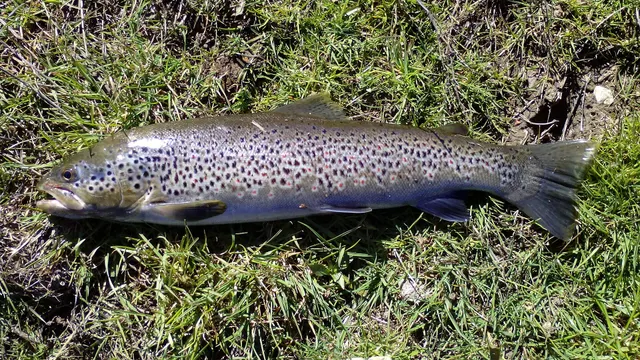 Brown troutTrout cut redds in the same way and face the same sediment problem, which is why a river managed for one is usually being managed for both.
Related reading
Rules and access
Environment and conservation
Sources and evidence
- Freshwater Fishes of the British Isles — HarperCollins (New Naturalist 75), 1992 (Reference work)Relied on for: Biology, life history, distribution and conservation status of British and Irish freshwater and diadromous fishes.States this directlyCitation checked — the work exists and is described correctly
- NASCO conservation and management of North Atlantic salmon — North Atlantic Salmon Conservation Organization (Government fisheries body)Relied on for: The conservation and management of North Atlantic salmon, including life history, run timing, marine survival trends and identified drivers.States this directlyCitation checked — the work exists and is described correctly
- JNCC species and habitat conservation advice — Joint Nature Conservation Committee (Conservation authority)Relied on for: Conservation status, designation and monitoring of species and habitats in the United Kingdom.Background and mechanism onlyCitation checked — the work exists and is described correctly
Why the 5 connections on this page are here, and the sources
Fish this applies to
Backed by research — 2 connections
Supported by peer-reviewed research or fisheries science. The sources are listed and can be checked.
Atlantic salmon
Why it works, and what that rests on. The underlying claims are documented in the fisheries science and reference literature cited rather than restated from practice.
- NASCO conservation and management of North Atlantic salmon — North Atlantic Salmon Conservation Organization (Government fisheries body)Relied on for: The conservation and management of North Atlantic salmon, including life history, run timing, marine survival and identified drivers.States this directlyCitation checked — the work exists and is described correctly
- Freshwater Fishes of the British Isles — HarperCollins (New Naturalist 75), 1992 (Reference work)Relied on for: Biology and life history of British and Irish salmonids, including spawning, juvenile stages and migration.States this directlyCitation checked — the work exists and is described correctly
Brown trout
Why it works, and what that rests on. The underlying claims are documented in the fisheries science and reference literature cited rather than restated from practice.
- NASCO conservation and management of North Atlantic salmon — North Atlantic Salmon Conservation Organization (Government fisheries body)Relied on for: The conservation and management of North Atlantic salmon, including life history, run timing, marine survival and identified drivers.States this directlyCitation checked — the work exists and is described correctly
- Freshwater Fishes of the British Isles — HarperCollins (New Naturalist 75), 1992 (Reference work)Relied on for: Biology and life history of British and Irish salmonids, including spawning, juvenile stages and migration.States this directlyCitation checked — the work exists and is described correctly
Related reading
Backed by research — 1 connection
Supported by peer-reviewed research or fisheries science. The sources are listed and can be checked.
Spawning triggers
Why it works, and what that rests on. The underlying claims are documented in the fisheries science and reference literature cited rather than restated from practice.
- FishBase: a global information system on fishes — Froese, R. and D. Pauly, eds. — FishBase Consortium (Scientific institute)Relied on for: Life history, diet, migration pattern, habitat association and depth range recorded for the species concerned.States this directlyPassage read and verified
- Freshwater Fishes of the British Isles — HarperCollins (New Naturalist 75), 1992 (Reference work)Relied on for: Biology, life history, distribution and conservation status of British and Irish freshwater and diadromous fishes.States this directlyCitation checked — the work exists and is described correctly
Rules and access
Official guidance — 1 connection
Stated by a fisheries authority, scientific institute or recognised angling body. Authoritative, but summarising rather than demonstrating.
Close seasons
This points to the kind of rule that applies rather than to a rule itself. The page already carries the notice that requirements vary; this says WHICH rules bear on it, which turns a generic warning into a route to the body that sets them.
- The IUCN Red List of Threatened Species — International Union for Conservation of Nature (Conservation authority)Relied on for: The conservation assessment of the species concerned, which is the basis on which protection measures are argued for and set.States this directlyCitation checked — the work exists and is described correctly
- ICES Advice on fishing opportunities, catch and effort — International Council for the Exploration of the Sea (Scientific institute)Relied on for: Stock status and the advice on which management and protection measures for the stocks concerned are set and revised.States this directlyCitation checked — the work exists and is described correctly
Environment and conservation
Official guidance — 1 connection
Stated by a fisheries authority, scientific institute or recognised angling body. Authoritative, but summarising rather than demonstrating.
Habitat damage from bank and shore access
An environmental effect attached to the practice that causes it, resting on guidance and monitoring published by the responsible bodies rather than on advocacy.
- JNCC species and habitat conservation advice — Joint Nature Conservation Committee (Conservation authority)Relied on for: Conservation status, designation, monitoring and protection of species and habitats in the United Kingdom.States this directlyCitation checked — the work exists and is described correctly
- Environment Agency fisheries management, byelaws and rod licensing information — Environment Agency (Government fisheries body)Relied on for: The structure of freshwater fisheries management including habitat protection, stocking consent and fishery regulation.States this directlyCitation checked — the work exists and is described correctly
How FishingHQ labels evidence is explained in the evidence policy.