How to keep lobworms and worms alive
Keeping lobworms and worms in usable condition, and what follows for the water it came from.
Why keeping it alive matters
A lobworm's whole value is that it writhes. It is a large, high-scent, high-movement bait and a dead one is a limp brown object that has lost most of what made it attractive. Worms are also easily damaged in ways that are not obvious until they are on the hook — a worm that has been crushed, dried or chilled too hard goes soft and breaks up on the cast.
The container
A deep container with a breathable lid, in the dark. Worms burrow, so depth matters more than surface area here — the opposite of maggots. A traditional wooden or polystyrene worm box works because it insulates and breathes. Plastic is acceptable if it is ventilated and kept out of the warm.
Temperature
Cool and stable, and never near freezing. Worms tolerate cool conditions well and warm ones badly; a worm box left in the sun is a worm box of casualties. Cool is a principle rather than a number here, and it matters more that the temperature does not swing than that it hits any particular value.
Oxygen
No aeration, but the bedding must stay open and unpacked. Worms breathe through the skin and need damp, airy bedding rather than a compressed sodden mass. Bedding that has been squashed down into a solid block is effectively suffocating them, and the fix is to loosen and replace it rather than to add water.
What to keep it in
Damp, not wet, bedding — shredded newspaper, coir, or a proprietary worm bedding. The test is that a handful squeezed hard yields a drop or two and no more. Too dry and the worms dehydrate and go stringy; too wet and the bedding sours and they drown. Removing dead worms promptly matters, because one decomposing worm will foul the bedding around it.
How long it keeps
Weeks in good conditions and a day in bad ones. Worms keep considerably better than most live baits provided the bedding is right and the temperature is cool, and toughening them by keeping them in slightly drier bedding for a while before use is a long-established practice among anglers.
Signs it is going wrong
Catching these early is the difference between losing a few and losing the lot.
- Worms lying on the surface of the bedding rather than burrowing into it.
- Yellowish, swollen or ringed segments, or worms going limp and stringy.
- A sour or ammoniacal smell from the bedding rather than a clean earthy one.
- Bedding that has collapsed into a wet compacted mass at the bottom of the box.
- Worms breaking apart when lifted, which indicates they have already deteriorated.
Transporting it
In the bedding, in a cool insulated container, out of the sun. Worms travel well if they are not shaken into a compacted mass and not allowed to warm up. Taking only the session's worms to the bank in a small tub, and leaving the main stock cool at home or in a cool box, keeps the bulk in good condition.
What not to do
Each of these is a common and avoidable way of killing this bait.
- Do not soak the bedding to keep worms moist — wet bedding sours and drowns them.
- Do not leave the box in direct sun or in a warm vehicle.
- Do not leave dead worms in with living ones; remove them as soon as they are noticed.
- Do not return worms that have been on the bank all day into clean stock without checking them.
- Do not tip unused worms into the water or release them into a garden or bank different from where they came from.
Biosecurity
Worms are terrestrial and the direct pathogen risk to fish is small, but the bedding and any water associated with them are not sterile, and moving worms between countries or regions can move soil organisms with them. The rule that matters is the general one: do not tip bait, bedding or water from one place into another. Composted or commercial bedding kept separate from garden soil reduces the risk of moving anything unintended.
Welfare
Worms are invertebrates, and proportionate care means not holding far more than needed, not letting a box dry out or sour, and not keeping stock indefinitely in conditions that are slowly deteriorating. Removing dead individuals promptly is both a welfare measure and the single most effective way to keep the rest alive.
Unused bait
Keep unused worms in their bedding for the next session — they store better than almost any other live bait, so disposal is usually unnecessary. Where worms must be discarded, put them in household compost or waste rather than into the water or onto the bank of a fishery.
Rules vary, and they vary a lot
Collecting, transporting, keeping and using live bait are regulated differently almost everywhere, and some of these baits may not be used at all in some waters. Restrictions commonly cover where and how much may be collected, whether live bait may be moved between waters, whether a species may be used as bait at all, and whether a licence or permit is required. FishingHQ does not state what any rule is or where it applies — check with the authority responsible for the water and the shore you intend to use before collecting or using live bait.
Check the rules before you fish
Fishing laws, bylaws, access rules, seasons, bait restrictions and permitted methods vary by location and can change. Check the current rules from the relevant authority and the water you intend to fish before fishing.
Check with:
- Current national or regional law for where you are fishing
- Current local bylaws
- The relevant fisheries authority
- The landowner, club or fishery whose water it is
- Any restrictions specific to the species or the method you intend to use
The full bait record
This page covers keeping lobworms and worms alive. The Lobworms and worms record covers the whole lifecycle — identifying it, obtaining it responsibly, preparing it, presenting it and disposing of it.
What this bait is for
The fish it catches, how it is fished and what you present it on.
Fish it catches
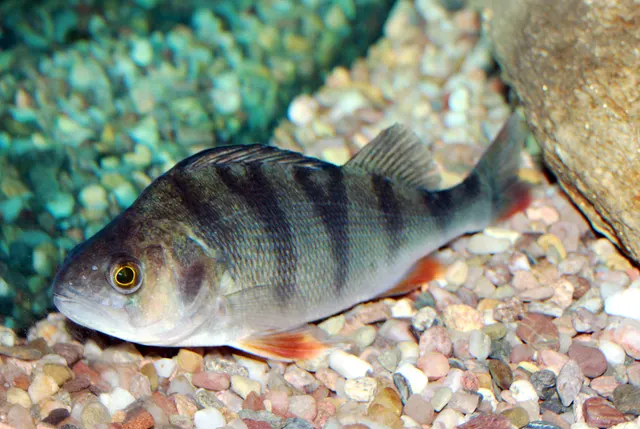 European perchA worm is the bait that catches a perch when nothing else will, and the one most people have access to.
- GudgeonA fragment of worm on a small hook, fished on the bottom, is the most reliable gudgeon bait there is — the barbels find it by scent in water where a sight feeder could not.
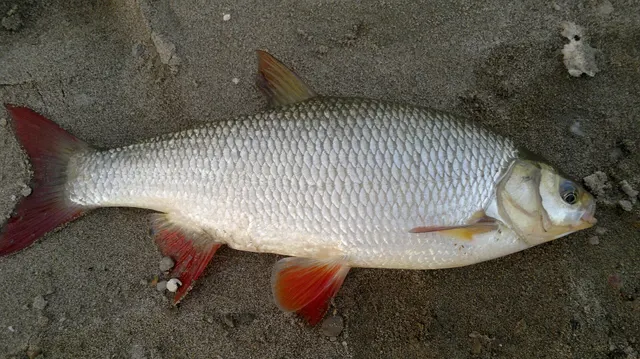 IdeWorm baits fished on float and feeder tackle in larger rivers.
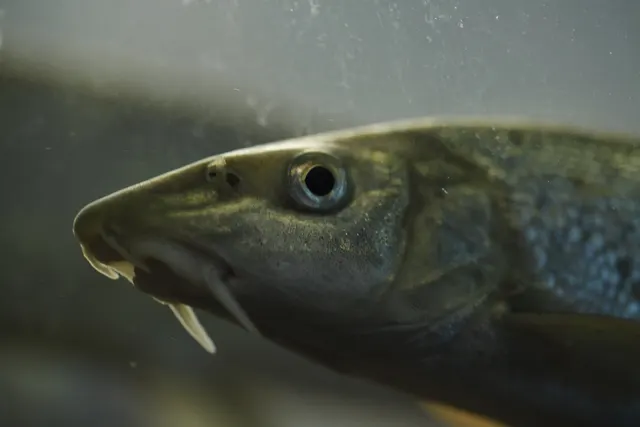 BarbelA powerful, streamlined river cyprinid built for holding station in fast water — and the hardest-fighting freshwater fish most British anglers will meet.
How it is fished
Why the 6 connections on this page are here, and the sources
Fish it catches
What experienced anglers do — 4 connections
Widely and independently recommended by experienced anglers and specialist sources. This is real angling knowledge, not proof: controlled evidence for it is limited, and FishingHQ records it as convention rather than as a demonstrated effect.
European perch
Long-established and independently described.
- Coarse Fishing — A. & C. Black, 1912 (Specialist angling publication)Relied on for: Worm baits for perch and general coarse fishing.Citation checked — the work exists and is described correctly
- Angling Times — Bauer Media (Specialist angling publication)Relied on for: Contemporary worm practice for perch.Citation checked — the work exists and is described correctly
Gudgeon
A statement about bait convention for a species, which is practice rather than biology.
- Coarse Fishing — A. & C. Black, 1912 (Specialist angling publication)Relied on for: Established coarse angling practice, including method selection, presentation and the reasoning behind them.States this directlyCitation checked — the work exists and is described correctly
- Freshwater Fishing — Macdonald & Jane's, 1975 (Specialist angling publication)Relied on for: Freshwater angling technique and the principles behind method selection.States this directlyCitation checked — the work exists and is described correctly
- General angling website restatements of established technique — Various (Credible secondary source)Relied on for: Widely restated angling practice, recorded as consensus rather than as scholarship.Background and mechanism onlyCitation checked — the work exists and is described correctly
Ide
A practitioner claim about tackle commonly used for Leuciscus idus.
- General angling website restatements of established technique — Various (Credible secondary source)Relied on for: Widely restated practitioner accounts of this presentation for ide.Citation checked — the work exists and is described correctly
- Angling Times — Bauer Media (Specialist angling publication)Relied on for: Practitioner treatment of comparable presentations for the species group.Citation checked — the work exists and is described correctly
Barbel
Established river practice, independently described.
- Freshwater Fishing — Macdonald & Jane's, 1975 (Specialist angling publication)Relied on for: Worm baits for barbel and chub in rivers.Citation checked — the work exists and is described correctly
- Angling Times — Bauer Media (Specialist angling publication)Relied on for: Contemporary worm practice for barbel.Citation checked — the work exists and is described correctly
How it is fished
What experienced anglers do — 2 connections
Widely and independently recommended by experienced anglers and specialist sources. This is real angling knowledge, not proof: controlled evidence for it is limited, and FishingHQ records it as convention rather than as a demonstrated effect.
Float fishing
The worm record's stated presentation error is burying the worm so nothing moves. A float holds a worm clear of the bottom with both ends free, which is the presentation that error is defined against.
- Coarse Fishing — A. & C. Black, 1912 (Specialist angling publication)Relied on for: Specialist treatment of which bait or lure family this technique is fished with.States this directlyCitation checked — the work exists and is described correctly
- Angling Times — Bauer Media (Specialist angling publication)Relied on for: The independently restated practitioner pairing of this technique with this family.Background and mechanism onlyCitation checked — the work exists and is described correctly
Ledgering
The worm is the oldest bottom bait and needs no buoyancy or visibility to work. Ledgering presents it on the bottom in flow or at range, which are the two conditions the float page names as its own limitations.
- Coarse Fishing — A. & C. Black, 1912 (Specialist angling publication)Relied on for: Specialist treatment of which bait or lure family this technique is fished with.States this directlyCitation checked — the work exists and is described correctly
- Angling Times — Bauer Media (Specialist angling publication)Relied on for: The independently restated practitioner pairing of this technique with this family.Background and mechanism onlyCitation checked — the work exists and is described correctly
Reviewed 2026-08-10.