Turbot vs Brill
How to tell them apart, and what follows from getting it right.
Why they get confused
Two left-eyed flatfish taken over the same sand and gravel ground, frequently in the same drift, and similar enough in outline that they are routinely landed together and sorted afterwards. Both are highly valued, and in most European waters they carry different size limits.
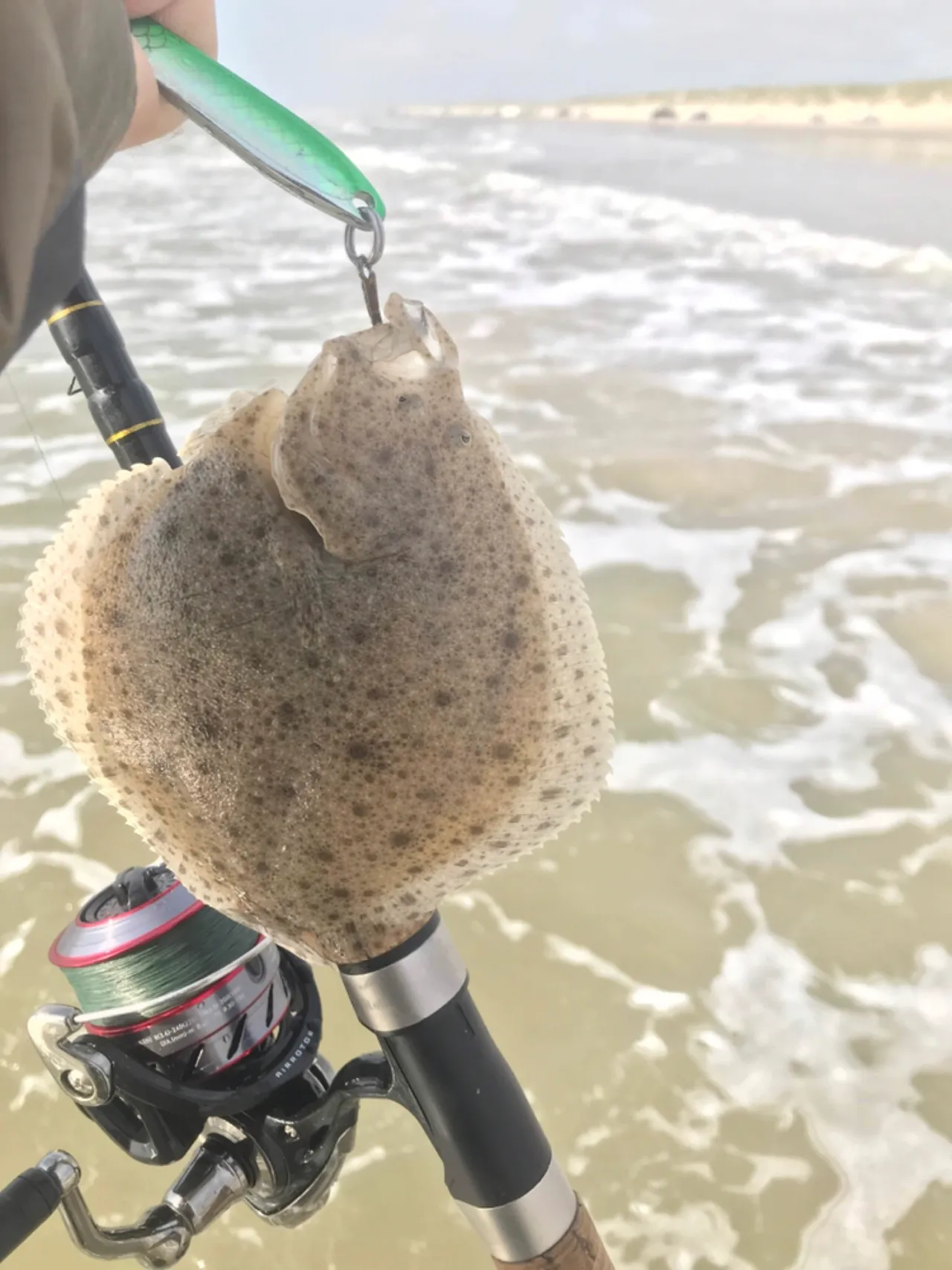
Turbot
Scophthalmus maximus — Scophthalmidae
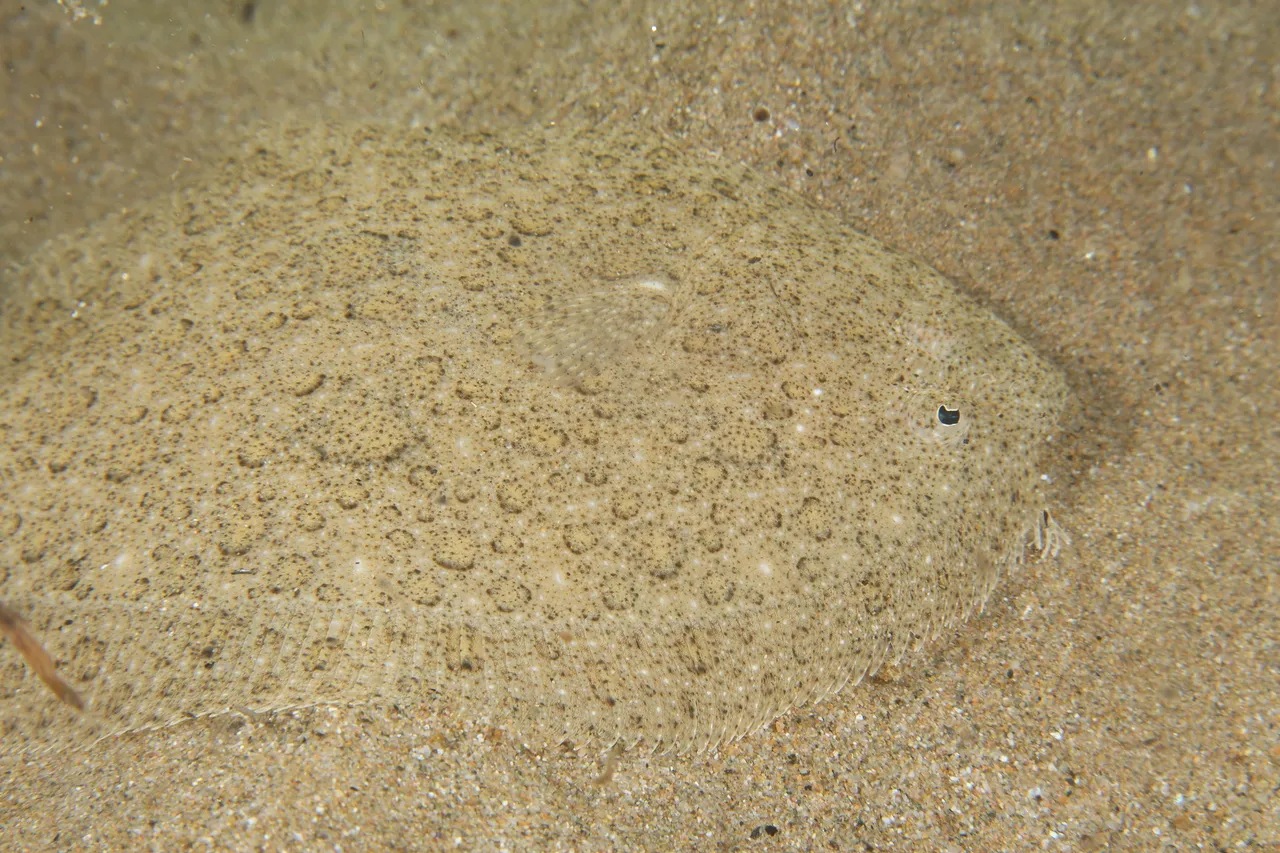
Brill
Scophthalmus rhombus — Scophthalmidae
The differences
Each difference is marked with how far it can be trusted on its own. A single diagnostic character settles the identification; suggestive ones only narrow it.
| Character | Turbot | Brill | Reliability |
|---|---|---|---|
| Skin textureIdentification | Bony tubercles scattered over the upper surface, unmistakably rough under a hand. | Smooth skin with small scales and no tubercles at all. | Diagnostic on its own |
| Front of the dorsal finIdentification | No free rays at the front of the dorsal fin. | The first few dorsal rays free and fringed, standing clear of the membrane. | Diagnostic on its own |
| Body outlineIdentification | Broad and almost circular, noticeably wider relative to length. | More oval, less extreme in width relative to length. | Supporting — use with others |
| Maximum sizeSize | Reaches a considerably larger maximum size than brill. | Smaller-growing, with far fewer very large individuals. | Suggestive only — varies |
Why it matters
Minimum sizes differ for the two across most of their shared range, and hybrids occur, which makes the texture check worth doing rather than assuming. Running a hand over the upper surface settles it in a second and works in the dark.
The full records
This page compares two species. Each of them has a complete record covering biology, behaviour, handling and the evidence behind all of it.
More about turbot
Where it lives, how it is caught, and what else it is confused with.
Similar and related fish
How it is caught
Gear for this fish
Where it lives
Why the 6 connections on this page are here, and the sources
Similar and related fish
Backed by research — 1 connection
Supported by peer-reviewed research or fisheries science. The sources are listed and can be checked.
Brill
An identification comparison naming both binomials: Scophthalmus maximus and Scophthalmus rhombus.
- FishBase: a global information system on fishes — Froese, R. and D. Pauly, eds. — FishBase Consortium (Scientific institute)Relied on for: Morphological and distributional data for Scophthalmus maximus and for Scophthalmus rhombus.States this directlyPassage read and verified
- The IUCN Red List of Threatened Species — International Union for Conservation of Nature (Conservation authority)Relied on for: Separate assessments treating Scophthalmus maximus and Scophthalmus rhombus as distinct species.States this directlyCitation checked — the work exists and is described correctly
How it is caught
What experienced anglers do — 2 connections
Widely and independently recommended by experienced anglers and specialist sources. This is real angling knowledge, not proof: controlled evidence for it is limited, and FishingHQ records it as convention rather than as a demonstrated effect.
Drift fishing
A practitioner claim about how Scophthalmus maximus is commonly fished, following from where and how it feeds.
- General angling website restatements of established technique — Various (Credible secondary source)Relied on for: Widely restated practitioner accounts of fishing for turbot.Citation checked — the work exists and is described correctly
- Sea Angler — Bauer Media (Specialist angling publication)Relied on for: Practitioner treatment of the methods used for turbot and comparable species.Citation checked — the work exists and is described correctly
Ledgering
A practitioner claim about how Scophthalmus maximus is commonly fished, following from where and how it feeds.
- General angling website restatements of established technique — Various (Credible secondary source)Relied on for: Widely restated practitioner accounts of fishing for turbot.Citation checked — the work exists and is described correctly
- Sea Angler — Bauer Media (Specialist angling publication)Relied on for: Practitioner treatment of the methods used for turbot and comparable species.Citation checked — the work exists and is described correctly
Gear for this fish
What experienced anglers do — 2 connections
Widely and independently recommended by experienced anglers and specialist sources. This is real angling knowledge, not proof: controlled evidence for it is limited, and FishingHQ records it as convention rather than as a demonstrated effect.
Fish strip and cut bait
A practitioner claim about tackle commonly used for Scophthalmus maximus.
- General angling website restatements of established technique — Various (Credible secondary source)Relied on for: Widely restated practitioner accounts of this presentation for turbot.Citation checked — the work exists and is described correctly
- Angling Times — Bauer Media (Specialist angling publication)Relied on for: Practitioner treatment of comparable presentations for the species group.Citation checked — the work exists and is described correctly
Sand eel
A practitioner claim about tackle commonly used for Scophthalmus maximus.
- General angling website restatements of established technique — Various (Credible secondary source)Relied on for: Widely restated practitioner accounts of this presentation for turbot.Citation checked — the work exists and is described correctly
- Angling Times — Bauer Media (Specialist angling publication)Relied on for: Practitioner treatment of comparable presentations for the species group.Citation checked — the work exists and is described correctly
Where it lives
Backed by research — 1 connection
Supported by peer-reviewed research or fisheries science. The sources are listed and can be checked.
Inshore ground
A habitat association for Scophthalmus maximus taken from the environment and distribution data on its FishBase summary.
- FishBase: a global information system on fishes — Froese, R. and D. Pauly, eds. — FishBase Consortium (Scientific institute)Relied on for: The environment, depth range and habitat description recorded for Scophthalmus maximus.States this directlyPassage read and verified
Reviewed 2026-08-10. FishingHQ does not state what any rule is or where any rule applies. Where this page says the two species are managed differently, that is a reason to check the authority for the water you are on — not a statement of what it requires.