Dusky flathead vs Sand flathead
How to tell them apart, and what follows from getting it right.
Why they get confused
Two flathead over the same Australian sand, both taken on the same drift and the same lure, both flat-headed and sandy-mottled with the eyes on top. Small dusky flathead and adult sand flathead overlap squarely in size, and because both change tone to match whatever they have been lying on, the colour a reader instinctively reaches for is the least useful thing about either.
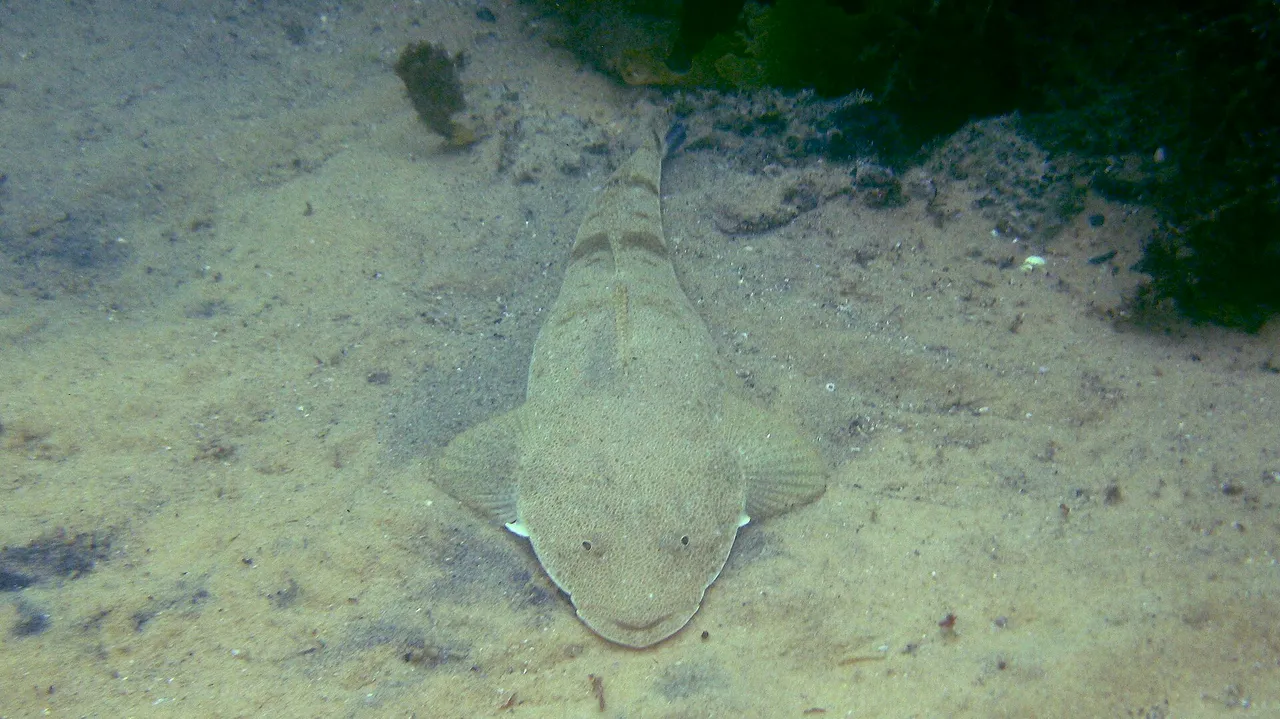
Dusky flathead
Platycephalus fuscus — Platycephalidae
._(8427783681).jpg)
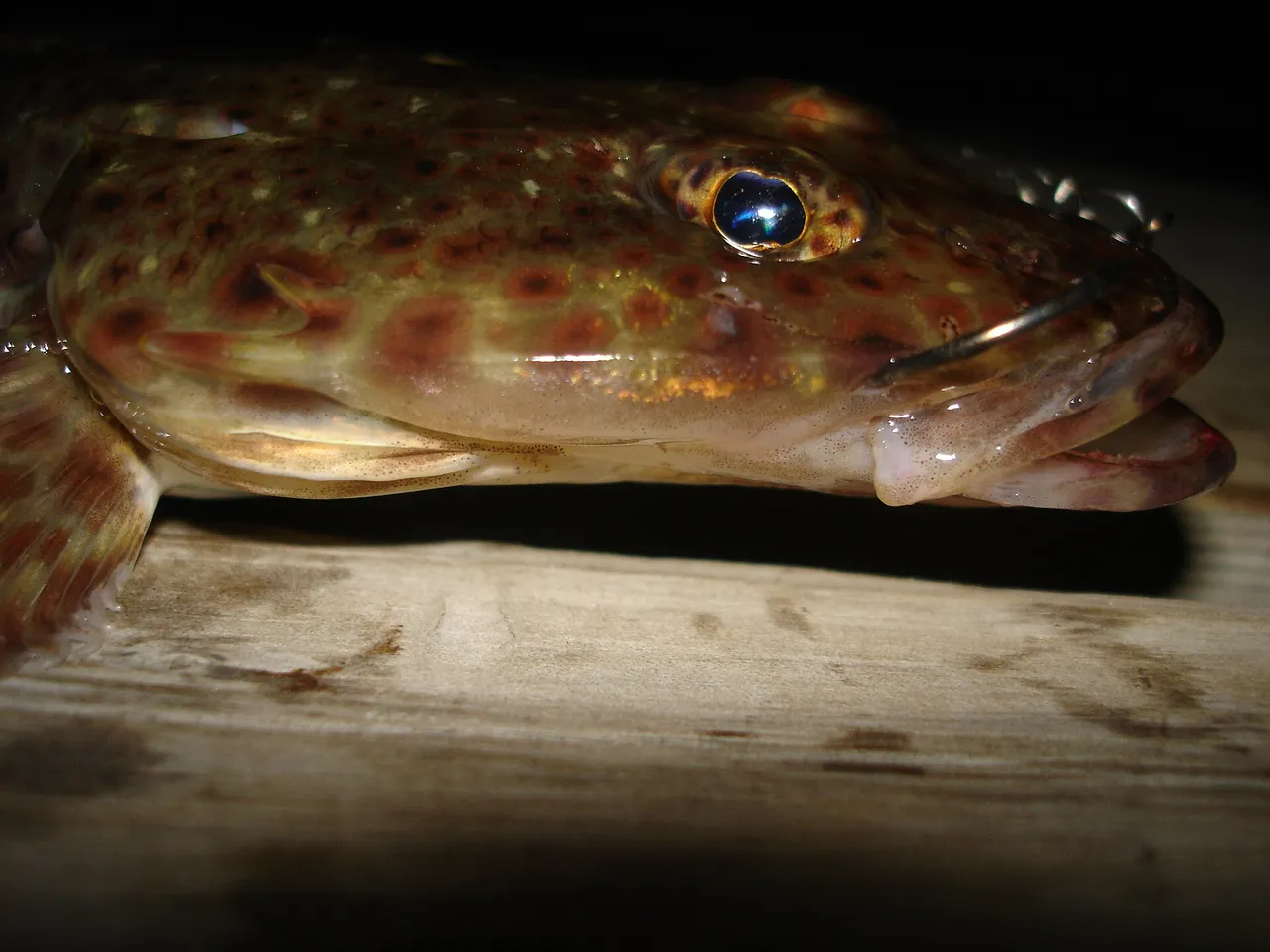
Sand flathead
Platycephalus bassensis — Platycephalidae

The differences
Each difference is marked with how far it can be trusted on its own. A single diagnostic character settles the identification; suggestive ones only narrow it.
| Character | Dusky flathead | Sand flathead | Reliability |
|---|---|---|---|
| The mark on the tailIdentification | One large, distinct dark spot low on the caudal fin, present at every size and hard to miss once you know to look. | Scattered dark blotches across the tail with no single dominant spot. | Diagnostic on its own |
| How the flank markings are arrangedIdentification | Coarse, irregular mottling that never organises itself into lines. | Small brown spots in fine, closely spaced, regular rows following the body — geometry rather than hue, which is why it survives the ground the fish was on. | Diagnostic on its own |
| The size the fish reachesSize | A much larger fish, with rod-caught specimens well into double figures of kilos and FishBase recording a maximum of 15 kg. | FishBase records a maximum of 46 cm and 3.1 kg; most rod-caught fish are well under a kilo. | Supporting — use with others |
| Where each is usually workingRange | Estuaries, bays and the lower reaches of coastal rivers along the east coast, often well into brackish water. | Open sand in bays and along the southern coast, including Tasmanian and Victorian waters where dusky flathead thins out. | Supporting — use with others |
| Spines on the gill coverHandling | Sharp opercular and preopercular spines, and on a large fish they are substantial enough to do real damage to a hand. | The same spines on a much smaller head, no less sharp for it — this is a family character and it is the reason neither is gripped across the head. | Suggestive only — varies |
Why it matters
Flathead are among the most-caught fish in Australian estuaries and the two species are managed differently: minimum and maximum sizes, and bag limits, differ between them and between states, and dusky flathead in particular is subject to slot limits designed to protect large breeding females. An angler who cannot separate the two cannot apply the rules they are fishing under. The current rules of the state fisheries authority are the only source for what those are. Handling matters too, and for the same reason both pages say it: the spines are on the gill cover, they are sharp on a fish of any size, and a flathead is lipped or netted rather than gripped.
The full records
This page compares two species. Each of them has a complete record covering biology, behaviour, handling and the evidence behind all of it.
More about dusky flathead
Where it lives, how it is caught, and what else it is confused with.
Similar and related fish
How it is caught
Gear for this fish
Where it lives
Why the 6 connections on this page are here, and the sources
Similar and related fish
Backed by research — 1 connection
Supported by peer-reviewed research or fisheries science. The sources are listed and can be checked.
Sand flathead
An identification comparison naming both binomials: Platycephalus bassensis and Platycephalus fuscus.
- FishBase: a global information system on fishes — Froese, R. and D. Pauly, eds. — FishBase Consortium (Scientific institute)Relied on for: Morphological and distributional data for Platycephalus bassensis and for Platycephalus fuscus.States this directlyPassage read and verified
- The IUCN Red List of Threatened Species — International Union for Conservation of Nature (Conservation authority)Relied on for: Separate assessments treating Platycephalus bassensis and Platycephalus fuscus as distinct species.States this directlyCitation checked — the work exists and is described correctly
How it is caught
What experienced anglers do — 3 connections
Widely and independently recommended by experienced anglers and specialist sources. This is real angling knowledge, not proof: controlled evidence for it is limited, and FishingHQ records it as convention rather than as a demonstrated effect.
Kayak fishing
The page names kayaks explicitly among the platforms. On shallow estuary flats the kayak is not merely a way of getting there — it is what allows the water to be fished without pushing the fish off it.
- Australian state recreational crabbing guidance: gear, limits and berried females — Australian state fisheries agencies and Australian crabbing guidance (Credible secondary source)Relied on for: Documents which fishery and which technique takes this species.States this directlyCitation checked — the work exists and is described correctly
- FishBase: a global information system on fishes — Froese, R. and D. Pauly, eds. — FishBase Consortium (Scientific institute)Relied on for: Independently corroborates the species' recreational capture and range.Background and mechanism onlyPassage read and verified
Ledgering
The page names prawn and fish baits beside the lures. Flathead are ambush predators lying on the bottom, so a bait on the bottom is the presentation and not a compromise.
- Australian state recreational crabbing guidance: gear, limits and berried females — Australian state fisheries agencies and Australian crabbing guidance (Credible secondary source)Relied on for: Documents which fishery and which technique takes this species.States this directlyCitation checked — the work exists and is described correctly
- FishBase: a global information system on fishes — Froese, R. and D. Pauly, eds. — FishBase Consortium (Scientific institute)Relied on for: Independently corroborates the species' recreational capture and range.Background and mechanism onlyPassage read and verified
Spinning
The page names the lures and the ground, and says accessibility, willingness and reasonable size make this the first significant fish many Australian anglers catch.
- Australian state recreational crabbing guidance: gear, limits and berried females — Australian state fisheries agencies and Australian crabbing guidance (Credible secondary source)Relied on for: Documents which fishery and which technique takes this species.States this directlyCitation checked — the work exists and is described correctly
- FishBase: a global information system on fishes — Froese, R. and D. Pauly, eds. — FishBase Consortium (Scientific institute)Relied on for: Independently corroborates the species' recreational capture and range.Background and mechanism onlyPassage read and verified
Gear for this fish
What experienced anglers do — 1 connection
Widely and independently recommended by experienced anglers and specialist sources. This is real angling knowledge, not proof: controlled evidence for it is limited, and FishingHQ records it as convention rather than as a demonstrated effect.
Soft plastics
A practitioner claim about which lure family answers this species' feeding or holding behaviour.
- IGFA International Angling Rules and World Record Requirements — International Game Fish Association (Angling or fisheries organisation)Relied on for: Recognition of the species as an established sport fish taken on artificial lures, and the line and tackle classes used for it.States this directlyPassage read and verified
- General angling website restatements of established technique — Various (Credible secondary source)Relied on for: Widely restated lure practice for this species.Background and mechanism onlyCitation checked — the work exists and is described correctly
Where it lives
Backed by research — 1 connection
Supported by peer-reviewed research or fisheries science. The sources are listed and can be checked.
Estuary
A habitat and feeding-mechanism claim held to a scientific standard, because the upward strike is what determines presentation.
- FishBase: a global information system on fishes — Froese, R. and D. Pauly, eds. — FishBase Consortium (Scientific institute)Relied on for: That Platycephalus fuscus inhabits shallow bays and estuaries over mud, silt, gravel, sand and seagrass from the intertidal zone to about 30 m, and feeds on small fish, crabs, prawns, small crustaceans, octopus, squid and polychaete worms.States this directlyPassage read and verified
Reviewed 2026-08-16. FishingHQ does not state what any rule is or where any rule applies. Where this page says the two species are managed differently, that is a reason to check the authority for the water you are on — not a statement of what it requires.