Conger eel vs European eel
How to tell them apart, and what follows from getting it right.
Why they get confused
Both are long, snake-bodied, apparently scaleless, dark above and pale below, both feed at night by smell, and both turn up on harbour walls and in estuaries where fresh and salt water meet. A small conger of half a metre from a pier at night and a large silver eel dropping downriver in autumn are the same shape in the same torchlight, and both are called eel by everybody who catches one.
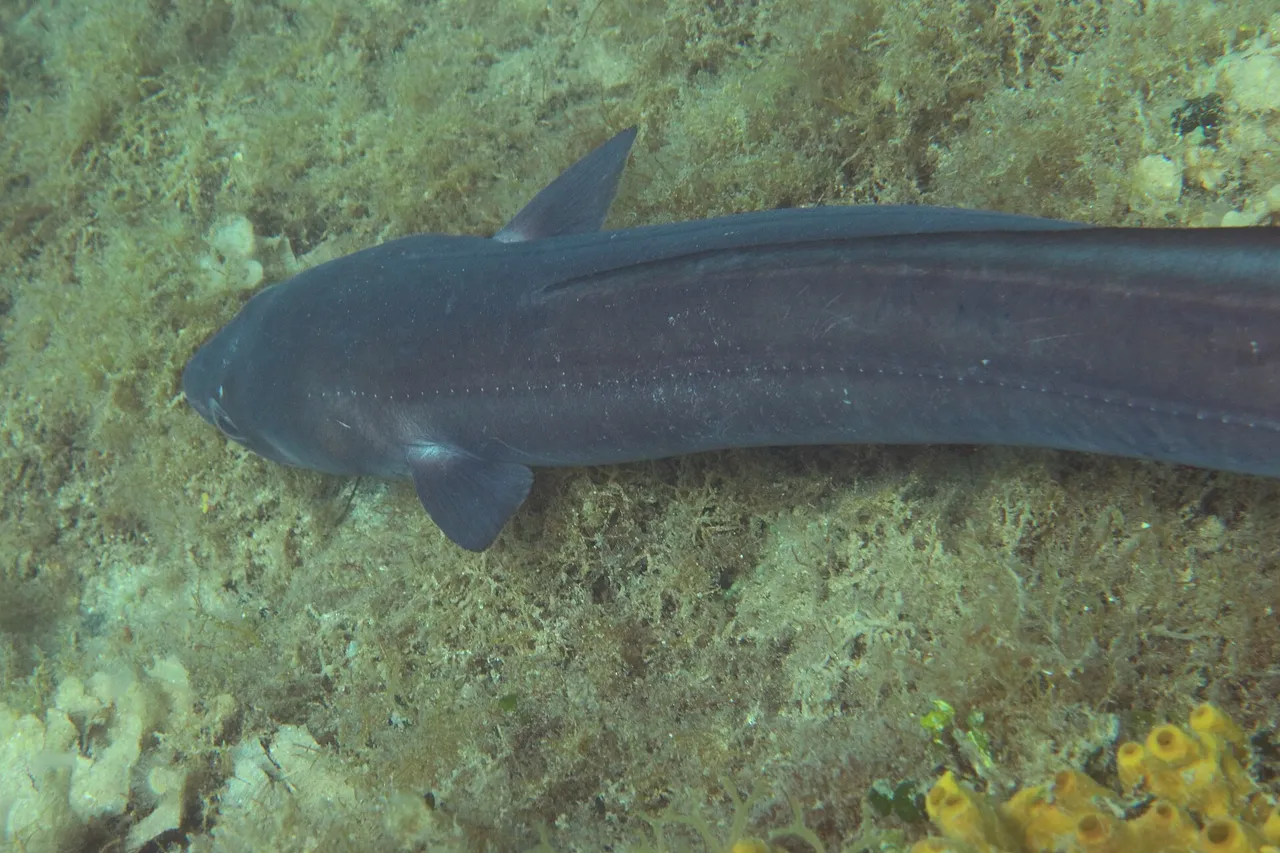
Conger eel
Conger conger — Congridae

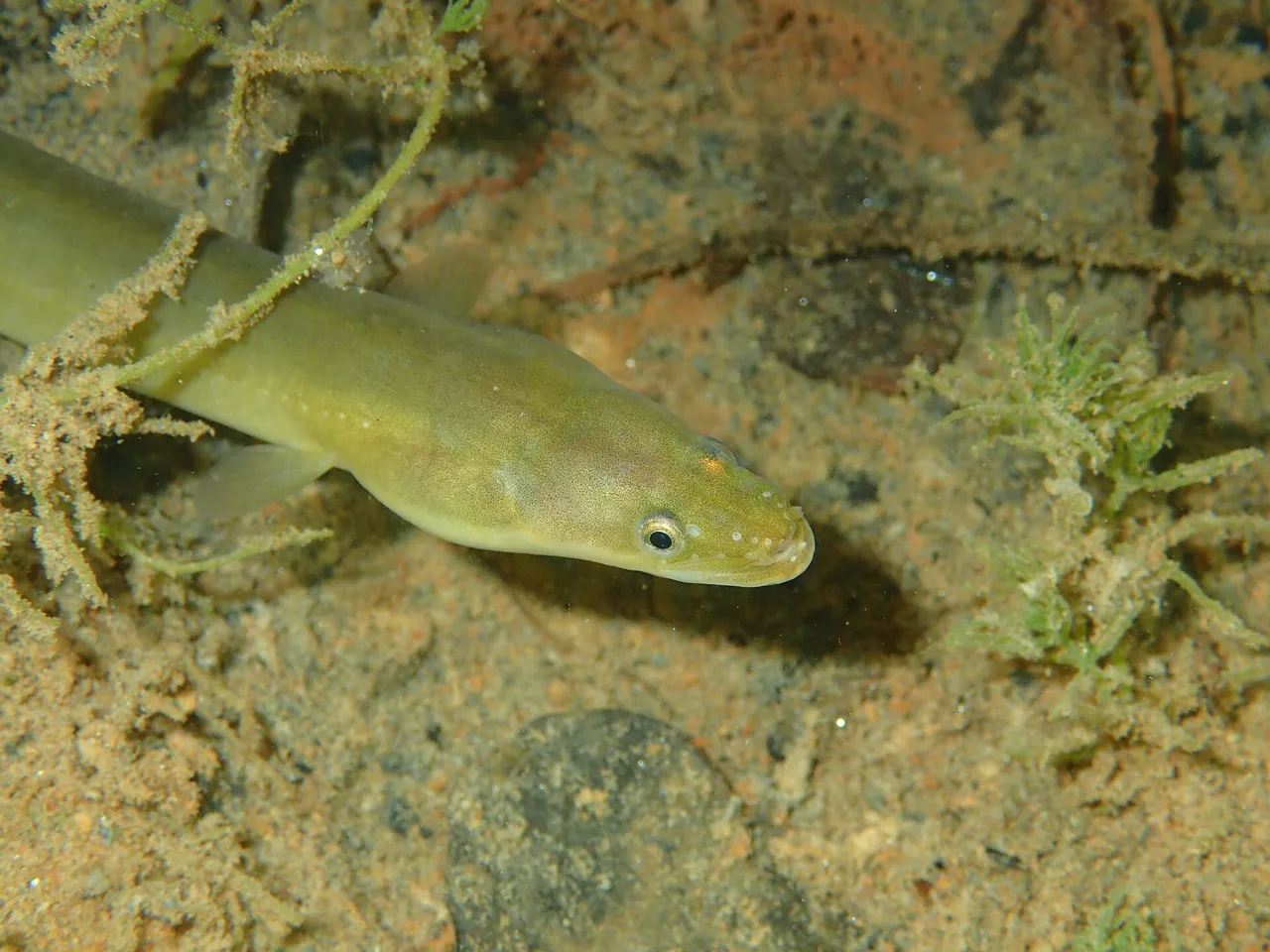
European eel
Anguilla anguilla — Anguillidae

The differences
Each difference is marked with how far it can be trusted on its own. A single diagnostic character settles the identification; suggestive ones only narrow it.
| Character | Conger eel | European eel | Reliability |
|---|---|---|---|
| Which jaw projectsIdentification | The UPPER jaw projects beyond the lower, so the snout overhangs the mouth. Combined with strong teeth, the head reads as blunt and heavy. | The LOWER jaw projects slightly beyond the upper — the exact reverse — so the chin leads. This is one glance at the head and it settles the fish. | Diagnostic on its own |
| Where the long back fin beginsIdentification | Just behind the pectoral fins, well forward, running unbroken into the tail. The fin starts almost at the shoulder. | Around the middle of the back, much further back, running round the tail to the vent as one continuous fin. The gap between the pectoral and the start of the fin is the check. | Diagnostic on its own |
| Pale pores along the sideIdentification | The lateral line is marked by a row of distinct pale pores, obvious against the dark flank and visible in a photograph. | No such row. What the flank does carry is very small scales embedded in thick mucus, so the fish appears scaleless without being so. | Supporting — use with others |
| The size the fish reachesSize | Ordinary fish run 3–10 kg, large ones 20–35, and the maximum published weight is 110 kg on an animal reaching three metres. | Ordinary fish run 300–700 g, a large one is two and a half kilos, and the maximum published weight is 6.6 kg. Anything above about three kilos is not a European eel. | Supporting — use with others |
| Fresh water or saltRange | Marine throughout: wrecks, reefs, rocky ground and harbour structures from the shoreline to several hundred metres, Norway to Senegal. | Rivers, lakes and coastal water across Europe and North Africa, with the spawning migration to the Sargasso. A yellow eel a long way up a river cannot be a conger. | Supporting — use with others |
| What happens if it is handled badlyHandling | The species on FishingHQ most likely to injure somebody. A large conger bites hard, does not tire predictably and thrashes with its whole body — rope net or sling, long pliers, hook cutters, gloves, two people, and cut the trace rather than fight for the hook. | The risk runs the other way. The thick protective mucus is stripped by dry hands, cloths and nets, so wet hands only, support the body, and do not attempt to grip firmly. The correct handling is fast and brief. | Supporting — use with others |
| Where each one standsConservation status | Least concern, though it spawns once in the deep Atlantic and dies, so an adult removed from a harbour wall has not yet bred. | Critically endangered, and a single panmictic population — one breeding stock for the whole continent, so a decline anywhere is a decline everywhere. | Supporting — use with others |
Why it matters
This is the most consequential identification on this list. A European eel is critically endangered, its capture and retention is regulated across its range, and the correct response to catching one is to return it immediately with wet hands and minimal handling — and to move if several come. A conger is least concern and the danger runs the other way: it is the fish most likely to injure the person holding it, and it should never be handled without controlling the head. Reversing the two means either mishandling a critically endangered animal or putting a hand near something that will take it.
The full records
This page compares two species. Each of them has a complete record covering biology, behaviour, handling and the evidence behind all of it.
More about conger eel
Where it lives, how it is caught, and what else it is confused with.
Similar and related fish
How it is caught
- DeadbaitingWhole or half fish baits, oily and large, which is what the fishery runs on. Conger are taken on the bottom on big baits and by almost nothing else, which is why this page stays below the three-edge gate rather than being padded to it.
- LedgeringA large bait fished hard on the bottom over wreck, rock and harbour structure, which is essentially the whole of how conger are taken.
Gear for this fish
- Fish strip and cut baitLarge oily deadbaits fished tight to structure. Conger locate a bait by scent in complete darkness, which is why the oiliest fish available is the right one.
- Squid and cuttlefishSquid or mackerel, bottom-fished, is what the statutory guide gives for the conger of the Ardmore rock marks, and squid is what survives a long soak in a place where crabs strip everything softer.
Where it lives
Why the 6 connections on this page are here, and the sources
Similar and related fish
Backed by research — 1 connection
Supported by peer-reviewed research or fisheries science. The sources are listed and can be checked.
European eel
A taxonomic and identification comparison naming both binomials.
- FishBase: a global information system on fishes — Froese, R. and D. Pauly, eds. — FishBase Consortium (Scientific institute)Relied on for: That Conger conger is a marine Congridae distinct from the catadromous freshwater Anguilla anguilla.States this directlyPassage read and verified
How it is caught
What experienced anglers do — 2 connections
Widely and independently recommended by experienced anglers and specialist sources. This is real angling knowledge, not proof: controlled evidence for it is limited, and FishingHQ records it as convention rather than as a demonstrated effect.
Deadbaiting
An established way this species is taken recreationally in north-west European waters.
- Sea Angler — Bauer Media (Specialist angling publication)Relied on for: Shore and boat practice in north-west European sea angling for the species and method described, presented across multiple independent contributors.States this directlyCitation checked — the work exists and is described correctly
- General angling website restatements of established technique — Various (Credible secondary source)Relied on for: Widely restated practice connecting this species to this method, recorded as practitioner consensus rather than as tested fact.Background and mechanism onlyCitation checked — the work exists and is described correctly
Ledgering
An established way this species is taken recreationally in north-west European waters.
- Sea Angler — Bauer Media (Specialist angling publication)Relied on for: Shore and boat practice in north-west European sea angling for the species and method described, presented across multiple independent contributors.States this directlyCitation checked — the work exists and is described correctly
- General angling website restatements of established technique — Various (Credible secondary source)Relied on for: Widely restated practice connecting this species to this method, recorded as practitioner consensus rather than as tested fact.Background and mechanism onlyCitation checked — the work exists and is described correctly
Gear for this fish
What experienced anglers do — 2 connections
Widely and independently recommended by experienced anglers and specialist sources. This is real angling knowledge, not proof: controlled evidence for it is limited, and FishingHQ records it as convention rather than as a demonstrated effect.
Fish strip and cut bait
A practitioner claim following from the species' verified reliance on chemoreception.
- Sea Angler — Bauer Media (Specialist angling publication)Relied on for: Practitioner treatment of large oily deadbaits for conger fished tight to structure.Citation checked — the work exists and is described correctly
- General angling website restatements of established technique — Various (Credible secondary source)Relied on for: Widely restated practitioner guidance on conger bait selection.Citation checked — the work exists and is described correctly
Squid and cuttlefish
Named for conger by a statutory guide and a practitioner directory independently, in both cases alongside a mackerel bait rather than instead of one.
- Inland Fisheries Ireland: South West Sea Angling Guide — Cork Harbour to Mine Head — Inland Fisheries Ireland, 2020 (Government fisheries body)Relied on for: The statutory body naming bottom-fished squid or mackerel for conger at a named run of rock marks.Passage read and verified
- Sea Angling in Ireland: the shore marks of Mayo — Sea Angling Ireland (Credible secondary source)Relied on for: A county directory naming squid among the baits used from a tidal pier where conger are taken over foul ground.Passage read and verified
Where it lives
Backed by research — 1 connection
Supported by peer-reviewed research or fisheries science. The sources are listed and can be checked.
Harbours, piers and breakwaters
A habitat claim held to a scientific standard.
- FishBase: a global information system on fishes — Froese, R. and D. Pauly, eds. — FishBase Consortium (Scientific institute)Relied on for: That Conger conger is a marine demersal species associated with wrecks, reefs, rocky ground and harbour structures from the shoreline to several hundred metres.States this directlyPassage read and verified
Reviewed 2026-08-16. FishingHQ does not state what any rule is or where any rule applies. Where this page says the two species are managed differently, that is a reason to check the authority for the water you are on — not a statement of what it requires.