What does nile perch eat?
What is established about how nile perch feeds, kept separate from what anglers infer from it.
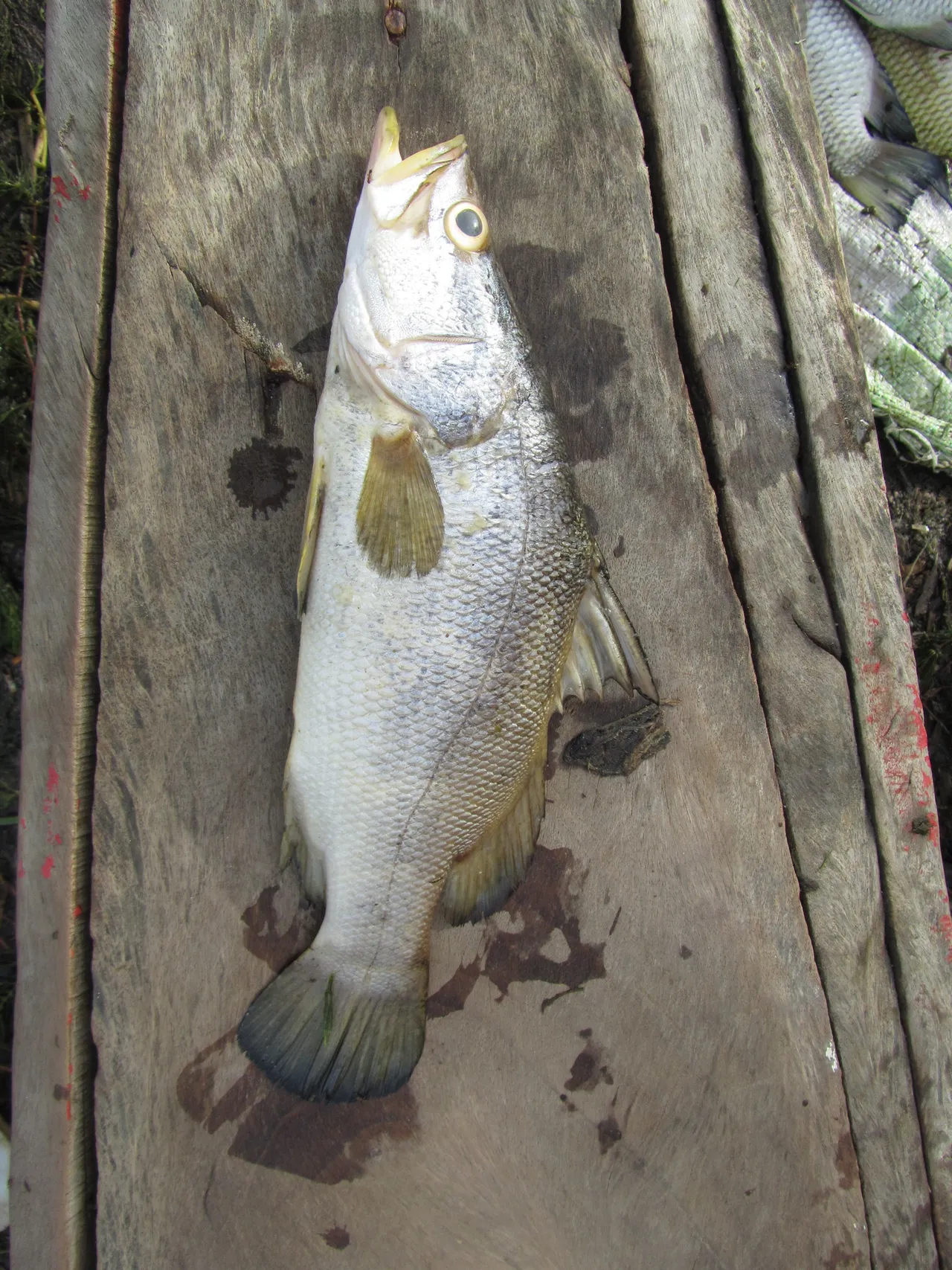
How this was identified, and who took it
Identified by: The distinctly CONCAVE head profile the record leads on, dipping between snout and nape, above a deep body with a large gold-ringed eye and the heavy jaw of a large protrusible mouth. The spiny dorsal and the soft dorsal behind it are both visible with the notch between them.Lucy Keith-Diagne — CC BY, via iNaturalist — source, licenceWhat is known about how it feeds
The Nile perch's diet cannot be described honestly without describing what it did to a lake.
The species is a dominant piscivore with no prey specialisation whatever. It eats the fish that happen to be in front of it, its own juveniles included, and smaller individuals add crustaceans and insects to that. That flexibility is a strength for the animal and it is precisely what made its introduction to Lake Victoria so destructive.
Following the introduction, and alongside eutrophication and other pressures, a very large number of the lake's endemic haplochromine cichlids declined or disappeared — one of the most severe vertebrate extinction events attributed to a single introduction. A specialist predator would have run out of food; a generalist did not.
The two verified relationships describe what the diet became afterwards. Dagaa, the small pelagic cyprinid endemic to the basin, is now a principal prey and supports the largest fishery in the lake by weight in its own right. Freshwater prawns are the second, recorded at group level, and are documented as a major component particularly in smaller perch.
So the food web reorganised around the introduction and the perch reorganised with it.
The fish itself is large, fast-growing and long-lived, and it hunts actively rather than by ambush, in open water as well as around structure.
The food
Prey with a verified dietary link to this fish. Each entry carries its own evidence, and each is written at the precision the source actually used: a named species where the source named one, a group or food category where it said “polychaetes”, “crustaceans” or “detritus” and meant it. That is why this list is shorter than the animal’s real diet rather than longer.
- Dagaa — Rastrineobola argentea
Dagaa became a principal prey of Nile perch in Lake Victoria after the decline of the endemic haplochromine cichlids, and the perch fishery and the dagaa fishery are now coupled.
- Decapod crustaceans as prey — a group rather than a species: the evidence names the group
The freshwater prawn Caridina is recorded as a major dietary component in Lake Victoria alongside dagaa, particularly in smaller Nile perch.
Food with no page of its own here yet
These are real components of the diet, listed as plain text because FishingHQ has no page for them yet. Inventing pages to make the list look fuller would be the fabrication this whole approach exists to prevent.
- haplochromine cichlids
- juvenile Nile perch (cannibalism)
- Nile tilapia
- insects, in smaller fish
What anglers do with this
Everything below is interpretation, not finding. It is what experienced anglers conclude from the biology above, and the reasoning is usually sound and almost never tested. It is separated from the biology deliberately.
The lack of specialisation means offering type matters less than placement and size, which is practitioner reasoning from a documented opportunism.
The dagaa relationship converts into a location argument: the perch are where the dagaa shoals are, and those shoals undertake a daily vertical migration that the fishery for them exploits with lights.
Everything else about this species as an angling subject sits inside a difficult context. The Nile perch fishery is economically enormous and socially important around Lake Victoria, and the ecological history above is not disputed. FishingHQ records both rather than choosing between them, and does not treat the fish as either a trophy or a villain.
What this does not establish
The crustacean relationship is group-level. Two relationships for a fish that eats whatever is present, in a food web that has been substantially reorganised within living memory and continues to change. Composition varies with lake, size and depth, and nothing here establishes proportions.
Where this connects
These are the baits, lures, methods and explainers FishingHQ already joins to this fish — which is why the list is sometimes short. They are not chosen for this page, and a link here means an evidenced relationship exists, not that it follows from the diet.
Lures recorded for this species
The science behind the feeding
This page covers feeding. The Nile perch record covers identification, lifecycle, seasonal behaviour, handling and the sources behind all of it.
Reviewed 2026-08-12.