What does flathead catfish eat?
What is established about how flathead catfish feeds, kept separate from what anglers infer from it.
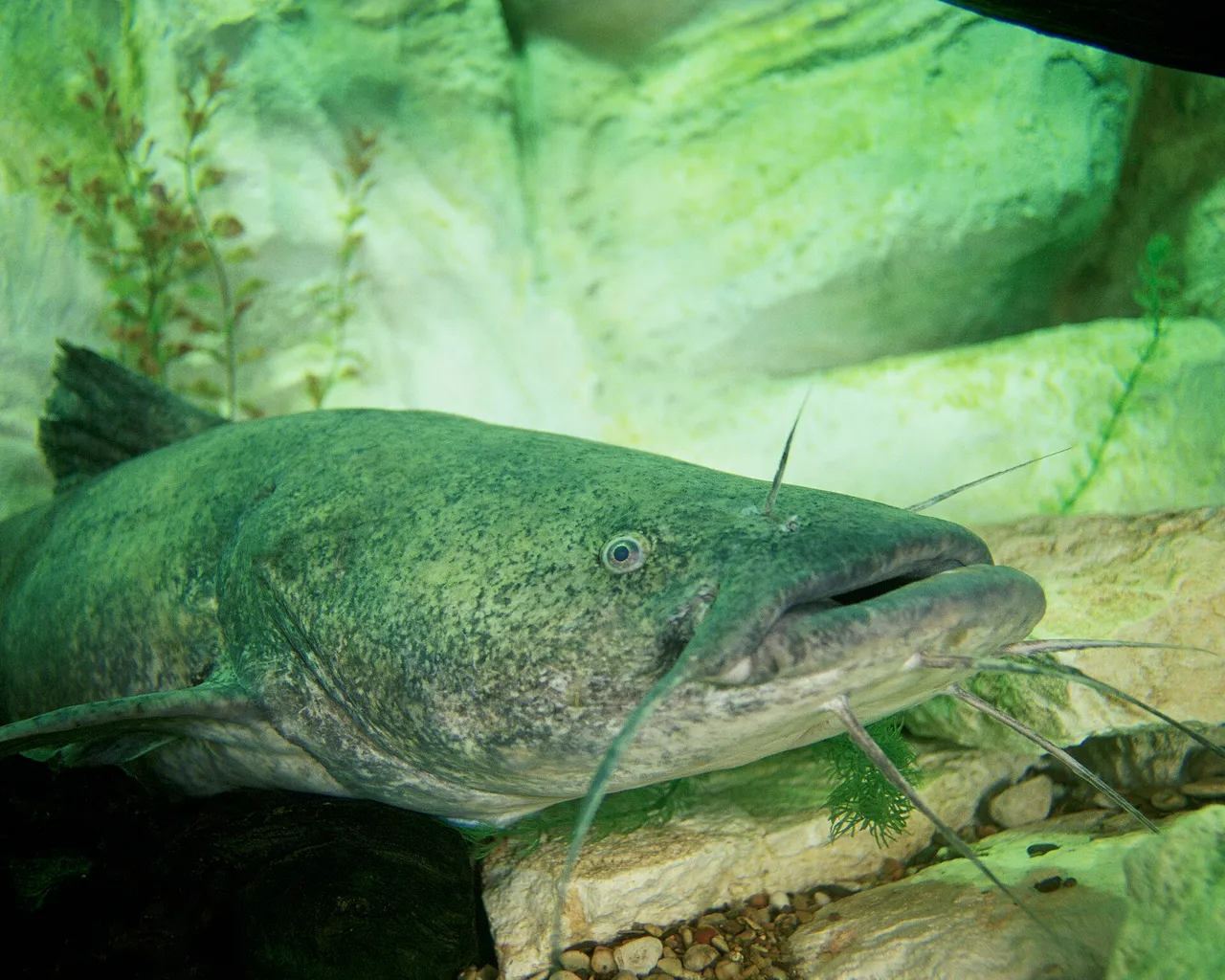
How this was identified, and who took it
Identified by: The projecting lower jaw — the character that separates this species from channel and blue catfish at a glance — is unmistakable, along with the flattened head, small eyes and mottled olive flank. A head-and-shoulders view; the caudal fin is outside the frame.Engbretson, Eric / U.S. Fish and Wildlife Service — Public domain, via Wikimedia Commons — source, licenceWhat is known about how it feeds
The flathead catfish will not eat anything that is dead, and among the large American catfish that is a genuinely unusual position.
Adults are almost exclusively piscivorous and take live fish and crayfish. Dead or prepared food is largely refused — a fact so consistent that it defines the fishery and separates it completely from blue and channel catfish angling on the same water.
The verified relationship is gizzard shad, the principal forage fish across most of the range, taken alive.
The behaviour is nocturnal and lair-based. Flatheads occupy daytime cover — undercut banks, timber, deep holes — and leave it after dark to hunt in shallower water, returning before light. That is a movement pattern rather than a general activity increase, and it means the fish is in two quite different places over a single day.
Juveniles take invertebrates and make the shift to fish as they grow, in the usual way.
Size is the other defining fact. Flatheads reach weights that put adults above almost everything else in their systems, and where the species has been introduced outside its native range it has been documented to reduce native fish populations substantially — a consequence of exactly the diet described above.
The food
Prey with a verified dietary link to this fish. Each entry carries its own evidence, and each is written at the precision the source actually used: a named species where the source named one, a group or food category where it said “polychaetes”, “crustaceans” or “detritus” and meant it. That is why this list is shorter than the animal’s real diet rather than longer.
- Gizzard shad — Dorosoma cepedianum
Flathead catfish take live fish almost exclusively as adults, and gizzard shad are a principal item where they are abundant.
Food with no page of its own here yet
These are real components of the diet, listed as plain text because FishingHQ has no page for them yet. Inventing pages to make the list look fuller would be the fabrication this whole approach exists to prevent.
- sunfish and bullheads
- crayfish
- carp and suckers
- juvenile flathead catfish (cannibalism)
What anglers do with this
Everything below is interpretation, not finding. It is what experienced anglers conclude from the biology above, and the reasoning is usually sound and almost never tested. It is separated from the biology deliberately.
The refusal of dead offerings is the single most consequential fact for anglers and it is not a preference to be worked around: the fishery uses live offerings because the species will not reliably take anything else.
The nocturnal movement from lair to shallow feeding ground converts into both timing and location — fish the shallower ground after dark rather than the daytime cover — which is convention resting on a documented behaviour.
Where the species is introduced, its effect on native fish communities is a management concern, and several jurisdictions encourage removal rather than release. What applies is a question for the relevant authority.
What this does not establish
One relationship for a piscivore whose diet includes whatever live fish the system holds. Composition depends entirely on the local forage community, and nothing here establishes proportions. Juvenile diet is invertebrate-based and is not described by this relationship.
Where this connects
These are the baits, lures, methods and explainers FishingHQ already joins to this fish — which is why the list is sometimes short. They are not chosen for this page, and a link here means an evidenced relationship exists, not that it follows from the diet.
Methods used for it
This page covers feeding. The Flathead catfish record covers identification, lifecycle, seasonal behaviour, handling and the sources behind all of it.
Reviewed 2026-08-12.