Longnose Point
Headland · Salt water
A point inside Jervis Bay. The department names its reef as a hot spot for snapper and for kingfish, and as a reef worth trolling or spinning for Australian salmon.
Safety: cliffs and rock platforms — can cause serious injury or death (general advice, not specific to this place).
FishingHQ describes what this place is, not whether you may fish it. Access, permits and who to ask.
What you can catch here
Documented at this place, grouped by how you would be fishing, with how strongly the sources support each one. This is what has been written down, not a forecast, and being listed is never permission to fish.
From a boat · 3
- Australasian snapperRegular local target1 placeLongnose PointOver headland
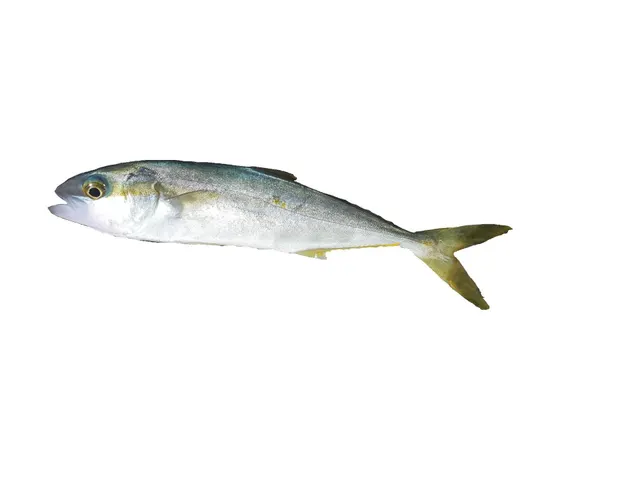 Yellowtail kingfishRegular local target1 placeLongnose PointOver headland
Photo: Hugues Evano (IFREMER, Délégation océan Indien (DOI), Département Ressources Biologiques et Environnement (RBE), F-97420 Le Port, France), via Wikimedia Commons, CC BY 4.0; resized
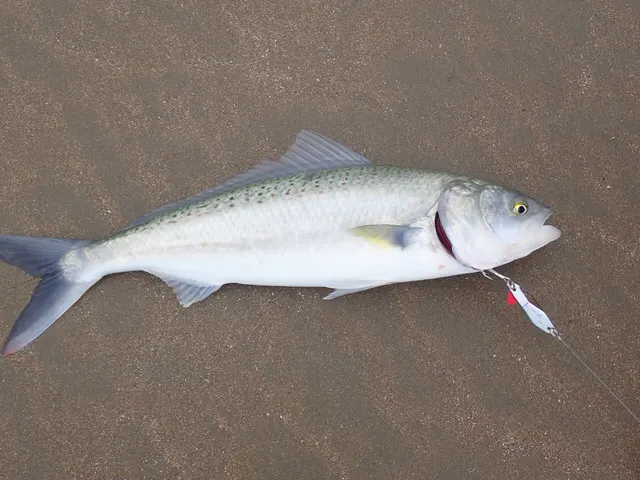 KahawaiSeasonal1 placeLongnose PointOver headlandAround Mar–Oct
Photo: zoology, via Wikimedia Commons, public domain; resized


What these strengths mean
- Regular local target
- Fishing sources describe this as a normal local target here, not merely as caught.
- Seasonal
- Well supported, and concentrated in part of the year rather than spread through it.
- How breadth is counted
- A fish documented at six marks is shown as six marks: breadth never raises the strength on its own. A fishery account describes the fishing; a recorded catch reports one specific catch. How evidence is weighed.
How people fish it
Practised here: Sea fishing, Lure fishing.
Methods the sources name for this ground. Each one is explained in full on its own page.
- Drift fishing
Letting the boat move with tide and wind while fishing, so the tackle searches ground instead of waiting on it — and the decision that determines whether a boat session works at all.
- Trolling
Towing lures or baits behind a moving boat to cover large volumes of water and locate scattered fish.
- Spinning
Casting an artificial lure and retrieving it so that it moves like something alive — the most direct form of lure fishing.
- Livebaiting at sea
Presenting a living fish where a predator will find it — the most effective method for many species and the one with the clearest welfare questions attached.
Baits and lures for these fish
The baits and lures each of the fish above is commonly taken on, from that fish’s own page. This is what works for the fish, not a report of what people use on this particular water — local knowledge and the conditions on the day still decide.
Lures
- Metal jigs — for Australasian snapper, Yellowtail kingfish, Kahawai
- Surface lures — for Yellowtail kingfish, Kahawai
- Soft plastics — for Australasian snapper
The ground and the water
- The ground
- A point inside Jervis Bay. The department names its reef as a hot spot for snapper and for kingfish, and as a reef worth trolling or spinning for Australian salmon.
Through the year
Snapper and kingfish all year, and Australian salmon from March to October, in the department's guide.
Safety
Cliffs and rock platforms — Can cause serious injury or death
General safety for this kind of ground, not a finding about this place.
Ocean rock platforms are swept by unexpected large waves, and anglers are washed off and drowned. The sets that cause it are not visible from the platform in advance, and the escape route is usually upward and slow.
What reduces it: Never fish rock platforms alone. Watch a mark for a full set cycle before going on it. Wear a lifejacket — mandatory in some jurisdictions for exactly this reason. Wear footwear with grip on wet rock, plan the escape route before you start, and never turn your back on the sea.
Rules and access
Particular to this water: The point is inside Jervis Bay Marine Park, whose sanctuary zones allow no fishing; check the zoning before fishing it.
Beyond what is stated above, FishingHQ does not know the current access position here. New South Wales requires its recreational fishing fee to be paid in all its waters, with exemptions the state lists. Marine parks and aquatic reserves have zones where fishing is not allowed or only some methods are, much of the shore is an intertidal protected area where shellfish and other invertebrates may not be taken, the state publishes advice against eating fish from some waters, and wearing a lifejacket is the law when rock fishing in declared council areas. Bag and size limits change. Check the current position with the NSW Department of Primary Industries and Regional Development before going.
Who holds the answer:
- The NSW Department of Primary Industries and Regional Development, which collects the fishing fee and publishes the rules, closures and marine park zoning.
- The council, port or land manager, where the shore or wharf is theirs.
- The NSW Department of Primary Industries and Regional Development, which sets the recreational fishing fee and its exemptions and publishes the rules, closures, marine park zoning and freshwater seasons.
- Service NSW, the state's service through which the licence is bought.
- The council, port or land manager, for wharves, parks, reserves and other land it owns or leases, which carry rules of their own.
- The NSW Food Authority, for advice on eating fish from waters with a contamination advisory, including Sydney Harbour.
- The managers of Booderee National Park, on Jervis Bay's southern shore, which is Commonwealth land with its own fishing rules.
- The NSW Department of Primary Industries and Regional Development: collects the fishing fee and publishes the bag and size limits, closures and reserve rules for this water.
Nearby fishing
Other publicly documented places within about 40 km, by distance. Positions are approximate public geography and are never exact marks.
- Point Perpendicular — 2–5 km · Headland
- Jervis Bay — 5–10 km · Bay
- Plantation Point — 5–10 km · Headland
- Lake Conjola — 25–40 km · Estuary
- Narrawallee Inlet — 25–40 km · Estuary
Sources for this place
- Go Fishing — Jervis Bay — NSW Department of Primary Industries and Regional Development, 2024 (Government fisheries body)Relied on for: The state fisheries department's Jervis Bay guide: the marine park, this place among its hot spots, the fish and methods, and the restrictions it states.States this directlyPassage read and verified
- Recreational fishing fee — NSW Department of Primary Industries and Regional Development (Government fisheries body)Relied on for: That the NSW recreational fishing fee must be paid, and a receipt carried, when fishing in any NSW water.States this directlyPassage read and verified
- FishBase: a global information system on fishes — Froese, R. and D. Pauly, eds. — FishBase Consortium (Scientific institute)Relied on for: That Arripis truttaceus ranges from Western Australia to Victoria and Tasmania and Arripis trutta from Brisbane to western Victoria, so 'Australian salmon' on this coast is Arripis trutta.States this directlyPassage read and verified
How FishingHQ labels evidence is explained in the evidence policy. Last reviewed 2026-10-22.
Before you go
- Fish documented here
- 3 at this place itself. See them.
- Getting there
- Not recorded. FishingHQ holds no sourced description of the way in.
- Rules particular to this water
- The point is inside Jervis Bay Marine Park, whose sanctuary zones allow no fishing; check the zoning before fishing it. Dated 2024: NSW Department of Primary Industries and Regional Development and NSW Department of Primary Industries and Regional Development. Whether it still applies is not established. Applies to: Longnose Point.
Nothing here is watched for change. Sources and who to ask.
- Hazards particular to this place
- None recorded for this place; the hazards of the wider coast or water still apply.
Check before you travel
- Whether you may fish here, and whether a licence or permit is needed — start with the NSW Department of Primary Industries and Regional Development.
- The tide times and the forecast for the day you go.
- Anything recorded here was true when it was read; it is not watched for change.