Haddock vs Atlantic cod
How to tell them apart, and what follows from getting it right.
Why they get confused
Both are three-dorsal gadoids of the same waters, taken on the same ground and often in the same drift, and a small cod and a large haddock are close enough in size and outline to give somebody pause on a moving deck.
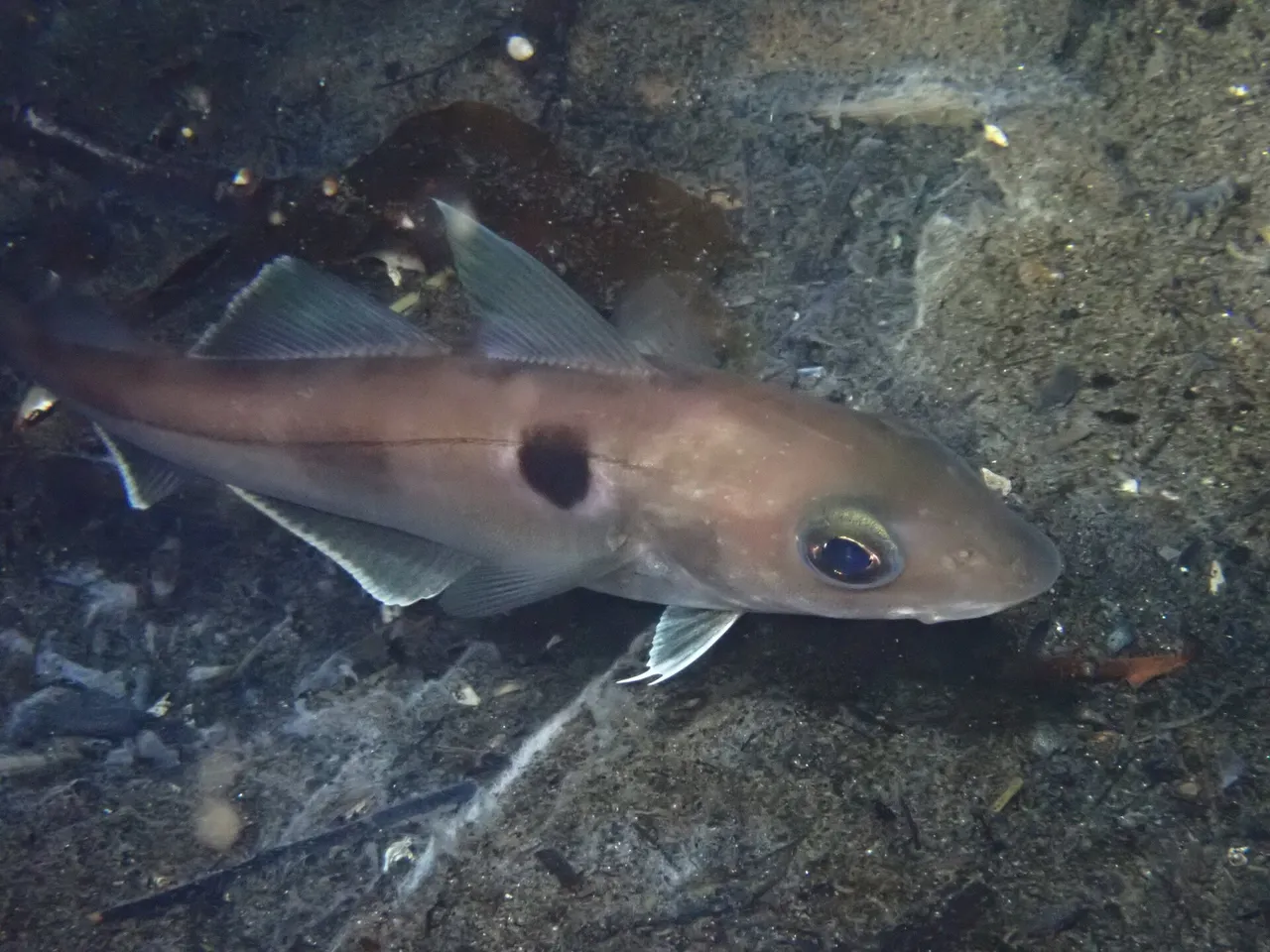
Haddock
Melanogrammus aeglefinus — Gadidae

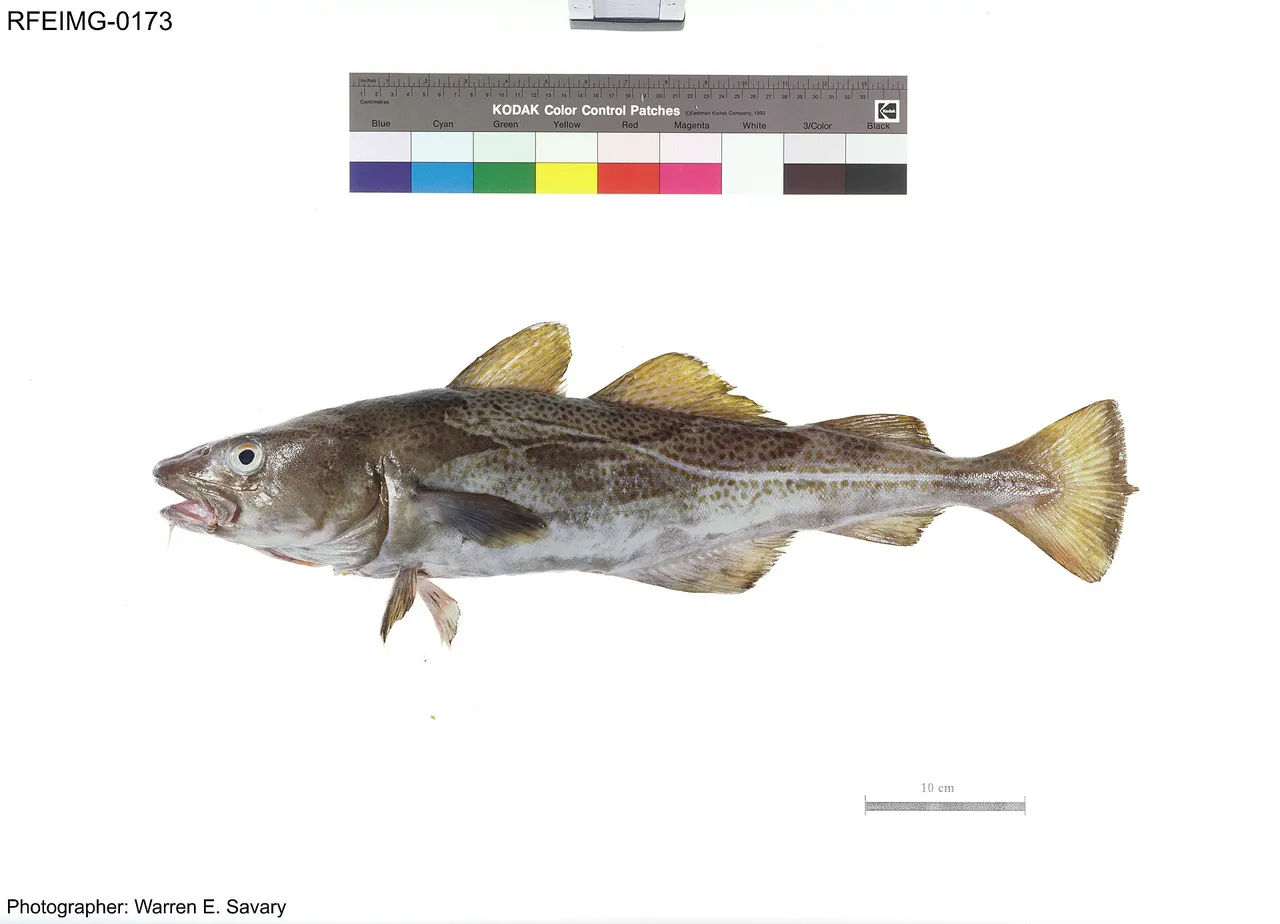
Atlantic cod
Gadus morhua — Gadidae
.jpg)
The differences
Each difference is marked with how far it can be trusted on its own. A single diagnostic character settles the identification; suggestive ones only narrow it.
| Character | Haddock | Atlantic cod | Reliability |
|---|---|---|---|
| Shoulder blotchIdentification | A dark thumbprint blotch above the pectoral fin, present in every fish. | No shoulder blotch anywhere above the pectoral fin, at any size or condition. | Diagnostic on its own |
| The lateral lineIdentification | Dark lateral line running over a silver-grey flank. | Pale, curved lateral line standing out against a mottled brown or greenish flank. | Diagnostic on its own |
| Chin barbelIdentification | Small barbel present. | Prominent barbel, larger and more obvious than a haddock's. | Supporting — use with others |
| Conservation positionConservation status | Assessed separately from cod, and stock status varies sharply between management areas. | Historically depleted across much of its range, with recovery uneven between stocks. | Supporting — use with others |
Why it matters
These two carry different minimum sizes and different quota positions almost everywhere they are both caught, and cod in particular is subject to restrictions that change between areas and seasons. The blotch is instant; use it.
The full records
This page compares two species. Each of them has a complete record covering biology, behaviour, handling and the evidence behind all of it.
More about haddock
Where it lives, how it is caught, and what else it is confused with.
Similar and related fish
How it is caught
Why the 2 connections on this page are here, and the sources
Similar and related fish
Backed by research — 1 connection
Supported by peer-reviewed research or fisheries science. The sources are listed and can be checked.
Atlantic cod
An identification and feeding comparison naming both binomials.
- FishBase: a global information system on fishes — Froese, R. and D. Pauly, eds. — FishBase Consortium (Scientific institute)Relied on for: That Melanogrammus aeglefinus and Gadus morhua are both Gadidae of the North Atlantic continental shelf with overlapping distributions.States this directlyPassage read and verified
- The Fishes of the British Isles and North-West Europe — Macmillan, 1969 (Reference work)Relied on for: The morphological separation of haddock from cod by lateral line colour and the shoulder blotch, and their differing feeding habits.States this directlyCitation checked — the work exists and is described correctly
How it is caught
What experienced anglers do — 1 connection
Widely and independently recommended by experienced anglers and specialist sources. This is real angling knowledge, not proof: controlled evidence for it is limited, and FishingHQ records it as convention rather than as a demonstrated effect.
Ledgering
A practitioner claim following from the species' verified feeding morphology.
- Sea Angler — Bauer Media (Specialist angling publication)Relied on for: Practitioner treatment of bait size and presentation for haddock in relation to cod on the same ground.Citation checked — the work exists and is described correctly
- General angling website restatements of established technique — Various (Credible secondary source)Relied on for: Widely restated practitioner guidance that haddock take small baits fished hard on the bottom.Citation checked — the work exists and is described correctly
Reviewed 2026-08-10. FishingHQ does not state what any rule is or where any rule applies. Where this page says the two species are managed differently, that is a reason to check the authority for the water you are on — not a statement of what it requires.