Flathead grey mullet vs Thick-lipped grey mullet
How to tell them apart, and what follows from getting it right.
Why they get confused
Grey mullet are the classic 'they all look the same' group, and these two overlap in harbours, estuaries and along the same coasts. Both are silver-grey with faint longitudinal stripes, two widely separated dorsal fins, a blunt head and a small mouth. Anglers commonly do not attempt the identification at all and simply record 'mullet'. The characters that separate them are on the lip and around the eye, and they take a close look at a fish in hand rather than a glance at one in the water.
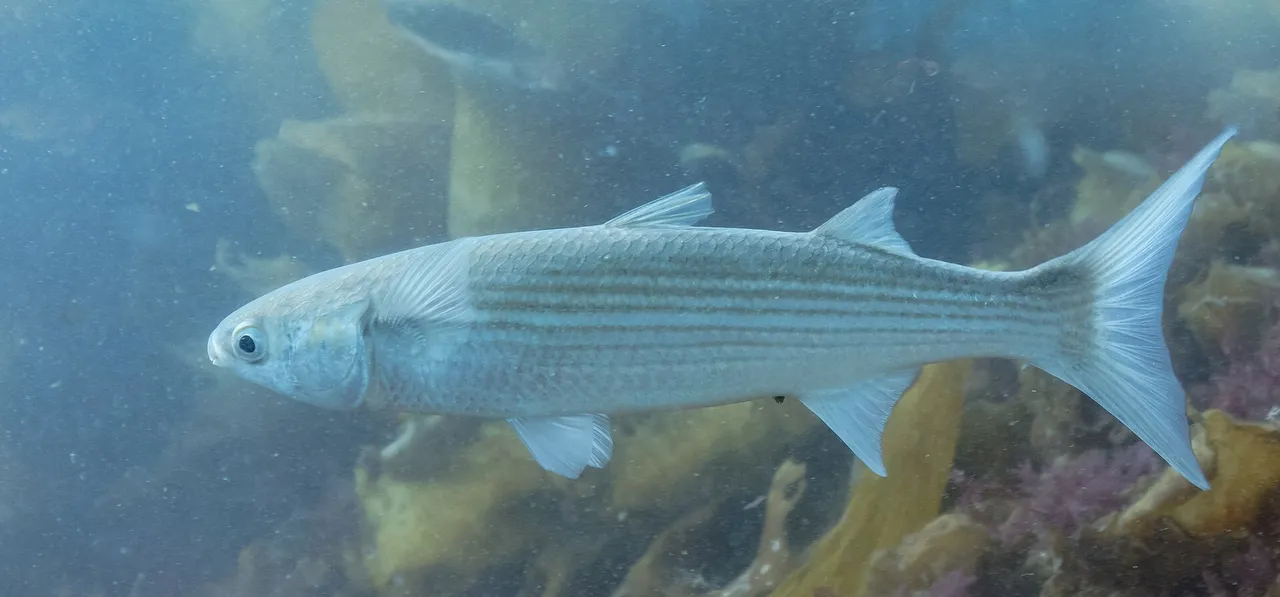
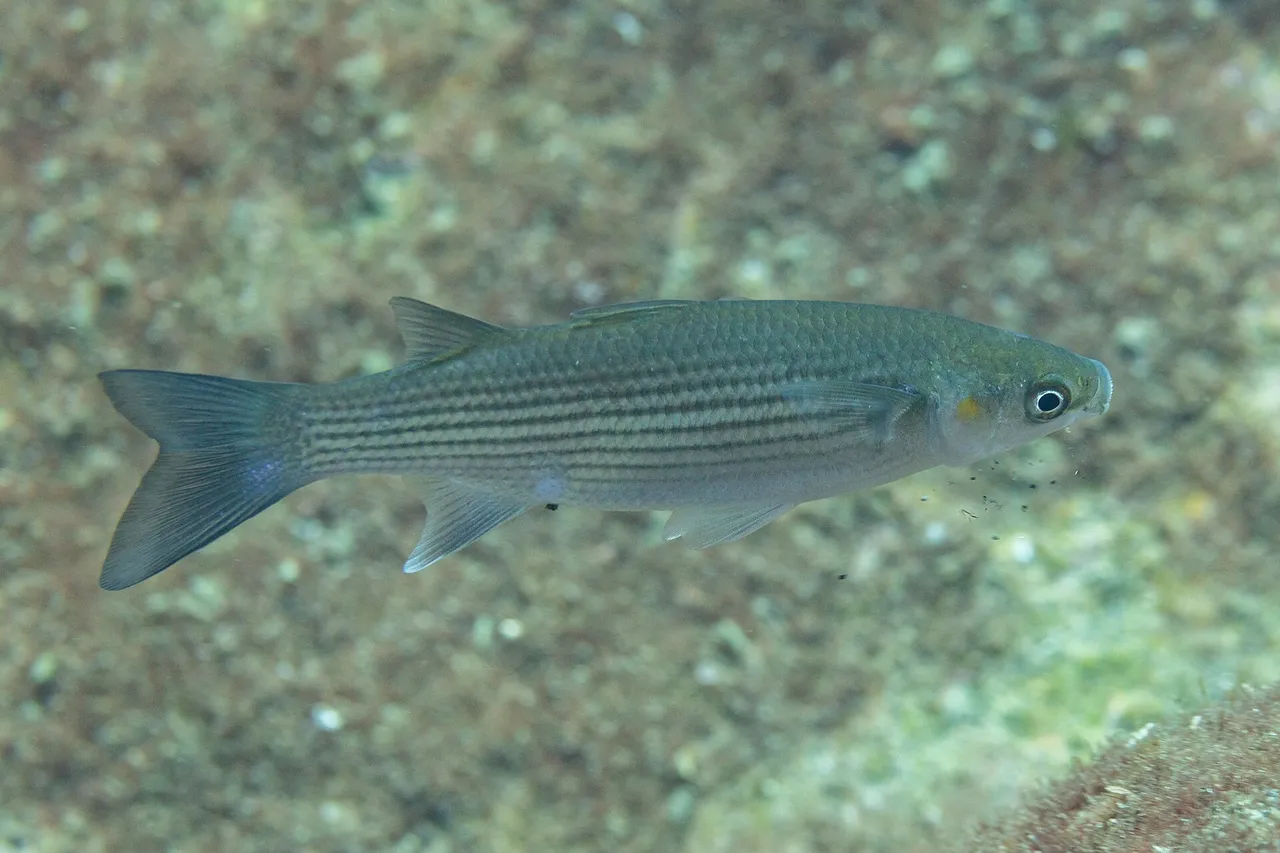
Flathead grey mullet
Mugil cephalus — Mugilidae
,_Parque_natural_de_la_Arr%C3%A1bida,_Portugal,_2021-09-09,_DD_25.jpg)
,_Catania,_Sicilia,_Italia,_2025-04-04,_DD_63.jpg)
The differences
Each difference is marked with how far it can be trusted on its own. A single diagnostic character settles the identification; suggestive ones only narrow it.
| Character | Flathead grey mullet | Thick-lipped grey mullet | Reliability |
|---|---|---|---|
| Thickness of the upper lipIdentification | Upper lip thin and unremarkable, without papillae along its edge. | Upper lip conspicuously thick and swollen — deep enough to be obvious side by side, and the character the species is named for. | Diagnostic on its own |
| Adipose eyelidIdentification | A well-developed adipose eyelid partly covering the eye, which is a distinctive character of this species. | Adipose eyelid absent or barely developed; the eye looks open by comparison. | Diagnostic on its own |
| Dark spot at the pectoral baseIdentification | A dark spot at the base of the pectoral fin in most individuals. | No comparable pectoral spot. | Supporting — use with others |
| How far the scales run forwardIdentification | Scaling on the head present but less extensive. | Large scales extending conspicuously forward onto the head. | Supporting — use with others |
| Where you are likely to beRange | Effectively cosmopolitan in warm and temperate coastal waters worldwide. | Eastern Atlantic and Mediterranean; the common mullet of British and north-west European harbours and estuaries. | Suggestive only — varies |
| Handling a fish that is going backHandling | Soft-mouthed and easily damaged; support the body, keep it wet and unhook quickly. | The same, and the species is slow-growing and long-lived enough that release is the norm among the anglers who target it. | Supporting — use with others |
Why it matters
Mullet are long-lived, slow-growing and slow to replace, and in several areas they are subject to specific measures — minimum sizes, area restrictions and in some places retention limits — that may apply to the group or to particular species within it. Records and specimen claims are also species-specific, and a great many 'record mullet' claims founder on the identification rather than the weight. Beyond that, the two do not behave identically: the thick-lipped is the estuary and harbour fish of north-west Europe with a genuine local fishery around it, and the flathead is a different animal in a different place. What may be taken and where is a matter for the competent authority.
The full records
This page compares two species. Each of them has a complete record covering biology, behaviour, handling and the evidence behind all of it.
More about flathead grey mullet
Where it lives, how it is caught, and what else it is confused with.
Similar and related fish
How it is caught
- Cast nettingMullet are the cast net's archetypal catch across the warm temperate and tropical world. They shoal densely in shallow, clear, hard-bottomed water — estuary margins, harbour edges, sand flats — where a thrown net can be seen to land and can enclose a whole shoal, and they are almost impossible to take in numbers any other way because of how selectively they feed.
- Float fishingMullet feed on fine particles and surface film in harbours and estuaries and refuse anything presented crudely, so a light float outfit fished with tiny hooks is the approach that the fish's caution rather than its habitat dictates.
Why the 3 connections on this page are here, and the sources
Similar and related fish
Backed by research — 1 connection
Supported by peer-reviewed research or fisheries science. The sources are listed and can be checked.
Thick-lipped grey mullet
A comparison resting on shared family and feeding ecology, naming both binomials.
- FishBase: a global information system on fishes — Froese, R. and D. Pauly, eds. — FishBase Consortium (Scientific institute)Relied on for: That Mugil cephalus and Chelon labrosus are both Mugilidae feeding on detritus and organic material in coastal and estuarine water.States this directlyPassage read and verified
How it is caught
What experienced anglers do — 2 connections
Widely and independently recommended by experienced anglers and specialist sources. This is real angling knowledge, not proof: controlled evidence for it is limited, and FishingHQ records it as convention rather than as a demonstrated effect.
Cast netting
Established angling practice for this species, recorded as convention. The note states the property of the animal or its water that makes the method the answer.
- Fishers' Craft and Lettered Art: Tracts on Fishing from the End of the Middle Ages — University of Toronto Press, 1997 (Scientific literature)Relied on for: That fishing practices develop around the fish and water available to them, and the historical method of reading such traditions.Background and mechanism onlyCitation checked — the work exists and is described correctly
- FAO fishing gear types and fishing technology information — Food and Agriculture Organization of the United Nations (Scientific institute)Relied on for: Classification and operation of the gear type described.States this directlyCitation checked — the work exists and is described correctly
Float fishing
Established angling practice for this species, recorded as convention. The note states the property of the animal or its water that makes the method the answer.
- Sea Angler — Bauer Media (Specialist angling publication)Relied on for: Established sea-angling technique and its application to this species.States this directlyCitation checked — the work exists and is described correctly
- General angling website restatements of established technique — Various (Credible secondary source)Relied on for: Widely restated practice connecting this species and method.Background and mechanism onlyCitation checked — the work exists and is described correctly
Reviewed 2026-08-13. FishingHQ does not state what any rule is or where any rule applies. Where this page says the two species are managed differently, that is a reason to check the authority for the water you are on — not a statement of what it requires.