Australian bass vs Estuary perch
How to tell them apart, and what follows from getting it right.
Why they get confused
Two close congeners in the same south-eastern Australian estuaries, taken on the same lures at the same times of year, and called by each other's names constantly. They are similar enough that they were long treated as one species, they hybridise naturally where their ranges meet, and the colour difference most anglers rely on is a tendency rather than a rule.
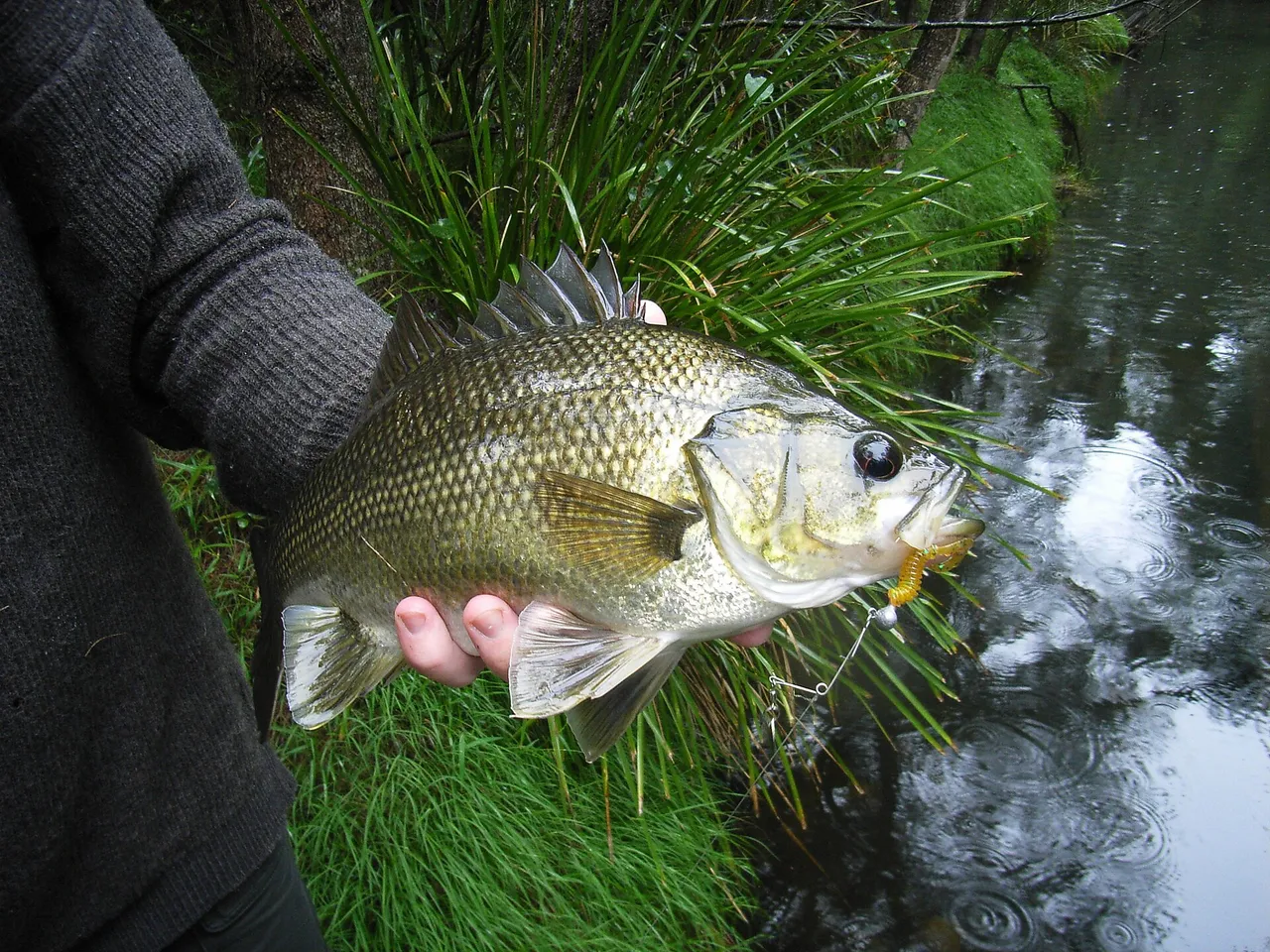
Australian bass
Macquaria novemaculeata — Percalatidae

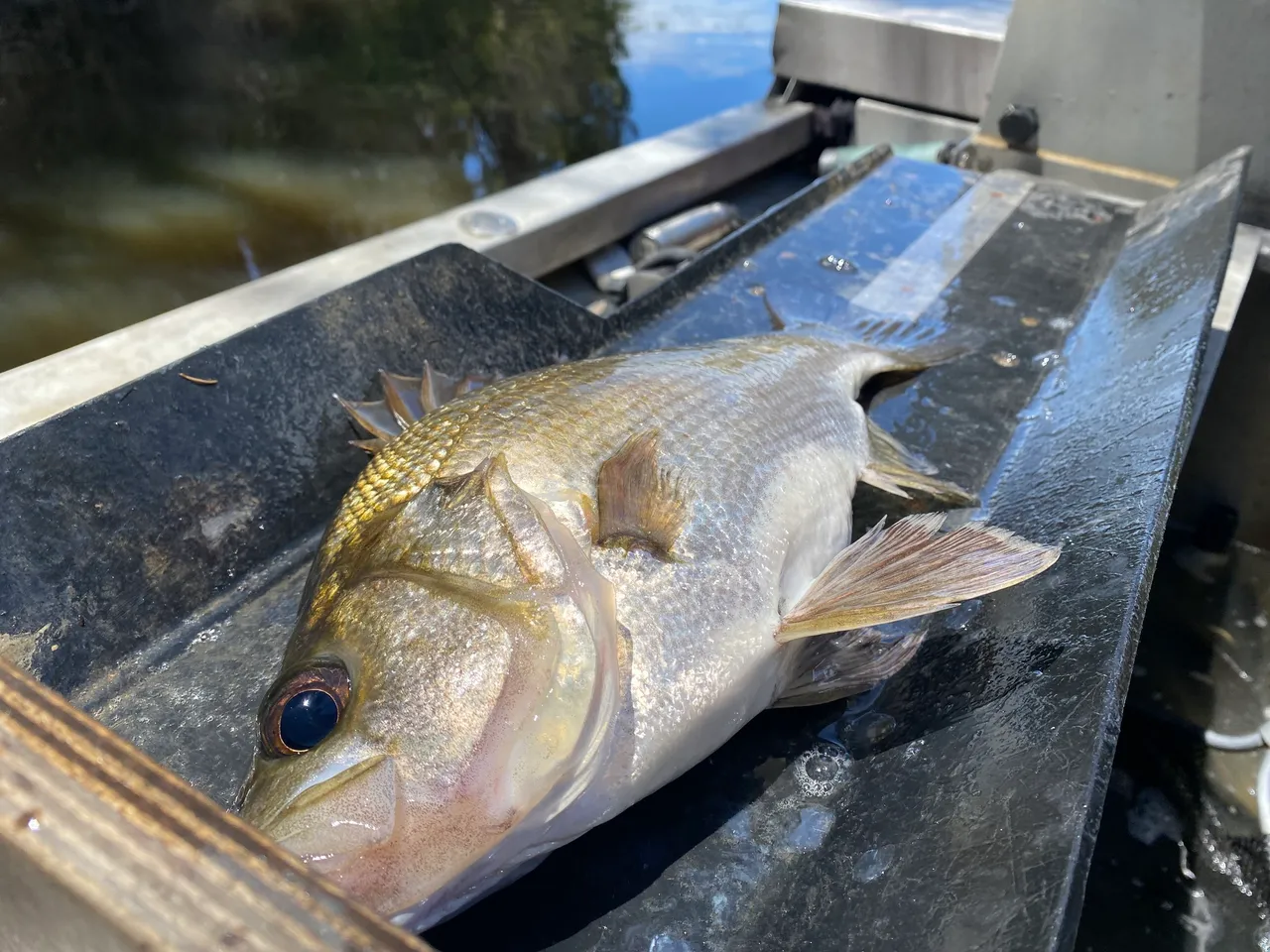
Estuary perch
Percalates colonorum — Percalatidae
The differences
Each difference is marked with how far it can be trusted on its own. A single diagnostic character settles the identification; suggestive ones only narrow it.
| Character | Australian bass | Estuary perch | Reliability |
|---|---|---|---|
| The profile between snout and dorsal finIdentification | Runs straight or bulges outwards over the top of the head. | Dips inwards into a distinct dish above the eye, giving the fish a slightly concave forehead. | Diagnostic on its own |
| Eye size against the headIdentification | Smaller in proportion to the head, fitting a fish that runs further into clear fresh water. | Noticeably larger in proportion, fitting a fish that works deeper and dirtier estuarine water. | Supporting — use with others |
| Flank toneIdentification | Generally darker — olive to bronze to almost black on fish from tannin-stained upstream water. | Generally paler, silver to light bronze. A real tendency, and one that both species break depending on the water they came out of. | Suggestive only — varies |
| How far each goes into fresh waterRange | Runs well up into fresh water and is the fish anglers target in freshwater reaches and impoundments above the tidal limit. | The more estuarine and salt-tolerant of the two, concentrated in the tidal reaches and lower estuary. | Supporting — use with others |
| The spawning migrationSpawning | Catadromous: adults drop down to the estuary in winter to spawn in salt water, then run back up into fresh. | Also spawns in the estuary in winter, but with less of a freshwater phase to leave, so the movement is shorter. | Supporting — use with others |
| Spiny dorsal and gill-cover spinesHandling | Strong dorsal spines and sharp gill-cover points that will draw blood from a careless grip. | The same, and no less sharp — this is a family character that identifies neither species and matters for both. | Suggestive only — varies |
Why it matters
Both fish are managed with closed seasons designed around the winter spawning run, and the rules have historically differed between the two and between states. An angler in a tidal reach in June needs to know which of the two is in the net. The pair also hybridises naturally where the ranges overlap, and hybrids carry intermediate head profiles, so a fish that reads halfway between the two in a river holding both may genuinely be one and cannot be resolved by eye. What may be kept and when must come from the current rules of the state fisheries authority, which change.
The full records
This page compares two species. Each of them has a complete record covering biology, behaviour, handling and the evidence behind all of it.
More about australian bass
Where it lives, how it is caught, and what else it is confused with.
Similar and related fish
How it is caught
Gear for this fish
- Soft plasticsSoft plastics fished around structure in coastal rivers and impoundments are a principal method for Australian bass, which hold tight to timber and rock.
- Surface luresSurface fishing at dawn and dusk in coastal rivers is the approach the species is most associated with, and it follows from the fish's willingness to feed upward on insects and small vertebrates.
Where it lives
Why the 5 connections on this page are here, and the sources
Similar and related fish
Backed by research — 1 connection
Supported by peer-reviewed research or fisheries science. The sources are listed and can be checked.
Estuary perch
An identification comparison naming both binomials: Percalates colonorum and Macquaria novemaculeata.
- FishBase: a global information system on fishes — Froese, R. and D. Pauly, eds. — FishBase Consortium (Scientific institute)Relied on for: Morphological and distributional data for Percalates colonorum and for Macquaria novemaculeata.States this directlyPassage read and verified
- The IUCN Red List of Threatened Species — International Union for Conservation of Nature (Conservation authority)Relied on for: Separate assessments treating Percalates colonorum and Macquaria novemaculeata as distinct species.States this directlyCitation checked — the work exists and is described correctly
How it is caught
What experienced anglers do — 1 connection
Widely and independently recommended by experienced anglers and specialist sources. This is real angling knowledge, not proof: controlled evidence for it is limited, and FishingHQ records it as convention rather than as a demonstrated effect.
Spinning
Established angling practice for this species, recorded as convention. The note states the property of the animal or its water that makes the method the answer.
- IGFA International Angling Rules and World Record Requirements — International Game Fish Association (Angling or fisheries organisation)Relied on for: Recognition of the species as an established sport fish and the angling methods and tackle classes conventionally used for it.States this directlyPassage read and verified
- General angling website restatements of established technique — Various (Credible secondary source)Relied on for: Widely restated practice connecting this species and method.Background and mechanism onlyCitation checked — the work exists and is described correctly
Gear for this fish
What experienced anglers do — 2 connections
Widely and independently recommended by experienced anglers and specialist sources. This is real angling knowledge, not proof: controlled evidence for it is limited, and FishingHQ records it as convention rather than as a demonstrated effect.
Soft plastics
A practitioner claim about which lure family answers this species' feeding or holding behaviour.
- IGFA International Angling Rules and World Record Requirements — International Game Fish Association (Angling or fisheries organisation)Relied on for: Recognition of the species as an established sport fish taken on artificial lures, and the line and tackle classes used for it.States this directlyPassage read and verified
- General angling website restatements of established technique — Various (Credible secondary source)Relied on for: Widely restated lure practice for this species.Background and mechanism onlyCitation checked — the work exists and is described correctly
Surface lures
A practitioner claim about which lure family answers this species' feeding or holding behaviour.
- IGFA International Angling Rules and World Record Requirements — International Game Fish Association (Angling or fisheries organisation)Relied on for: Recognition of the species as an established sport fish taken on artificial lures, and the line and tackle classes used for it.States this directlyPassage read and verified
- General angling website restatements of established technique — Various (Credible secondary source)Relied on for: Widely restated lure practice for this species.Background and mechanism onlyCitation checked — the work exists and is described correctly
Where it lives
Backed by research — 1 connection
Supported by peer-reviewed research or fisheries science. The sources are listed and can be checked.
Estuary
A life-history claim with direct management consequence, held to a scientific standard.
- FishBase: a global information system on fishes — Froese, R. and D. Pauly, eds. — FishBase Consortium (Scientific institute)Relied on for: That Macquaria novemaculeata occupies coastal rivers and estuaries of eastern Australia with a catadromous life history.States this directlyPassage read and verified
- NASCO conservation and management of North Atlantic salmon — North Atlantic Salmon Conservation Organization (Government fisheries body)Relied on for: That diadromous fish depend on unobstructed passage between fresh and salt water and that barriers are a recognised management concern.FishingHQ's interpretation of what it saysCitation checked — the work exists and is described correctly
Reviewed 2026-08-16. FishingHQ does not state what any rule is or where any rule applies. Where this page says the two species are managed differently, that is a reason to check the authority for the water you are on — not a statement of what it requires.