What does spotted bass eat?
What is established about how spotted bass feeds, kept separate from what anglers infer from it.
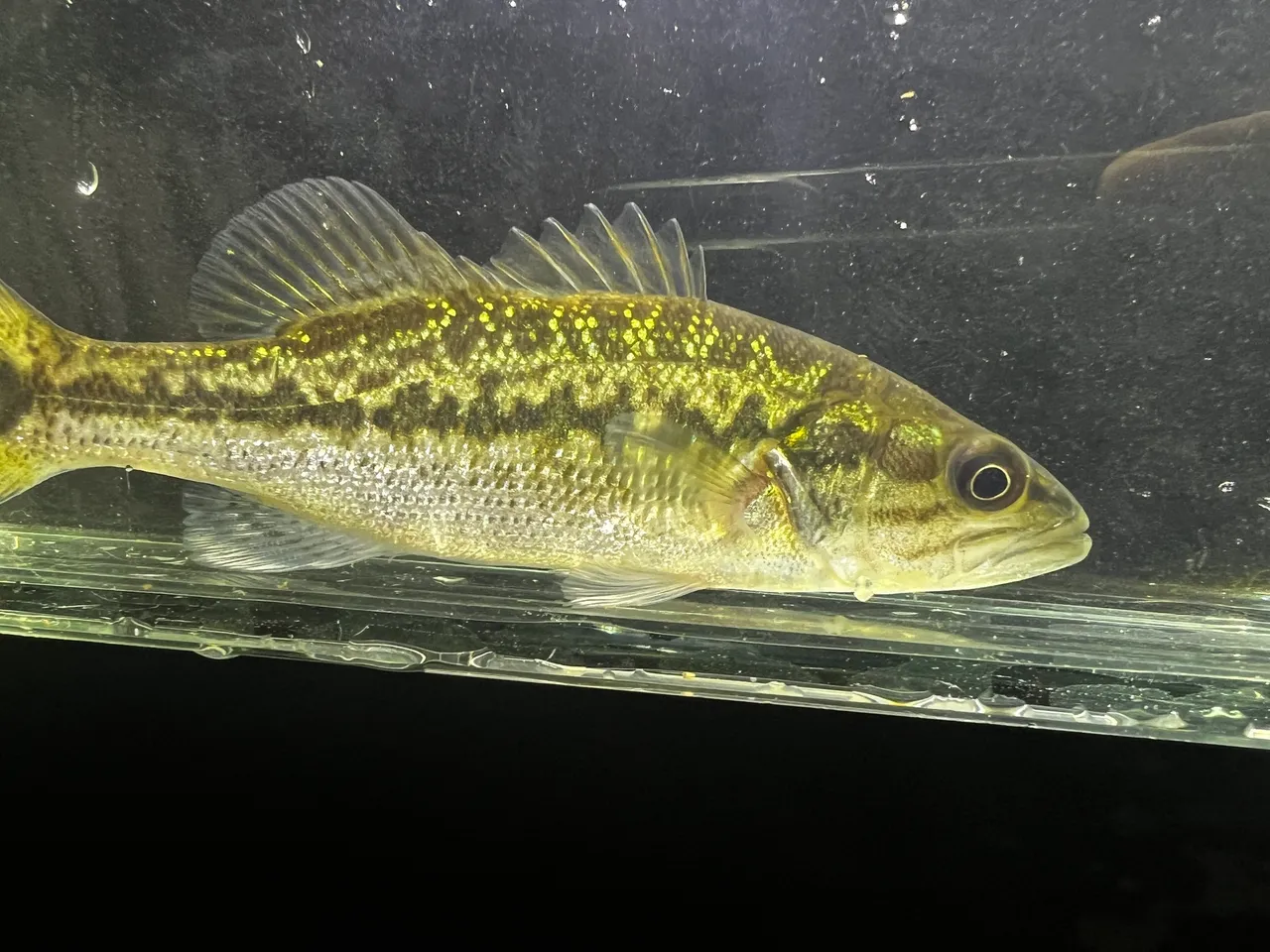
How this was identified, and who took it
Identified by: Rows of small dark spots below the lateral line forming longitudinal streaks, upper jaw terminating at approximately the posterior margin of the eye, and a broad connection between the spiny and soft dorsal fins — the three characters separating Micropterus punctulatus from M. salmoides and M. dolomieu. Four agreeing identifications on the source, none disagreeing.Nick Tobler (Cowturtle) — CC BY, via iNaturalist — source, licenceWhat is known about how it feeds
The spotted bass sits between the largemouth and the smallmouth in almost every respect, and its diet is where the position is clearest.
The verified relationship is freshwater crayfish, taken from rocky ground in the manner of a smallmouth, and it is the principal item across much of the range. Fish and insects supplement it.
What separates the species is depth and current. Spotted bass tolerate current better than largemouth and occupy deeper water than either of their relatives in many reservoirs, holding over rock and channel structure well below where a largemouth would be found. The same crayfish diet, obtained deeper.
The identification confusion with largemouth matters here because it affects what is known about the diet: the two are frequently recorded together and the species was not consistently separated in older work, so a good deal of what is written about "bass" diets in the American south-east covers both.
The species is also the subject of an active conservation problem. Introduced spotted bass hybridise with and displace native black basses in several drainages, and because they occupy deeper water they are not always detected before the displacement is well advanced.
Feeding is temperature-linked in the usual way for the family, and the fish remains active in cooler water than largemouth do.
The food
Prey with a verified dietary link to this fish. Each entry carries its own evidence, and each is written at the precision the source actually used: a named species where the source named one, a group or food category where it said “polychaetes”, “crustaceans” or “detritus” and meant it. That is why this list is shorter than the animal’s real diet rather than longer.
- Freshwater crayfish as prey — a group rather than a species: the evidence names the group
Spotted bass take crayfish heavily from rocky ground, which is one of the habitat distinctions between them and largemouth bass in shared water.
Food with no page of its own here yet
These are real components of the diet, listed as plain text because FishingHQ has no page for them yet. Inventing pages to make the list look fuller would be the fabrication this whole approach exists to prevent.
- shad and shiners
- aquatic insect larvae
- terrestrial insects
- small sunfish
What anglers do with this
Everything below is interpretation, not finding. It is what experienced anglers conclude from the biology above, and the reasoning is usually sound and almost never tested. It is separated from the biology deliberately.
The depth tolerance is the practically useful distinction, and anglers use it directly: spotted bass are found and fished deeper than largemouth on the same reservoir, frequently over channel structure and rock.
The crayfish emphasis converts into the same substrate-directed presentations used for smallmouth, which is inference from a shared diet rather than from a shared taxonomy.
The identification problem has an angling consequence worth stating: retention rules frequently differ between black bass species, and a fish that has not been correctly identified cannot be handled correctly under them. What applies is a question for the relevant authority.
What this does not establish
One group-level relationship for a broader diet. Much of the older dietary literature does not separate this species from largemouth bass reliably, which limits what can be said with confidence. Composition varies with reservoir and river habitat, and nothing here establishes proportions.
Where this connects
These are the baits, lures, methods and explainers FishingHQ already joins to this fish — which is why the list is sometimes short. They are not chosen for this page, and a link here means an evidenced relationship exists, not that it follows from the diet.
Lures recorded for this species
Methods used for it
This page covers feeding. The Spotted bass record covers identification, lifecycle, seasonal behaviour, handling and the sources behind all of it.
Reviewed 2026-08-12.