Northern red snapper vs Yellowtail snapper
How to tell them apart, and what follows from getting it right.
Why they get confused
Both are reef snappers of the Gulf and the western Atlantic, both are caught on the same trips and sold under overlapping market names, and both carry yellow somewhere. A reader who has learned 'red snapper' as the name for any reddish snapper on a Florida boat will apply it to a yellowtail, and the fillets are sold as different things at different prices, so the confusion has money in it as well as biology.
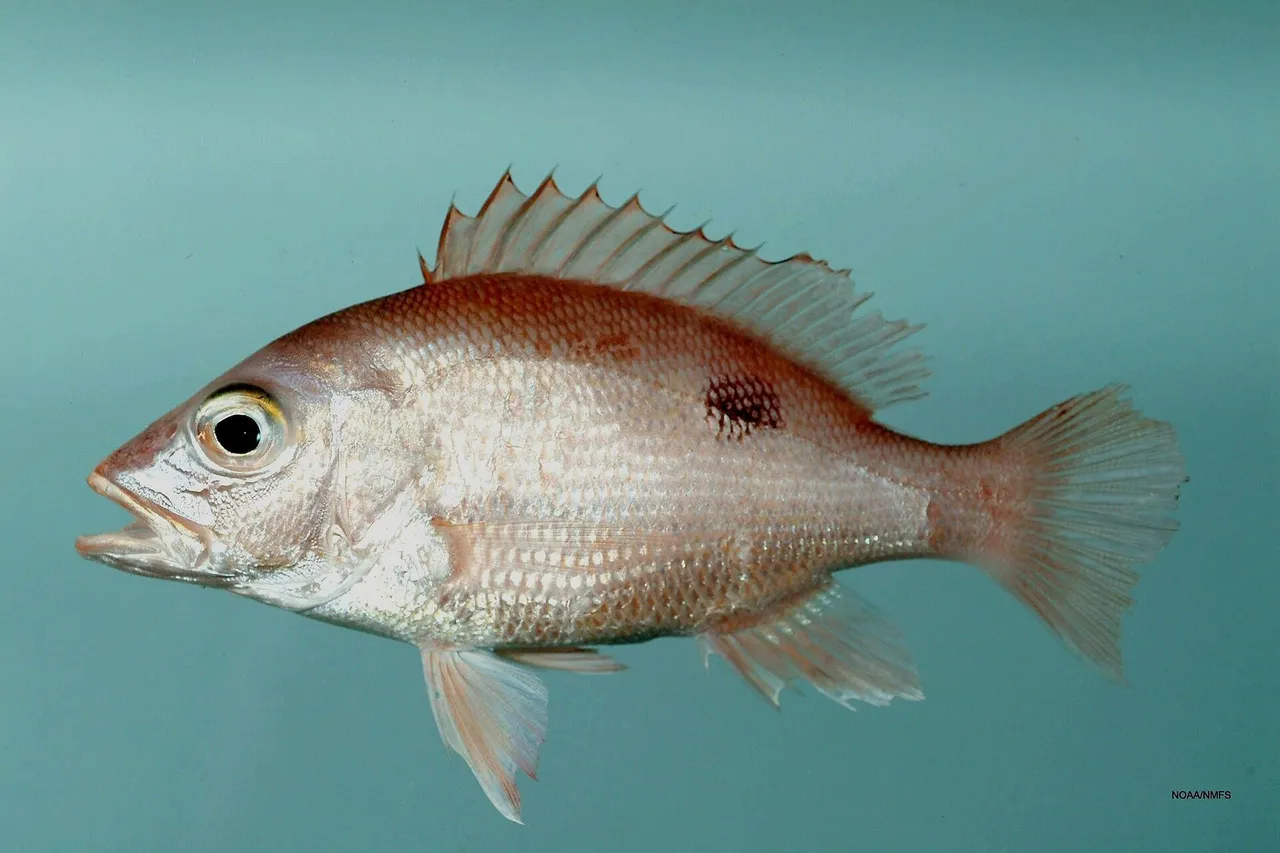
Northern red snapper
Lutjanus campechanus — Lutjanidae

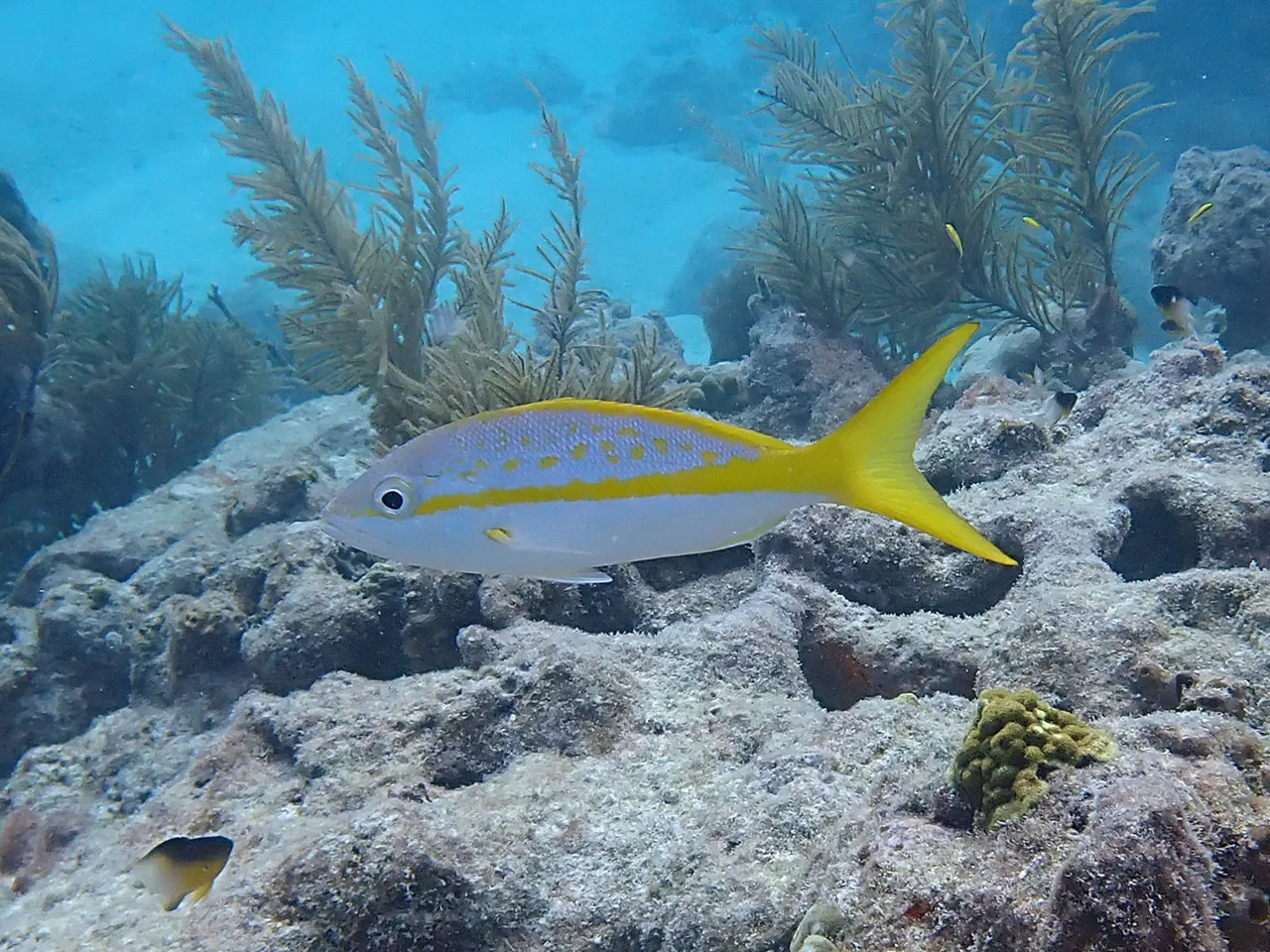
Yellowtail snapper
Ocyurus chrysurus — Lutjanidae
The differences
Each difference is marked with how far it can be trusted on its own. A single diagnostic character settles the identification; suggestive ones only narrow it.
| Character | Northern red snapper | Yellowtail snapper | Reliability |
|---|---|---|---|
| Where the yellow stopsIdentification | No yellow stripe at all; the fish is red to pink overall, deepest on the back and fading on the belly. | A broad yellow stripe runs from the snout through the eye, widens backwards, and does not stop at the tail wrist — it becomes the entire caudal fin. | Diagnostic on its own |
| The shape of the tailIdentification | Truncate to slightly emarginate — nearly square across the back edge in an adult. | Deeply forked with pointed lobes, and uniformly yellow with no dark margin. | Diagnostic on its own |
| Body depth and profileIdentification | Deep-bodied and heavy-shouldered with a steep forehead, built as a structure-holding bottom predator. | Noticeably slimmer and more streamlined with a pointed snout, built as a mid-water fish that leaves the bottom to feed. | Supporting — use with others |
| A flank spot in young fishIdentification | Juveniles and small adults carry a dark spot high on the flank below the soft dorsal, which fades in large fish. | No flank spot at any age; the yellow blotches above the lateral line are irregular and scattered rather than a single mark. | Supporting — use with others |
| How each behaves around structureSeason | Holds tight to wrecks, ledges and hard bottom, often close to the seabed and often in loose aggregations over one feature. | Schools well up off the bottom over reef, frequently in mid-water, which is why the two come from the same mark on quite different presentations. | Supporting — use with others |
Why it matters
In the Gulf of Mexico and the South Atlantic these two are managed as separate stocks with separate seasons, separate size rules and, for red snapper, a history of closures that has made the species one of the most closely regulated recreational fish in the United States. Getting the name wrong is not a matter of pride. It is also a fish-market problem: 'red snapper' is one of the most substituted species names in the seafood trade, and a reader who can tell a yellowtail from a red snapper on the boat is better placed than most buyers on the counter. What may actually be kept, and when, must come from the current rules of the responsible fisheries authority.
The full records
This page compares two species. Each of them has a complete record covering biology, behaviour, handling and the evidence behind all of it.
More about northern red snapper
Where it lives, how it is caught, and what else it is confused with.
Similar and related fish
How it is caught
Where it lives
Why the 4 connections on this page are here, and the sources
Similar and related fish
Backed by research — 1 connection
Supported by peer-reviewed research or fisheries science. The sources are listed and can be checked.
Yellowtail snapper
An identification comparison naming both binomials: Ocyurus chrysurus and Lutjanus campechanus.
- FishBase: a global information system on fishes — Froese, R. and D. Pauly, eds. — FishBase Consortium (Scientific institute)Relied on for: Morphological and distributional data for Ocyurus chrysurus and for Lutjanus campechanus.States this directlyPassage read and verified
- The IUCN Red List of Threatened Species — International Union for Conservation of Nature (Conservation authority)Relied on for: Separate assessments treating Ocyurus chrysurus and Lutjanus campechanus as distinct species.States this directlyCitation checked — the work exists and is described correctly
How it is caught
What experienced anglers do — 2 connections
Widely and independently recommended by experienced anglers and specialist sources. This is real angling knowledge, not proof: controlled evidence for it is limited, and FishingHQ records it as convention rather than as a demonstrated effect.
Drift fishing
The page names bait and jigs over structure. Descending-device requirements for released fish are now standard through much of the range, which is a fact about this fishery and not about the fish.
- Florida saltwater fishing regulations and Keys sanctuary rules — Florida state wildlife authority and the Florida Keys National Marine Sanctuary (Government fisheries body)Relied on for: Documents which fishery and which technique takes this species.States this directlyCitation checked — the work exists and is described correctly
- General angling website restatements of established technique — Various (Credible secondary source)Relied on for: Independently corroborates the species' recreational capture and range.Background and mechanism onlyCitation checked — the work exists and is described correctly
Jigging
The page names jigs beside bait as the two ways the species is fished. Jigging is separated because it is a lure fishery with a different selectivity and a different release profile.
- Florida saltwater fishing regulations and Keys sanctuary rules — Florida state wildlife authority and the Florida Keys National Marine Sanctuary (Government fisheries body)Relied on for: Documents which fishery and which technique takes this species.States this directlyCitation checked — the work exists and is described correctly
- General angling website restatements of established technique — Various (Credible secondary source)Relied on for: Independently corroborates the species' recreational capture and range.Background and mechanism onlyCitation checked — the work exists and is described correctly
Where it lives
Backed by research — 1 connection
Supported by peer-reviewed research or fisheries science. The sources are listed and can be checked.
Inshore ground
A habitat claim held to a scientific standard.
- FishBase: a global information system on fishes — Froese, R. and D. Pauly, eds. — FishBase Consortium (Scientific institute)Relied on for: That Lutjanus campechanus is a reef-associated species of the western Atlantic and Gulf of Mexico, generally between about 10 and 190 m.States this directlyPassage read and verified
Reviewed 2026-08-16. FishingHQ does not state what any rule is or where any rule applies. Where this page says the two species are managed differently, that is a reason to check the authority for the water you are on — not a statement of what it requires.