Grass carp vs Silver carp
How to tell them apart, and what follows from getting it right.
Why they get confused
Both are large barbel-less Asian cyprinids introduced worldwide, both turn up in the same rivers and lakes where stocking or escape has put them, and neither looks like the common carp most anglers expect. Somebody who has caught neither before has one mental slot marked big silver carp-shaped fish with no barbels, and the two fall into it together. Their management implications are quite different, which is why the slot needs splitting.
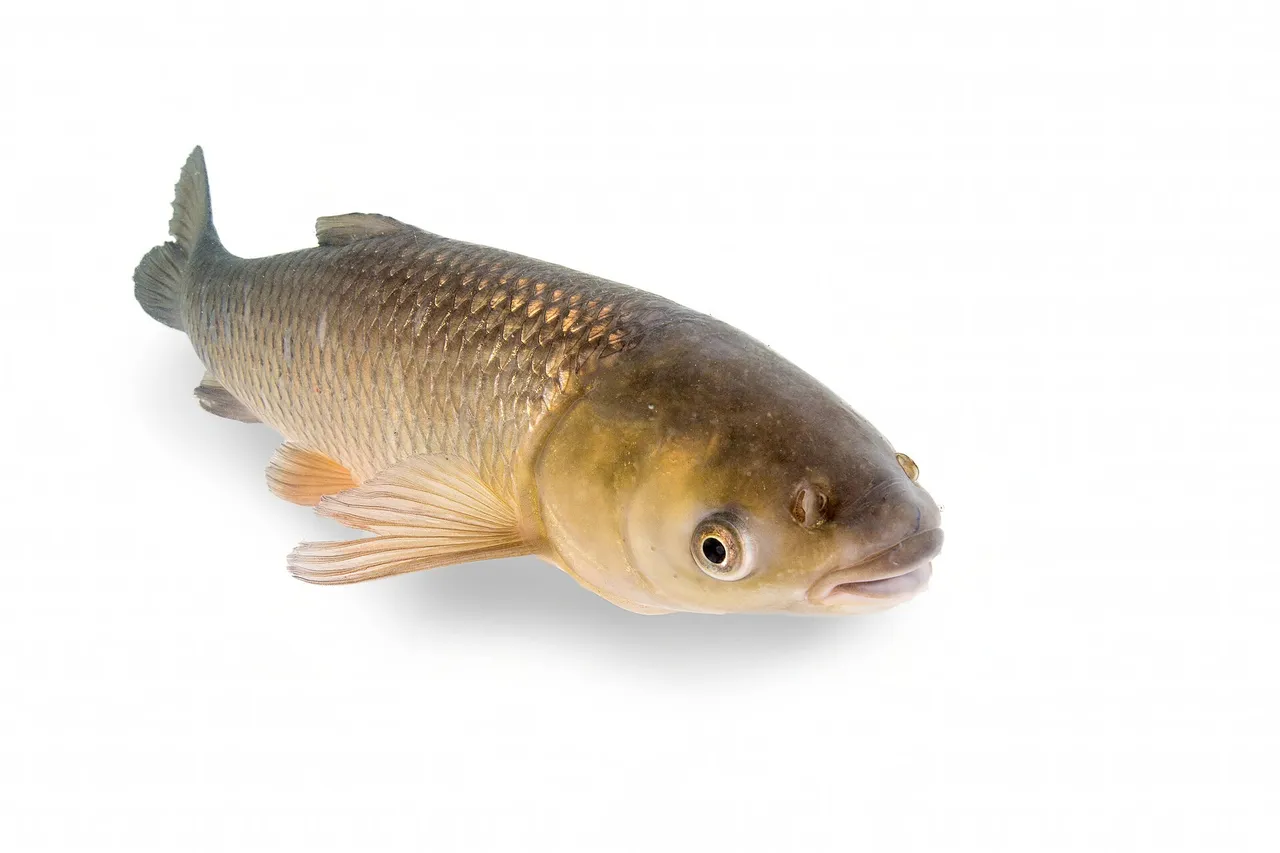
Grass carp
Ctenopharyngodon idella — Xenocyprididae

Silver carp
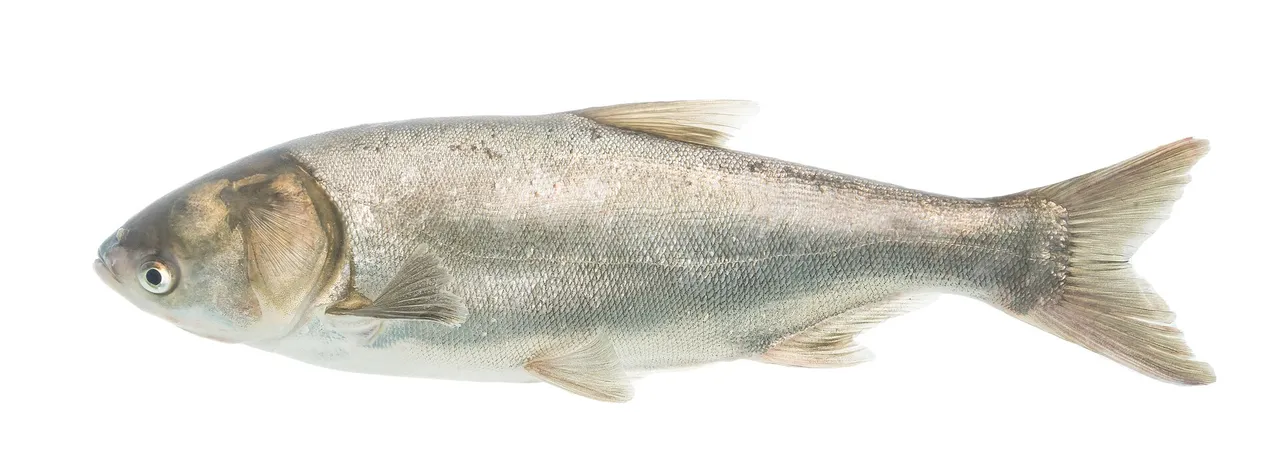
Hypophthalmichthys molitrix — Xenocyprididae
.jpg)
The differences
Each difference is marked with how far it can be trusted on its own. A single diagnostic character settles the identification; suggestive ones only narrow it.
| Character | Grass carp | Silver carp | Reliability |
|---|---|---|---|
| Where the eye sitsIdentification | The eye is set at about the midline of the head, level with or above the line of the mouth, as in almost every other fish. | The eye is set LOW, below the line of the upturned mouth. Nothing else an angler is likely to meet has this. | Diagnostic on its own |
| The mouth and what it is forIdentification | A terminal mouth with firm lips built for cropping vegetation, on a broad blunt head. | A strongly upturned mouth with gill rakers fused into a fine filtering sieve for straining plankton. | Diagnostic on its own |
| Belly keelIdentification | No keel. The belly is rounded. | A sharp keel runs the whole length of the belly from throat to vent. | Diagnostic on its own |
| ScalesIdentification | Large scales with strongly outlined edges, giving a distinct cross-hatched appearance over an olive to silvery-brown flank. | Very small scales over plain unmarked silver, with no cross-hatching. | Supporting — use with others |
| What it eats and therefore what it does to a waterFeeding | Eats aquatic vegetation in large quantities, which is why it is stocked for weed control and why it restructures a water when it escapes. | Filters phytoplankton and zooplankton, competing directly with the larval stages of native fish rather than with adult grazers. | Supporting — use with others |
| The hazard each presentsHandling | A very large strong fish; the risk is to the fish from poor support rather than to the angler. | The hazard is in the air rather than the hand — silver carp leap when disturbed by engine noise, and collisions have caused broken bones and concussion to boaters. | Supporting — use with others |
Why it matters
Where these fish are non-native, and that is most of the water where anglers meet them, the two carry different management responses: grass carp is frequently stocked deliberately and sometimes as a sterile triploid, while silver carp is almost everywhere an unwanted invader with reporting requirements attached. Getting the identification right determines whether a capture should be reported and what must be done with the fish. Moving a live individual of either between waters is among the most damaging things an angler can do and is frequently an offence — check the responsible authority's requirements for captured fish rather than deciding for yourself.
The full records
This page compares two species. Each of them has a complete record covering biology, behaviour, handling and the evidence behind all of it.
More about grass carp
Where it lives, how it is caught, and what else it is confused with.
How it is caught
Why the 1 connections on this page are here, and the sources
How it is caught
What experienced anglers do — 1 connection
Widely and independently recommended by experienced anglers and specialist sources. This is real angling knowledge, not proof: controlled evidence for it is limited, and FishingHQ records it as convention rather than as a demonstrated effect.
Float fishing
Established angling practice for this species, recorded as convention. The note states the property of the animal or its water that makes the method the answer.
- Coarse Fishing — A. & C. Black, 1912 (Specialist angling publication)Relied on for: Established coarse-angling technique and its application to the species.States this directlyCitation checked — the work exists and is described correctly
- Angling Times — Bauer Media (Specialist angling publication)Relied on for: Contemporary British coarse practice for this species.Background and mechanism onlyCitation checked — the work exists and is described correctly
Reviewed 2026-08-15. FishingHQ does not state what any rule is or where any rule applies. Where this page says the two species are managed differently, that is a reason to check the authority for the water you are on — not a statement of what it requires.